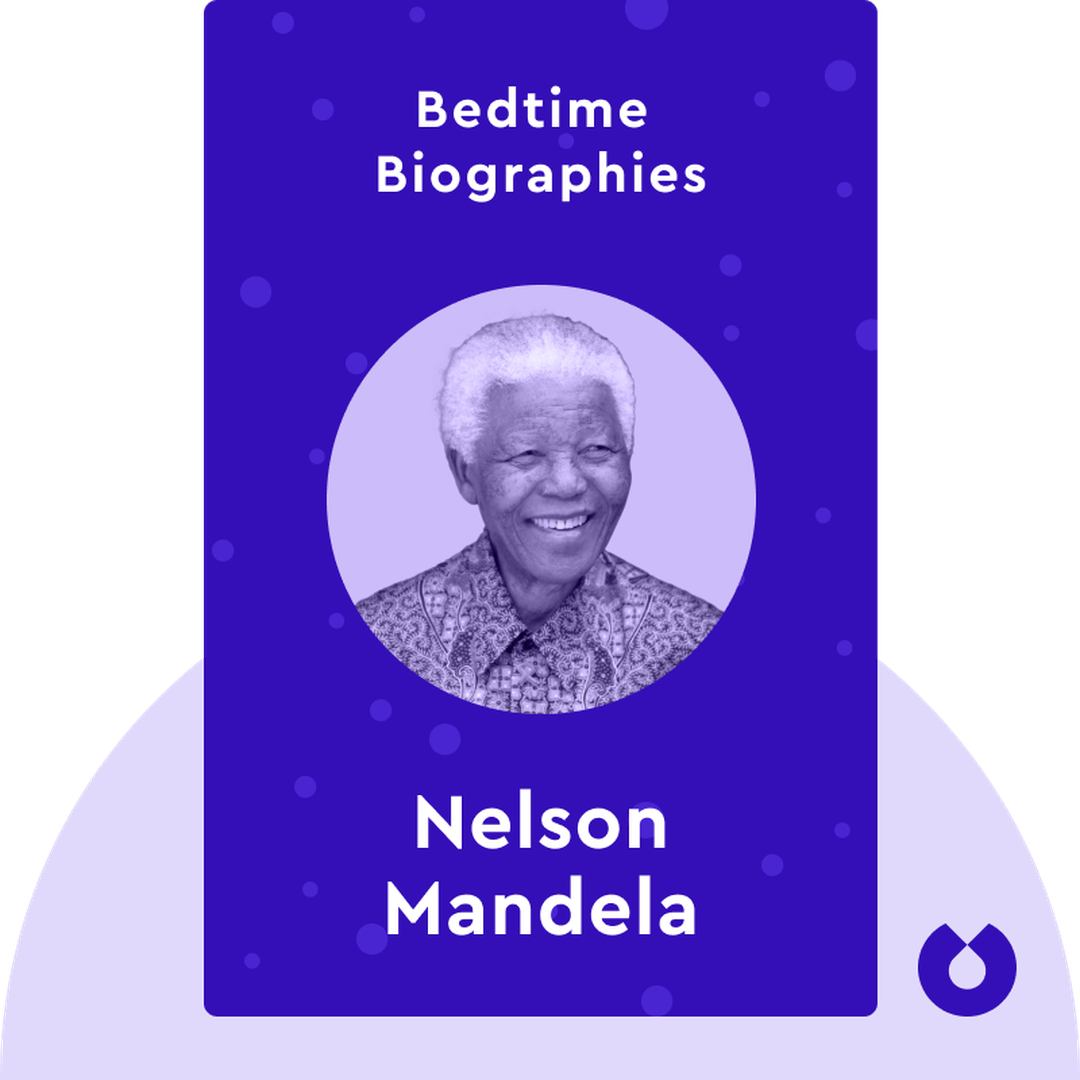
Bedtime Biography: Long Walk to Freedom
Start ListeningDownload Try free on iPhoneScan to start in 5 seconds
Categories:
If You're Curious About These Questions...
You should listen to this audiobook
- Did you know how a young boy from a remote South African village evolved into a global symbol of resistance and the first Black president of his nation?
- Have you ever wondered what kept Nelson Mandela’s spirit unbroken during twenty-seven years of imprisonment, and how he turned a jail cell into a platform for change?
- What’s the secret to Mandela’s incredible ability to forgive his oppressors and lead a divided nation toward a peaceful future after decades of conflict?
Listen to Bedtime Biography: Long Walk to Freedom — Free Audiobook
Loading player...
Key Takeaways from Bedtime Biography: Long Walk to Freedom
- Discover how Nelson Mandela’s unwavering willingness to sacrifice his freedom and endure thirty years of imprisonment ultimately led to the dismantling of apartheid.
- Understand the profound impact of colonial rule on Mandela's early life, from the erasure of his African birth name to his father losing his land and title for defying British authority.
- Master the art of 'leading from behind,' a powerful leadership strategy Mandela learned from a tribal regent who guided his people by listening attentively and letting them own their decisions.
- Find out how Mandela's exposure to the African National Congress during his college years broadened his worldview and planted the seeds for his fight against South Africa's racist policies.
- Learn why Mandela chose to reject a comfortable royal destiny and flee to Johannesburg, taking the daring first steps toward carving out his own remarkable legacy.
Learning Tools
Reinforce what you learned from Bedtime Biography: Long Walk to Freedom
Mind Map
Bedtime Biography: Long Walk to Freedom
Early Life & Roots+
Education & Awakening+
Rise of Activism+
Escalation & Trials+
Underground & Arrest+
Imprisonment+
Freedom & Presidency+
Quiz — Test Your Understanding
Question 1 of 9
What key leadership principle did Nelson Mandela learn from observing Chief Jongintaba, the regent of the Thembu people?
Question 2 of 9
What was the primary reason Nelson Mandela and his brother Justice ran away to Johannesburg?
Question 3 of 9
How did the ANC's strategy initially change under the influence of Mandela's Youth League in response to the apartheid regime?
Question 4 of 9
What was the core purpose of the Freedom Charter presented in Soweto in 1955?
Question 5 of 9
What realization led Mandela to form Umkhonto we Sizwe ('Spear of the Nation') and abandon strict nonviolence?
Question 6 of 9
During his trial for initiating plans for a liberation army, why did Mandela refuse to mount a traditional legal defense?
Question 7 of 9
Despite the harsh conditions on Robben Island, how did Mandela and the ANC leaders turn their imprisonment into a positive opportunity?
Question 8 of 9
Throughout the 1980s, the apartheid government repeatedly offered to release Mandela from prison. Why did he consistently refuse?
Question 9 of 9
What did Mandela's encounter with the Inuit children in Canada demonstrate?
Bedtime Biography: Long Walk to Freedom — Full Chapter Overview
- 1Recommendation
- 2Chapter One
- 3Chapter Two
- 4Chapter Three
- 5Chapter Four
- 6Chapter Five
- 7The End
Bedtime Biography: Long Walk to Freedom Summary & Overview
Read to you by Twaambo Kapilikisha
Nelson Mandela's Long Walk to Freedom (1994) is one of the most famous autobiographies of recent times. It tells the story of his life, from his humble beginnings in the South African countryside to his work as an iconic anti-apartheid freedom fighter, and ends, after chronicling his twenty-year prison sentence, with his final victory and release.
Who Should Listen to Bedtime Biography: Long Walk to Freedom?
- People interested in Nelson Mandela
- Anyone curious about South African history
- Proponents of social justice
Books Similar to Bedtime Biography: Long Walk to Freedom
Readers who enjoyed this also liked these titles.