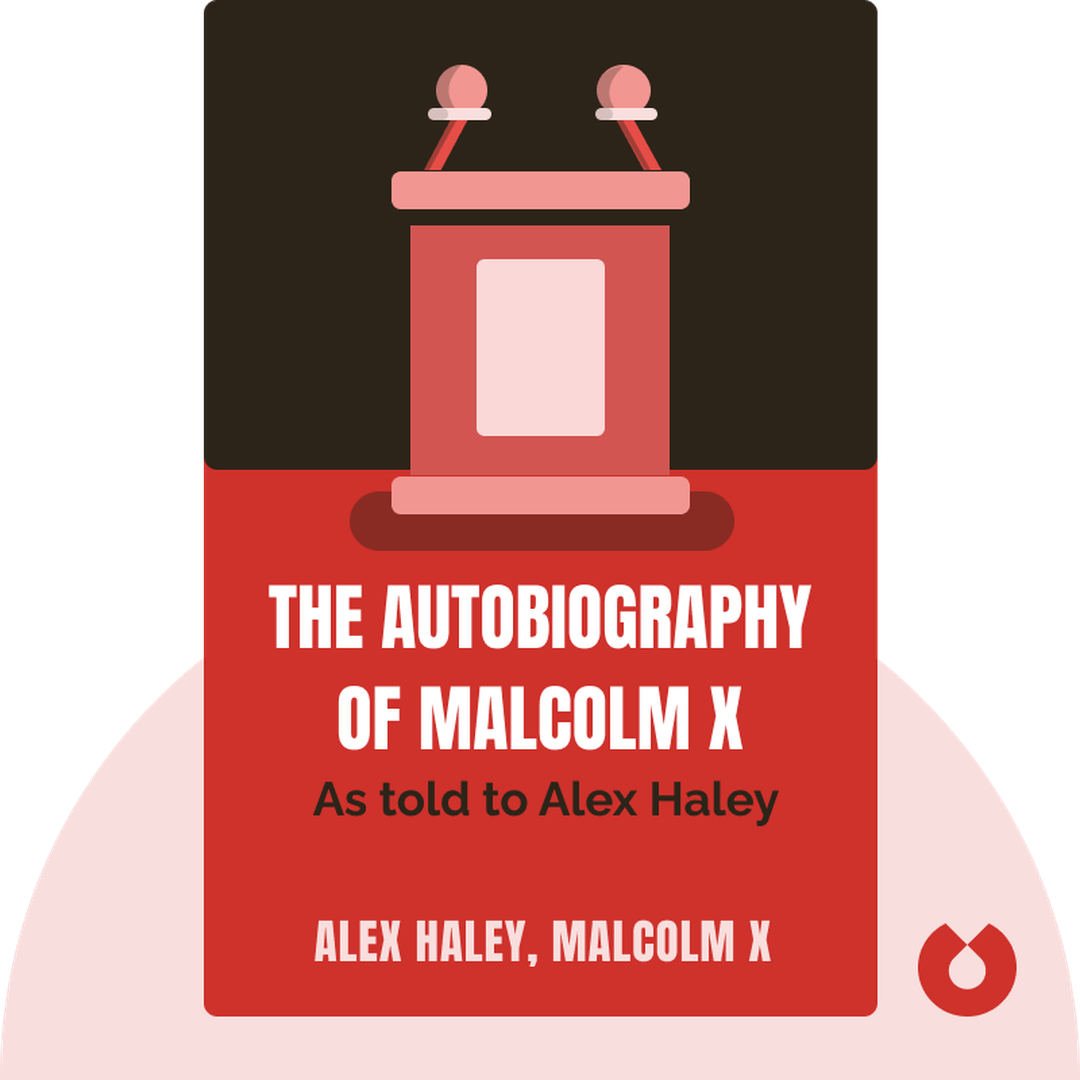
The Autobiography of Malcolm X
Start ListeningDownload Try free on iPhoneScan to start in 5 seconds
Categories:
If You're Curious About These Questions...
You should listen to this audiobook
- Did you know that one of the 20th century’s most influential human rights leaders began his journey as a high school dropout caught in a cycle of crime and drug addiction?
- What’s the secret to a self-taught education that can transform a prison cell into a launchpad for a global revolution of the mind?
- Have you ever wondered what profound realization led one of history’s most radical voices to completely redefine his vision of identity and freedom in his final years?
Listen to The Autobiography of Malcolm X — Cinematic Audio Edition
Loading player...
Key Takeaways from The Autobiography of Malcolm X
- Understand how the historical legacy of slavery, systemic racism, and forced segregation into ghettos deeply shaped the mindset and experiences of African Americans.
- Discover the devastating impact of racial violence and systemic oppression through Malcolm X's traumatic childhood, including his father's assassination and the dismantling of his family.
- Learn how internalized racism pushed a generation of African Americans to alter their God-created bodies just to fit into white standards of beauty and society.
- Recognize the profound influence of environment and peer groups by tracing Malcolm's dangerous descent into a life of drug use, gambling, and crime.
- Find out how the relentless economic and social pressures of racism drove a young, wide-eyed Malcolm to become 'Detroit Red,' a hardened street hustler.
Learning Tools
Reinforce what you learned from The Autobiography of Malcolm X
Mind Map
The Autobiography of Malcolm X
Early Life & Trauma+
Youth, Hustling & Crime+
Prison & Spiritual Awakening+
Rise in the Nation of Islam+
Disillusionment & Break from NOI+
Mecca & Ideological Shift+
Assassination & Legacy+
Quiz — Test Your Understanding
Question 1 of 10
Why did Malcolm believe his mother treated him more harshly than his siblings when he was a child?
Question 2 of 10
What pivotal school incident made Malcolm realize his white teachers did not view him as an equal, despite his academic success?
Question 3 of 10
How did Malcolm later view the process of 'conking' his hair, which he learned from his friend Shorty?
Question 4 of 10
What was the primary reason Malcolm received an unusually harsh ten-year prison sentence for burglary?
Question 5 of 10
According to the teachings of the Nation of Islam, what did the 'X' in Malcolm X's name represent?
Question 6 of 10
Which event in 1957 brought national television and newspaper attention to Malcolm X and the Nation of Islam?
Question 7 of 10
What was the initial cause of Malcolm's deep sense of betrayal by his mentor, Elijah Muhammad?
Question 8 of 10
How did Malcolm's pilgrimage to Mecca profoundly change his views on race?
Question 9 of 10
After returning from Mecca, what advice did Malcolm X have for white people who wanted to help his newly formed Organization of Afro-American Unity (OAAU)?
Question 10 of 10
In Ossie Davis's eulogy for Malcolm X, how did he characterize Malcolm to counter the narrative that he was a man of hate?
The Autobiography of Malcolm X — Full Chapter Overview
- 1Recommendation
- 2Malcolm lost his father and mother when he was very young.
- 3Malcolm’s turbulent school years showed him racism, yet Boston unveiled another world entirely.
- 4Malcolm was introduced to modern Black culture across Roxbury and Harlem.
- 5After losing his job, Malcolm embraced a criminal life amid Harlem in the 1940s.
- 6Malcolm’s criminal pursuits eventually put him in prison, where he experienced a profound awakening.
- 7Malcolm left prison devoted to the Nation of Islam and eager to spread its message.
- 8As a Nation of Islam minister, he became Malcolm X and drew national attention.
- 9The attention Malcolm X received would eventually place him firmly at odds with the Nation of Islam.
- 10A pilgrimage to Mecca opened up Malcolm’s eyes to Muslim unity.
- 11Malcolm X returned to the U.S. with a completely new agenda.
- 12Though Malcolm X was at peace with the possibility of death, his assassination was a tragic loss.
The Autobiography of Malcolm X Summary & Overview
The Autobiography of Malcolm X (1965) is a profound and personal account of one man’s journey from dropping out of school and entering a life of crime and drug addiction to finding redemption through human rights activism. These blinks tell the story of a curious and evolving mind: a man who dedicated his life to helping African-Americans gain identity and freedom from oppression by any means necessary.
Who Should Listen to The Autobiography of Malcolm X?
- Human rights activists
- Historians
- People interested in the civil rights movement
Books Similar to The Autobiography of Malcolm X
Readers who enjoyed this also liked these titles.