If You're Curious About These Questions...
You should listen to this audiobook
- Did you know that as our lifespans increase, the traditional model of 'learn then work' is becoming a major risk to your career stability?
- Have you ever wondered why a university degree is rapidly losing its power to guarantee success in a job market dominated by automation?
- What if you could future-proof your professional life by mastering a new ecosystem of learning designed specifically for a 100-year career?
Listen to Long Life Learning — Free Audiobook
Loading player...
Key Takeaways from Long Life Learning
- Understand why rising human life expectancy and automation make traditional, one-off education obsolete, requiring a crucial shift toward lifelong upskilling.
- Discover how disruptive innovations like modularized learning can help academic institutions deliver the specific, job-ready skills that students actually want.
- Learn why companies must stop relying solely on outside hires and start investing in training for their existing employees to support an aging workforce.
- Explore the five guiding principles—navigability, support, targeting, integration, and transparency—needed to build resilient career support systems for vulnerable workers.
- Recognize the critical need for better data transparency and early career advising to help people confidently navigate expensive education options and a complex job market.
Learning Tools
Reinforce what you learned from Long Life Learning
Mind Map
Long Life Learning
The New Reality of Work+
Rethinking Academia+
Employer Responsibility+
Five Principles for the Future+
Data Networks & Infrastructure+
Quiz — Test Your Understanding
Question 1 of 11
Why is the traditional life plan of finishing school, building a career, and retiring at 65 becoming less plausible?
Question 2 of 11
According to 50 years of data from The Freshman Survey, what is the consistent number one reason students give for going to college?
Question 3 of 11
How does the book describe the initial target audience for 'disruptive innovations' in a market?
Question 4 of 11
Why will companies soon be forced to invest in training their existing employees rather than just hiring new talent?
Question 5 of 11
How can AI-powered guidance systems help workers who want to change careers?
Question 6 of 11
What is meant by 'wraparound supports' in the context of adult education?
Question 7 of 11
What is an educational 'on-ramp' as described in the text?
Question 8 of 11
How do Income Share Agreements (ISAs) help integrate learning and working?
Question 9 of 11
What is the primary negative consequence of 'upcredentialing' (credential inflation)?
Question 10 of 11
What metaphor is used in the book to describe the ideal open infrastructure for connecting education and workforce data?
Question 11 of 11
What does the concept of 'skill shapes' reveal about the job market?
Long Life Learning — Full Chapter Overview
- 1Recommendation
- 2Academic institutions need to adapt to changes in the work ecosystem.
- 3Employers should invest in their employees’ talents and skills.
- 4People need reliable information and systems to navigate education and work.
- 5Every learner needs proper support throughout their education.
- 6Learners need focused education programs to build new skills.
- 7We need programs that help people combine learning with work.
- 8Transparent and fair hiring practices benefit employers and job seekers alike.
- 9Strong data networks can connect education with the workforce.
- 10Final summary
Long Life Learning Summary & Overview
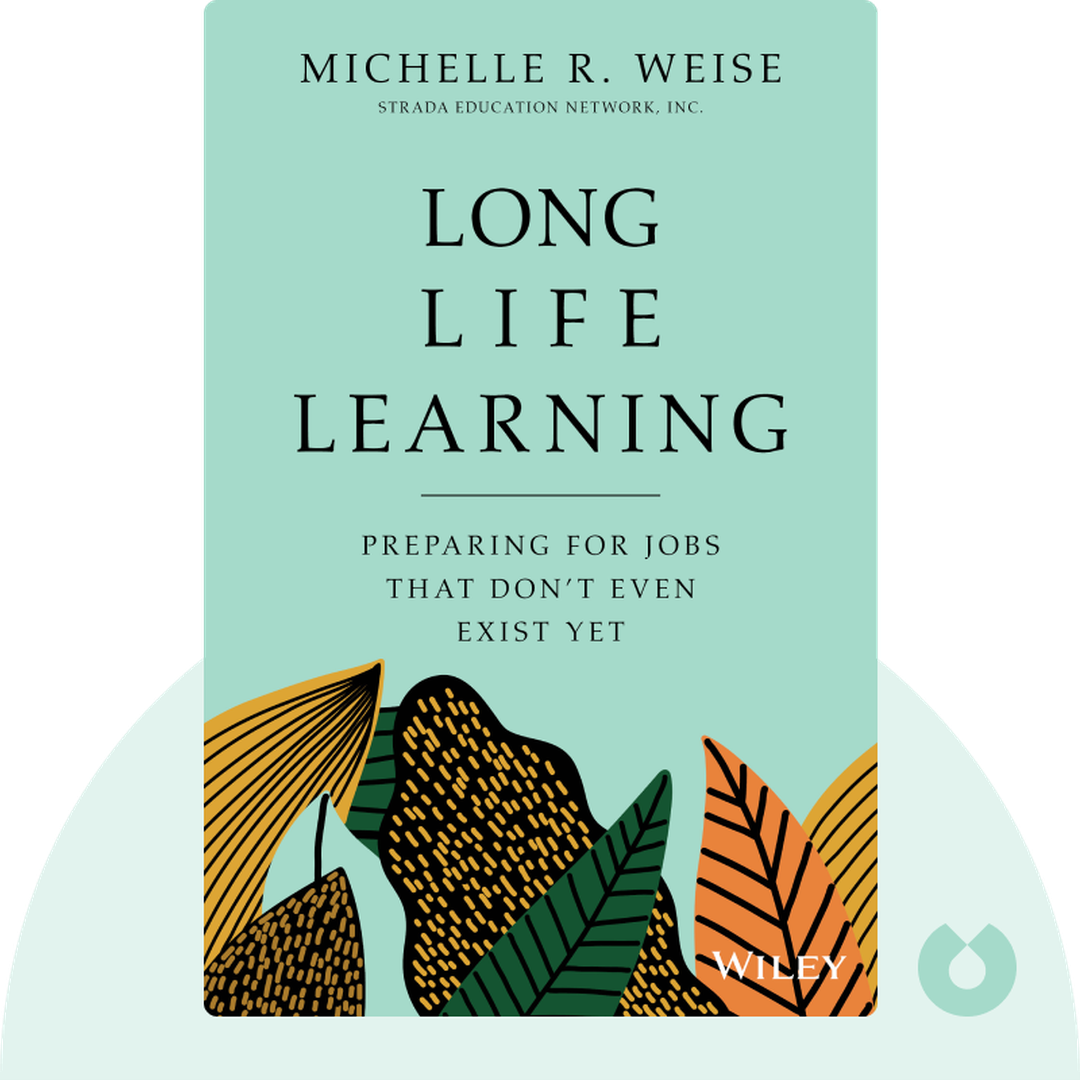
Long Life Learning (2020) argues decisively that the ways in which we currently think about education and its relationship to work are broken and passé. More and more jobs are being automated, college degrees have been devalued, and people are living longer lives than ever before. These factors, combined with others, are a blaring signal that we must shift toward learning that is designed to be both lifelong and suitable for longer lives.
Who Should Listen to Long Life Learning?
- Current or aspiring business and political leaders
- Educators who want to help reform academia
- Anyone curious about the future of work
Books Similar to Long Life Learning
Readers who enjoyed this also liked these titles.