If You're Curious About These Questions...
You should listen to this audiobook
- Have you ever wondered why falsehoods often travel faster and reach more people on social media than the actual truth?
- Are you curious about how certain types of misinformation can directly endanger public health and destabilize democratic institutions?
- What if there was a way to stop the spread of dangerous lies without compromising our fundamental right to free speech?
Listen to Liars — Free Audiobook
Loading player...
Key Takeaways from Liars
- Discover why false information spreads significantly faster than the truth on social media by exploiting novelty and triggering strong emotional responses like surprise and disgust.
- Understand how digital echo chambers and the rapid spread of misinformation fracture the traditional 'marketplace of ideas,' threatening democratic self-governance.
- Explore the complex challenge of balancing constitutional free speech with public safety when confronting harmful but genuinely believed falsehoods.
- Learn why granting government authorities the power to act as arbiters of truth is a dangerous slippery slope that historically leads to the suppression of legitimate dissent.
- Recognize the crucial societal value of protecting unpopular minority opinions, as open dialogue allows for essential error correction and social progress.
Learning Tools
Reinforce what you learned from Liars
Mind Map
Liars
The Misinformation Problem+
The Free Speech Dilemma+
Dangers of Censorship+
Alternatives to Censorship+
The Misinformation Matrix+
Quiz — Test Your Understanding
Question 1 of 6
According to the study mentioned in the text, why does false information spread significantly faster and more broadly on social media than true information?
Question 2 of 6
How does the rapid spread of online misinformation challenge the traditional concept of the 'marketplace of ideas'?
Question 3 of 6
What did Supreme Court Justice Robert Jackson warn could be the ultimate result of the 'coercive elimination of dissent'?
Question 4 of 6
Why do experts often argue that outright censorship is an ineffective way to combat false information?
Question 5 of 6
Which of the following is an example of using 'choice architecture' to combat misinformation without resorting to censorship?
Question 6 of 6
When determining the appropriate response to a falsehood, which four factors make up the 'misinformation matrix' framework proposed in the text?
Liars — Full Chapter Overview
- 1Recommendation
- 2Faster Than Truth Can Travel
- 3Balancing Freedom Against Harm
- 4The Argument Against Censorship
- 5Alternatives to Censorship
- 6The Misinformation Matrix
- 7Final summary
Liars Summary & Overview
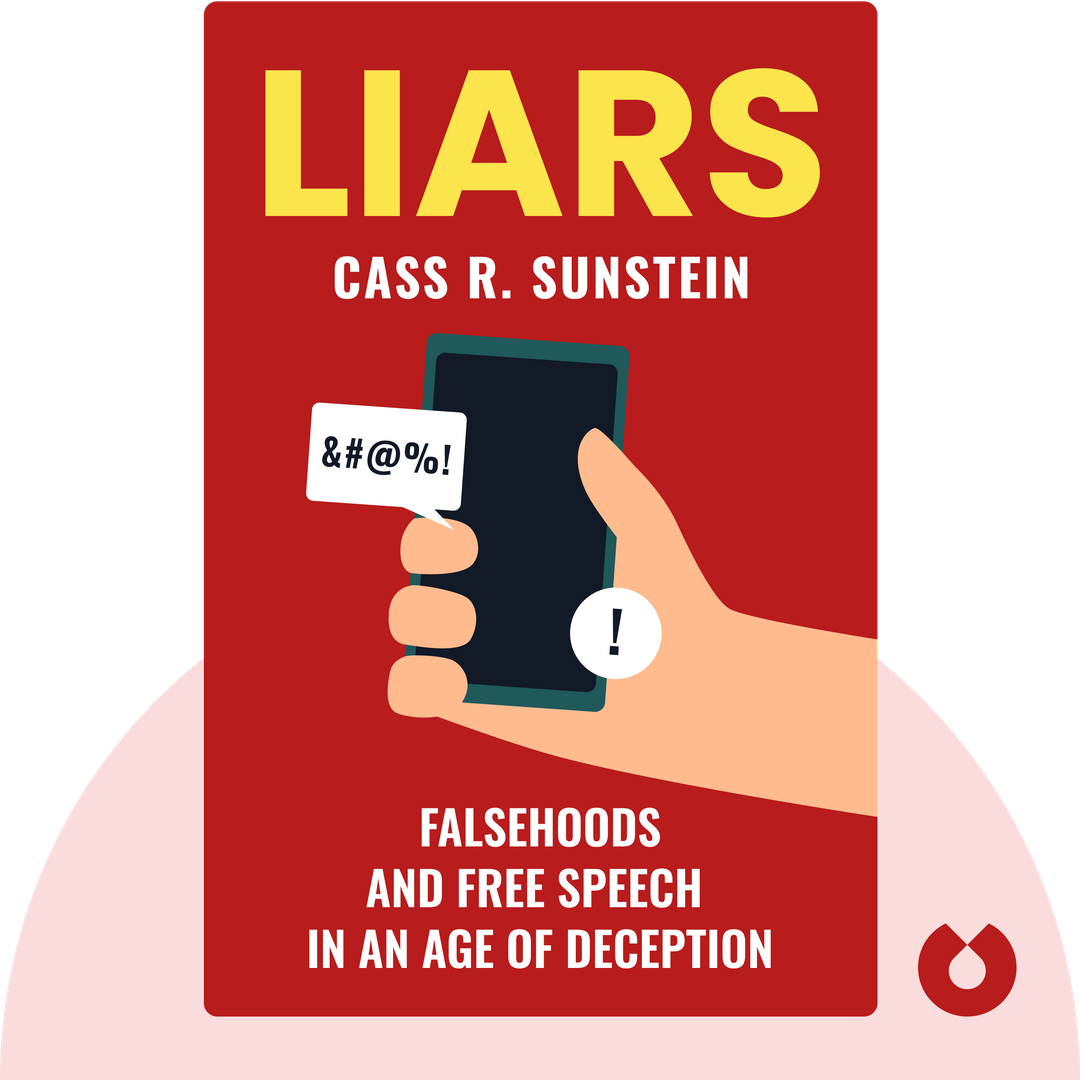
Liars (2021) explores the alarming spread of falsehoods in the digital age and its impact on society. It examines how social media amplifies the reach of lies, threatening public health and democratic foundations, while proposing potential solutions to combat misinformation without compromising free speech.
Who Should Listen to Liars?
- Citizens concerned about the spread of misinformation
- Journalists and media professionals navigating the evolving landscape of truth
- Social media users seeking to become more discerning consumers of online content
Books Similar to Liars
Readers who enjoyed this also liked these titles.