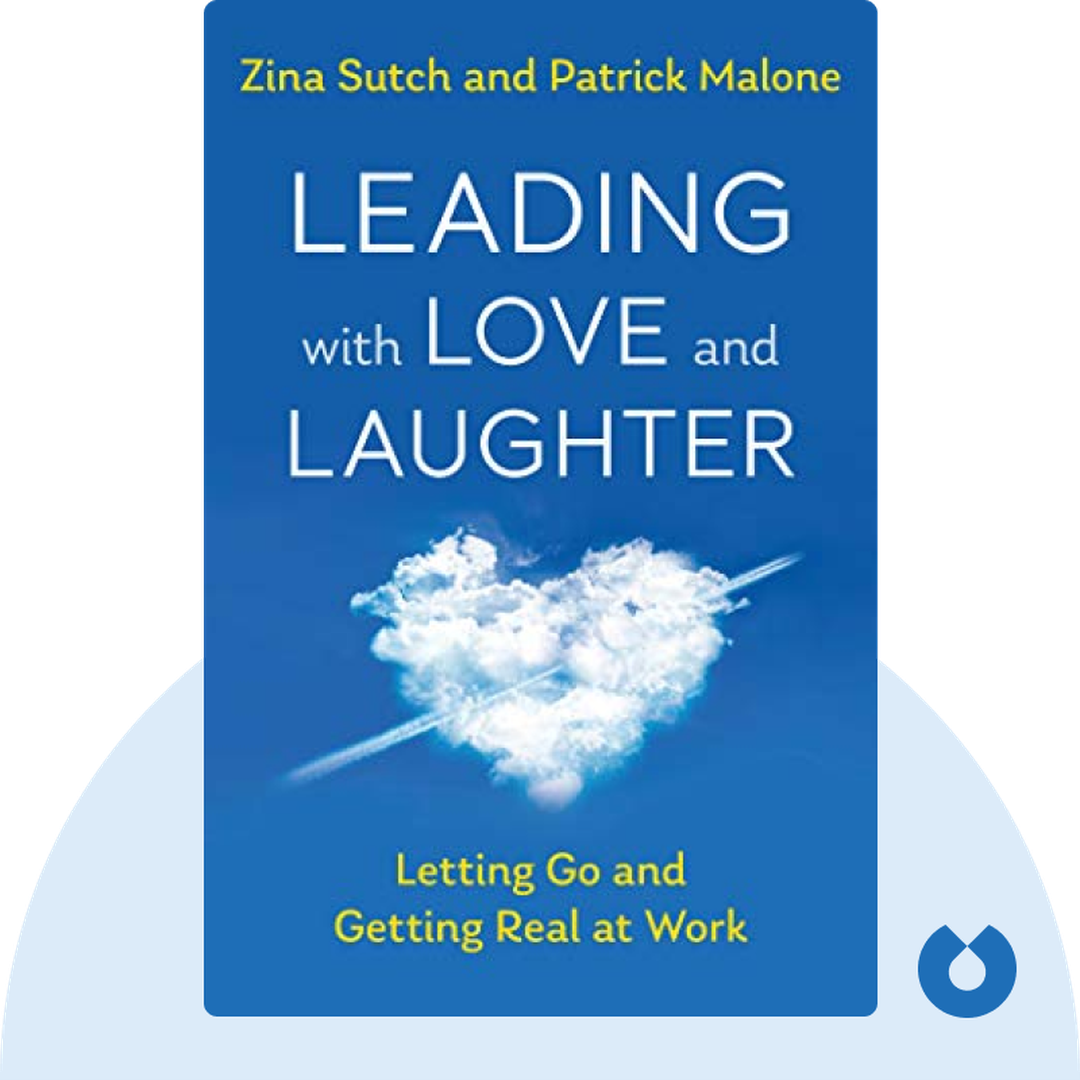
Leading with Love and Laughter
Start ListeningDownload Try free on iPhoneScan to start in 5 seconds
Categories:
If You're Curious About These Questions...
You should listen to this audiobook
- Did you know that integrating laughter into your leadership style can actually improve your team’s physical health and boost their overall performance?
- What if you could unlock your team’s full creative potential and build deep trust by leading with the one principle most managers are afraid to mention?
- Are you curious about how to master the art of workplace humor while navigating the hidden risks that often lead to professional pitfalls?
Listen to Leading with Love and Laughter — Free Audiobook
Loading player...
Key Takeaways from Leading with Love and Laughter
- Discover why philautia, or self-love, is the most crucial type of love for leaders, enabling you to accept yourself, take risks, and authentically care for others.
- Understand how bringing compassion, caring, and kindness into the workplace directly boosts engagement, leading 95 percent of employees to work harder for your organization.
- Learn how to build fiercely loyal and winning teams by demonstrating philia, a friendship-based love that fosters mutual respect, trust, and equality.
- Master the practice of self-awareness to better understand your emotions, allowing you to process feedback effectively and stay open to continuous self-development.
- Embrace vulnerability not as a weakness, but as a powerful leadership tool that allows you to take risks, admit what you don't know, and build deep connections with your team.
Learning Tools
Reinforce what you learned from Leading with Love and Laughter
Mind Map
Leading with Love and Laughter
The Role of Love in Leadership+
The Power of Laughter at Work+
Quiz — Test Your Understanding
Question 1 of 7
According to the ancient Greek classifications of love, which type is considered the most important foundational love for a leader to possess?
Question 2 of 7
What was the primary reason Arthur T. Demoulas, CEO of Market Basket, was able to inspire such intense loyalty that employees and customers protested his firing?
Question 3 of 7
Cultivating genuine love in leadership requires focusing on three core principles. Which of the following is one of those essential principles?
Question 4 of 7
When a leader uses snide comments and cynical barbs followed by a demeaning chuckle, what psychological driver of laughter are they displaying?
Question 5 of 7
According to a 2017 article in the Journal of Personality and Social Psychology, how does the successful use of appropriate humor impact a leader's image?
Question 6 of 7
How does humility relate to a leader's ability to effectively use humor in the workplace?
Question 7 of 7
Which of the following is cited as a detrimental use of workplace humor that can tarnish a professional reputation?
Leading with Love and Laughter — Full Chapter Overview
- 1Recommendation
- 2Great Leadership Needs Love
- 3Loving Leaders Build Winning Teams and Change Lives
- 4Leading with Love Takes Self-Awareness, Vulnerability, and Kindness
- 5Laughter Builds a More Relaxed, Creative, and Productive Workplace
- 6There Are Many Chances Each Day to Use Heartfelt Humor at Work
- 7Appropriate Workplace Humor Offers Many Benefits
- 8Final summary
Leading with Love and Laughter Summary & Overview
Leading with Love and Laughter (2021) explores how a love-and-laughter approach to leadership can lead to better team performance, improved morale, trust, creativity, and improved health. It provides the information needed for leaders to show love and to navigate the potential problems of humor in the workplace.
Who Should Listen to Leading with Love and Laughter?
- Leaders who want to show their team some love
- Laughter-lovers who want to bring humor to the workplace
- Managers looking for new ideas to get the most out of their team
Books Similar to Leading with Love and Laughter
Readers who enjoyed this also liked these titles.