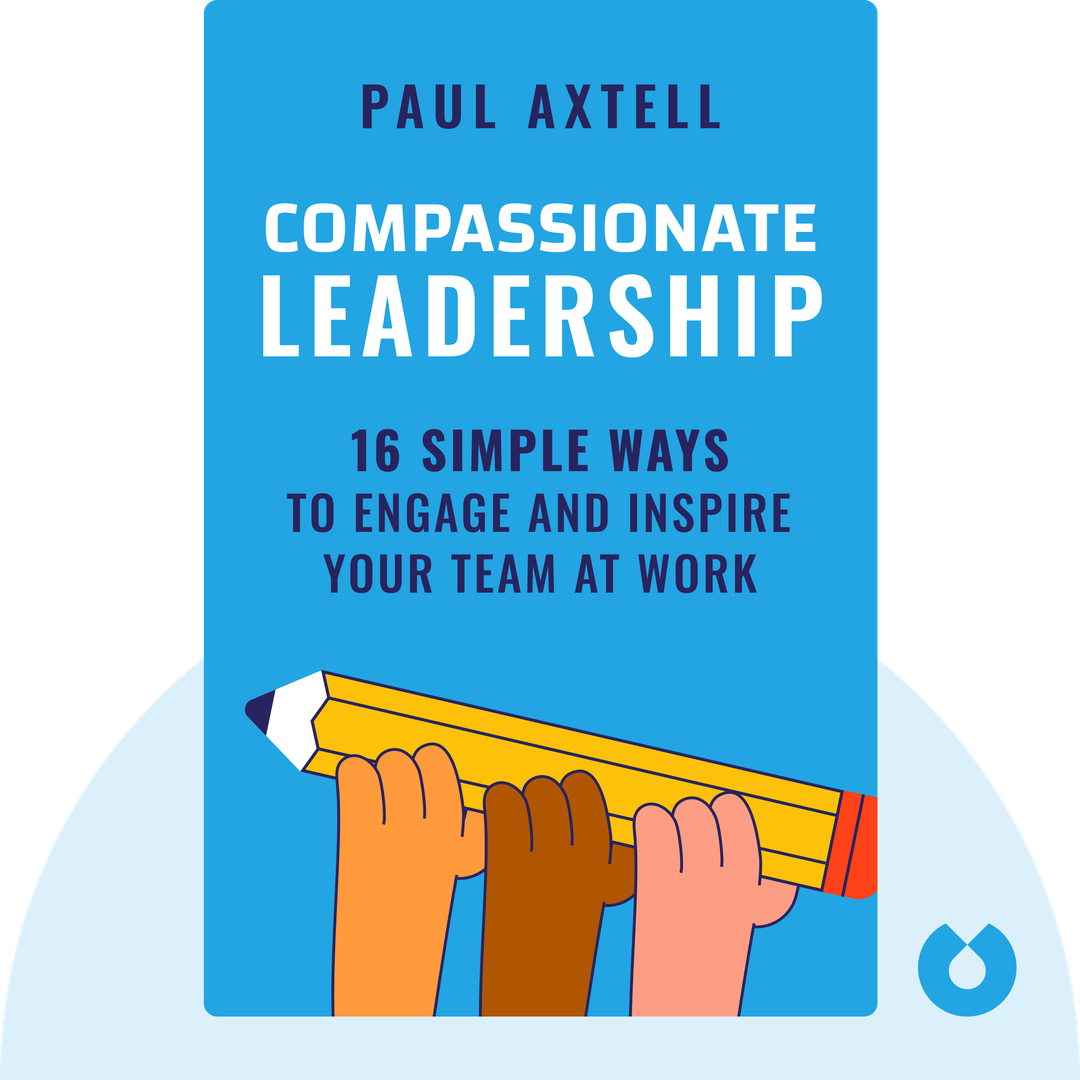
Compassionate Leadership
Start ListeningDownload Try free on iPhoneScan to start in 5 seconds
Categories:
If You're Curious About These Questions...
You should listen to this audiobook
- What’s the secret to building a team where every member feels truly seen, heard, and motivated to give their best work?
- Have you ever wondered why some leaders can effortlessly navigate high-pressure situations while keeping their team’s trust completely intact?
- What if you could boost your team's performance and well-being by mastering just a few simple, empathy-driven communication shifts?
Listen to Compassionate Leadership — Free Audiobook
Loading player...
Key Takeaways from Compassionate Leadership
- Discover how shifting your perspective to lead with authenticity and care creates a solid foundation for trust and meaningful team connections.
- Learn why trust and respect are intrinsically linked, and how simple everyday actions like expressing heartfelt appreciation can dramatically boost team morale.
- Master the art of intentional communication by avoiding multitasking, staying fully present, and making every conversation an opportunity to foster empathy.
- Understand how to transform frustrating complaints into constructive solutions by listening without defense and asking one powerful question: 'What’s your request?'
- Find out how to build unshakeable leadership credibility by honoring your commitments, setting crystal-clear expectations, and reliably keeping your word.
Learning Tools
Reinforce what you learned from Compassionate Leadership
Mind Map
Compassionate Leadership
Mindset & Authenticity+
Trust & Respect+
Intentional Communication+
Problem-Solving & Accountability+
Team Engagement & Empowerment+
Effective Meetings+
Coaching & Feedback+
Leader Self-Care+
Quiz — Test Your Understanding
Question 1 of 8
According to the text, what is the true foundation of great leadership, rather than relying solely on authority?
Question 2 of 8
How does the author suggest a leader should handle situations when things do not go as planned?
Question 3 of 8
What is the recommended approach for handling a team member's complaint?
Question 4 of 8
When asking for input from a team, what crucial step do leaders often miss that can damage engagement?
Question 5 of 8
How should a compassionate leader optimally close a meeting?
Question 6 of 8
Why should leaders ask questions like 'What have you done about this so far?' instead of providing immediate answers?
Question 7 of 8
How does the text suggest a leader should view the constant stream of problems they face?
Question 8 of 8
What is the primary reason the text gives for leaders to avoid multitasking during conversations and work?
Compassionate Leadership — Full Chapter Overview
- 1Recommendation
- 2Lead with the right mindset
- 3Build mutual trust and respect
- 4Make every conversation purposeful and meaningful
- 5Transform complaints into solutions and honor your word
- 6Engage teams by asking, listening, and trusting
- 7Create meetings that bring clarity and action
- 8Coach through questions and clear expectations
- 9Care for yourself so you can lead well
- 10Final summary
Compassionate Leadership Summary & Overview
Compassionate Leadership (2021) explores how leaders can cultivate empathy and trust within their teams to create a more engaged and collaborative work environment. It provides practical strategies for improving communication, fostering emotional intelligence, and inspiring individuals to thrive both personally and professionally. Through actionable steps, it encourages leaders to build meaningful connections that enhance team performance and well-being.
Who Should Listen to Compassionate Leadership?
- Aspiring leaders seeking to enhance emotional intelligence
- Experienced managers aiming to build stronger team trust
- Anyone interested in cultivating empathy-driven leadership skills
Books Similar to Compassionate Leadership
Readers who enjoyed this also liked these titles.