If You're Curious About These Questions...
You should listen to this audiobook
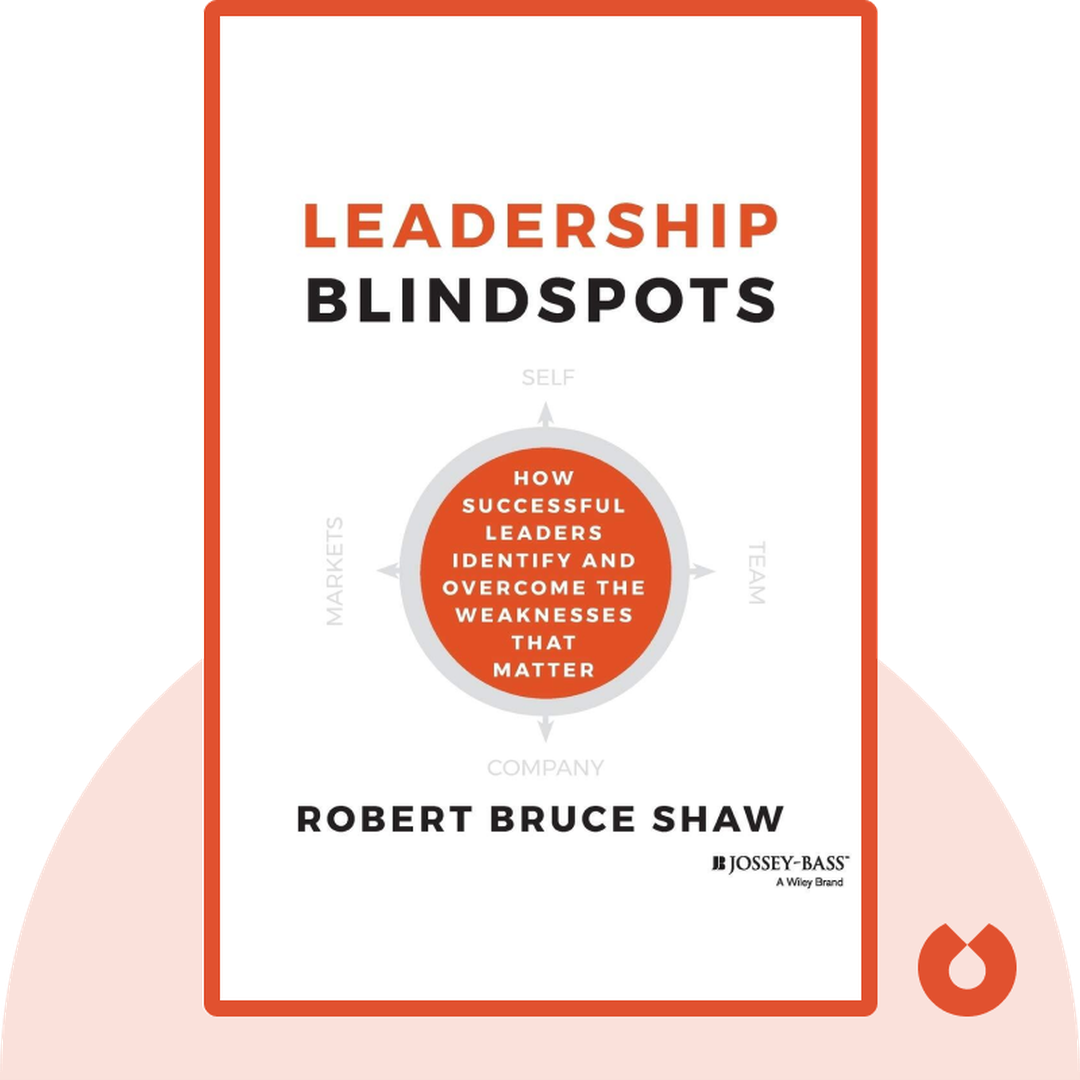
- Have you ever wondered if there are invisible gaps in your leadership that everyone around you can see, except for you?
- Did you know that the most dangerous risks to your career aren't the problems you’re currently solving, but the ones you don't even realize exist?
- What if you could learn to uncover your own psychological blind spots and stop them from sabotaging your professional success?
Listen to Leadership Blindspots — Free Audiobook
Loading player...
Key Takeaways from Leadership Blindspots
- Understand why unrecognized weaknesses pose a far greater threat to your career than the flaws you already know about, as seen in the costly mistakes of leaders like Steve Jobs.
- Learn how to uncover your hidden blind spots by rigorously auditing your past mistakes and identifying recurring patterns in your misjudgments.
- Discover the danger of ignoring your blind spots to maintain the status quo, and realize why committing the effort to change is essential for your company's survival.
- Find out why you must actively solicit honest, critical feedback from your team or anonymous third parties to reveal the career-threatening flaws you cannot see yourself.
- Master the art of prioritizing your flaws using the 'waterline' analogy to distinguish between harmless blind spots and those that could actually sink your business.
Learning Tools
Reinforce what you learned from Leadership Blindspots
Mind Map
Leadership Blindspots
Understanding Blind Spots+
Identifying Blind Spots+
The Role of Feedback+
Staying Grounded+
Building the Right Team+
Quiz — Test Your Understanding
Question 1 of 8
Why are blind spots considered more dangerous than known weaknesses?
Question 2 of 8
According to the text, what is the most effective first step a leader can take to identify their personal blind spots?
Question 3 of 8
Why is it essential for leaders to actively ask for feedback rather than waiting for it to be volunteered?
Question 4 of 8
What does Bill Gore's 'waterline' naval analogy illustrate about leadership blind spots?
Question 5 of 8
How can a blind spot occasionally be beneficial to a leader, as demonstrated by Sara Blakely?
Question 6 of 8
Why does the author caution leaders against relying solely on 'concise, filtered reports' from their staff?
Question 7 of 8
Why is evaluating a company's performance based exclusively on its budget considered a potential blind spot?
Question 8 of 8
What leadership strategy did Steve Jobs use at Pixar to help overcome his personal blind spots?
Leadership Blindspots — Full Chapter Overview
- 1Recommendation
- 2Blind spots are hidden weaknesses or threats that can undermine your success.
- 3Review your mistakes and identify recurring weaknesses.
- 4Feedback is essential for avoiding blind spots, so be sure to ask for it.
- 5Not all blind spots are equally harmful, and some may not be so bad.
- 6The best way to understand your own business is to see it firsthand.
- 7Seek out contradictory data and subtle warning signs.
- 8Build a circle of trusted advisers and encourage productive debate.
- 9Final summary
Leadership Blindspots Summary & Overview
Leadership Blindspots is all about the unknowns that set us back – the gaps in our skills, knowledge and understanding that cause our business efficiency and problem-solving skills to falter. By following the techniques outlined in this book, you can effectively identify and eliminate your own blind spots.
Who Should Listen to Leadership Blindspots?
- Anyone interested in psychology
- Leaders interested in improving their performance and tackling risks and threats
- Employees who want to help their leaders be successful
Books Similar to Leadership Blindspots
Readers who enjoyed this also liked these titles.