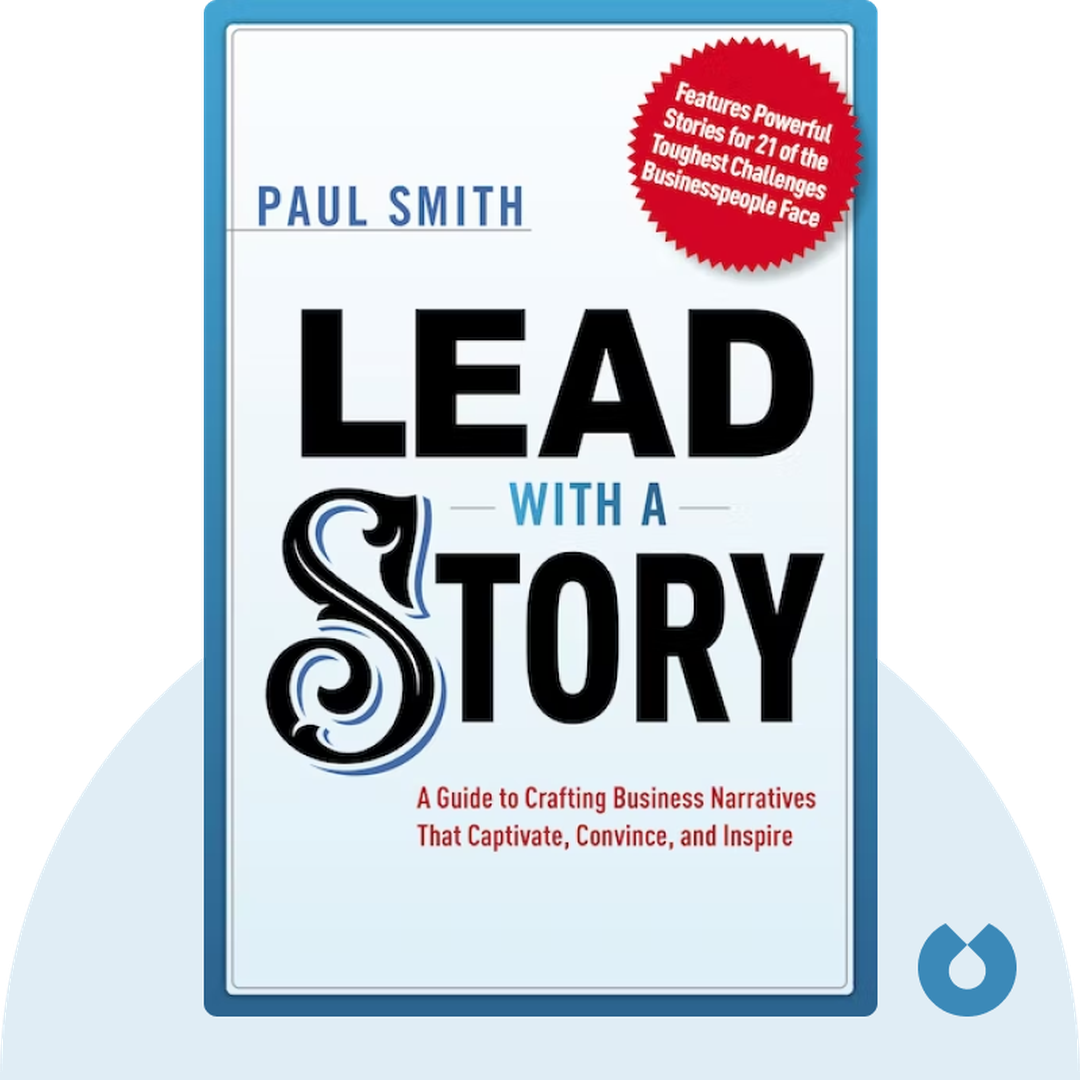
If You're Curious About These Questions...
You should listen to this audiobook
- Did you know that a well-crafted story can be far more effective at changing human behavior than even the most compelling data or logic?
- Have you ever wondered why some leaders can effortlessly captivate a room while others struggle to keep their team from dozing off during presentations?
- What’s the secret storytelling framework used by the world’s most successful companies to turn vision into reality and motivate people to do their best work?
Listen to Lead with a Story — Free Audiobook
Loading player...
Key Takeaways from Lead with a Story
- Discover why storytelling is a powerful business tool that makes information 20 times more memorable and appeals to visual, auditory, and kinetic learners alike.
- Learn how to capture and leverage remarkable customer service experiences to set higher performance standards and inspire your workforce.
- Understand why sharing compelling narratives about real actions is far more effective at proving a company's true culture than repeating hollow corporate slogans.
- Find out how sharing specific employee success stories can clarify unwritten rules and build trust in your company's official policies.
- Master the strategy of using personal storytelling to break through shallow small talk and forge strong, genuine relationships among diverse team members.
Learning Tools
Reinforce what you learned from Lead with a Story
Mind Map
Lead with a Story
The Power of Storytelling+
Business Applications+
Story Structure (CAR)+
Essential Techniques+
Quiz — Test Your Understanding
Question 1 of 8
According to the text, why are stories considered highly effective for teaching and imparting knowledge compared to isolated facts?
Question 2 of 8
How does storytelling effectively spread a company's values and culture better than corporate slogans?
Question 3 of 8
In the context of team building, what is a primary benefit of having employees share personal stories with one another?
Question 4 of 8
Why is telling a story often more effective than relying on a company rulebook to enforce policy?
Question 5 of 8
How can leaders effectively use stories like that of marathon runner John Stephen Akhwari or the launch of Pringles?
Question 6 of 8
According to the book, what are the three essential ingredients of a successful story?
Question 7 of 8
What key lesson is demonstrated by the Texas anti-littering campaign's shift from using a weeping Native American to using local sports stars?
Question 8 of 8
Why is it highly effective to place a surprise at the end of a story?
Lead with a Story — Full Chapter Overview
- 1Recommendation
- 2Storytelling is a vital part of any successful business.
- 3Collecting customer stories can greatly improve customer service.
- 4Stories are often the best way to share a company’s values and culture.
- 5Use stories to build strong relationships among diverse team members.
- 6Rule books can’t replace a good story when creating and sharing company policy.
- 7Stories can inspire employees, even during difficult times.
- 8A successful story has just three ingredients: context, action, and a result.
- 9The most powerful stories appeal to people’s emotions.
- 10Add surprises to your story to capture interest and strengthen memory.
- 11Final summary
Lead with a Story Summary & Overview
Lead with a Story (2012) teaches you how to enhance your skills as a great leader by harnessing the power of storytelling. By taking examples from one of the most successful companies in the world, you’ll learn how to craft a great story that motivates people and modifies their behavior.
Who Should Listen to Lead with a Story?
- Leaders of all kinds
- Anyone who wants to be better at motivating others
- Anyone who finds his or her coworkers dozing off during presentations
Books Similar to Lead with a Story
Readers who enjoyed this also liked these titles.