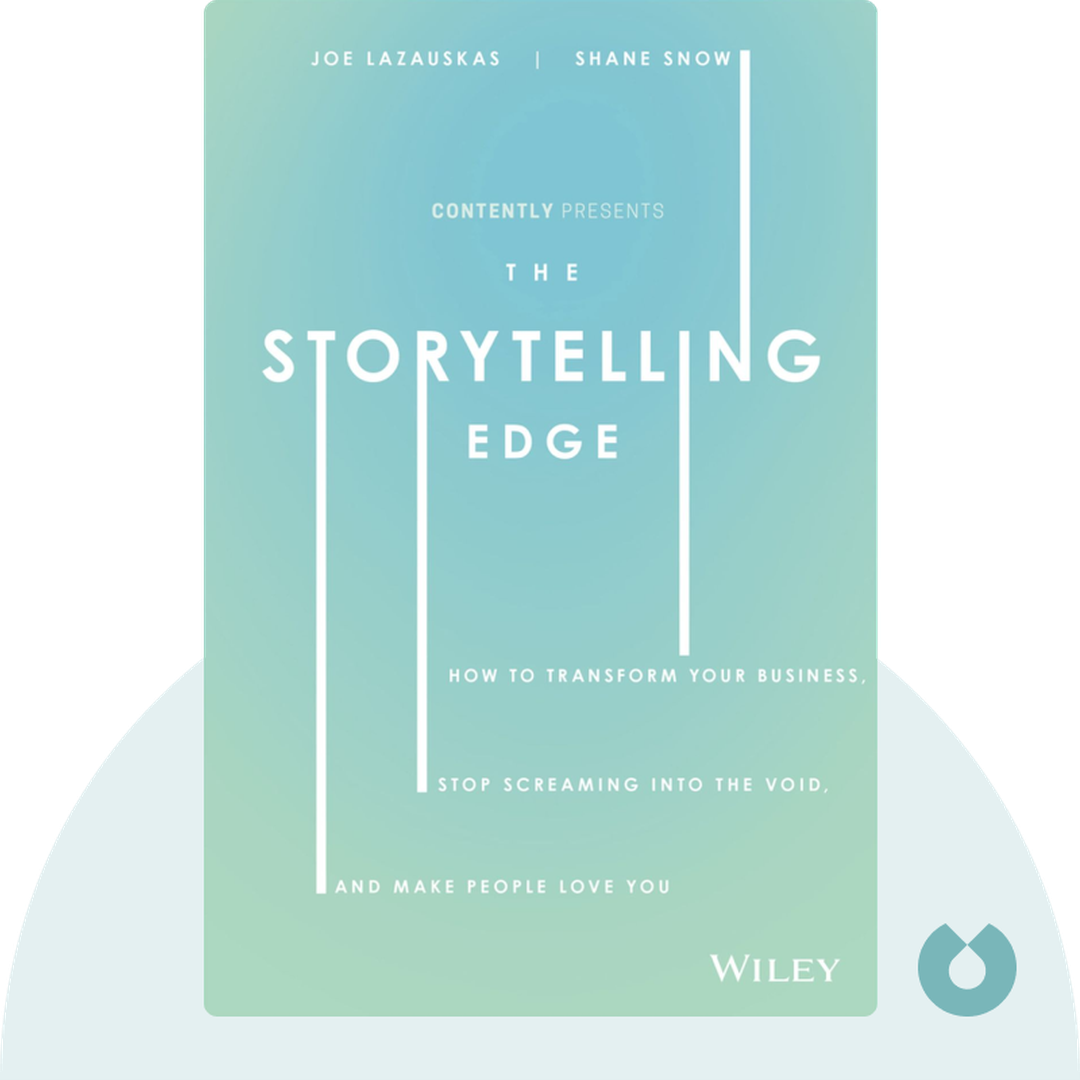
If You're Curious About These Questions...
You should listen to this audiobook
- Did you know that according to an ancient proverb, the people who tell the stories are actually the ones who run the world?
- Have you ever wondered why some brands command total loyalty while others struggle just to be noticed?
- What's the secret to crafting a narrative so persuasive that it can turn a skeptical audience into your biggest advocates?
Listen to The Storytelling Edge — Free Audiobook
Loading player...
Key Takeaways from The Storytelling Edge
- Discover how compelling storytelling drives human behavior and persuades people to take action, proving it is a learnable skill rather than an innate gift.
- Understand the neuroscience behind why stories light up multiple areas of the brain, making them far more engaging and memorable than raw statistics.
- Learn why creating relatable characters is crucial for capturing attention, allowing audiences to see their own lives reflected in your narrative.
- Master the elements of novelty and tension by constantly opening and closing the gap between 'what is' and 'what could be' to keep your audience hooked.
- Find out why legendary writers like Ernest Hemingway value fluency over complexity, using simple language to remove obstacles and speed the audience along.
Learning Tools
Reinforce what you learned from The Storytelling Edge
Mind Map
The Storytelling Edge
The Neuroscience of Storytelling+
Core Elements of a Great Story+
Fluency Over Complexity+
Empathy and Tribe Building+
Publishing and Content Strategy+
Quiz — Test Your Understanding
Question 1 of 7
Why does the human brain find stories more memorable than logical statements or statistics?
Question 2 of 7
According to the book, what three essential elements must a great story possess to keep an audience engaged?
Question 3 of 7
What did the authors discover when they analyzed the writing of highly regarded storytellers like Ernest Hemingway and J.K. Rowling?
Question 4 of 7
What is the evolutionary purpose of the neurochemical oxytocin that is released when we engage with a compelling story?
Question 5 of 7
What lesson does the book draw from the 16th-century Italian writers of 'avvisi' (gossip rags) and the modern media company Upworthy?
Question 6 of 7
How did reporter Nellie Bly help Joseph Pulitzer differentiate his newspaper from competitors who relied on sensational clickbait headlines?
Question 7 of 7
Referencing the Greek philosopher Aristotle, how does the book define the concept of 'tension' in a story?
The Storytelling Edge — Full Chapter Overview
- 1Recommendation
- 2Our brains are wired to find stories more engaging and more memorable than simple statements.
- 3Great narratives are relatable and demand both novelty and tension.
- 4Great storytellers prize fluency over complexity.
- 5Stories make us care about people in our tribe.
- 6How you publish matters just as much as what you publish.
- 7When content is ubiquitous, it pays to go deep.
The Storytelling Edge Summary & Overview
The Storytelling Edge (2018) is a study of communication by two content strategists who’ve taken an old Native American proverb to heart – “those who tell the stories run the world.” As Shane Snow and Joe Lazauskas assert, it doesn’t much matter if you’re an individual, a business, or a government: if you want to thrive in today’s world, you need to be able to tell your story as convincingly and fluently as possible.
Who Should Listen to The Storytelling Edge?
- Marketing and advertising pros
- Brand managers and copywriters
- Entrepreneurs looking for new ideas
Books Similar to The Storytelling Edge
Readers who enjoyed this also liked these titles.