If You're Curious About These Questions...
You should listen to this audiobook
- Have you ever wondered why society is so obsessed with early achievement, and what this high-pressure race is really doing to our mental health?
- What if reaching your peak later in life actually gives you a massive advantage over those who found success in their twenties?
- Are you curious about the hidden scientific benefits of being a 'late bloomer' and how your delayed start might be your greatest asset?
Listen to Late Bloomers — Cinematic Audio Edition
Loading player...
Key Takeaways from Late Bloomers
- Discover why the brain's prefrontal cortex doesn't fully mature until age 25 or later, proving that many people are biologically wired to bloom later in life.
- Understand how society's obsession with 'wunderkinds' and early achievement creates a dangerous standard that falsely equates delayed success with failure.
- Learn how the intense pressure to pursue extrinsic goals, like perfect test scores and wealth, is driving a youth mental health crisis at the expense of intrinsic happiness.
- Explore the inspiring journey of author Rich Karlgaard, who transformed from an aimless twenty-something into the publisher of Forbes, proving that early struggles do not dictate your future.
- Find out how to embrace your unique developmental pace and unlock the hidden strengths you gain when you take your time to achieve your goals.
Learning Tools
Reinforce what you learned from Late Bloomers
Mind Map
Late Bloomers
The Myth of Early Achievement+
The Science of Maturation+
Redefining Career Pathways+
Actionable Strategies to Bloom+
Quiz — Test Your Understanding
Question 1 of 8
According to the text, what dangerous message does the societal obsession with the 'wunderkind' ideal promote?
Question 2 of 8
Researcher Jean M. Twenge attributes the decline in young people's mental health to a societal shift toward which type of goals?
Question 3 of 8
Why does the author argue that the drive for early cognitive and professional success in young adults doesn't make neurological sense?
Question 4 of 8
According to psychology professor Jeffrey Arnett, what is a primary benefit of prolonging 'emerging adulthood' through activities like gap years or volunteer missions?
Question 5 of 8
What did scientists Laura Germine and Joshua Hartshorne discover about human cognitive abilities as we age?
Question 6 of 8
To combat the wasteful 'up-and-out' practice in many companies, what alternative career model does the author propose?
Question 7 of 8
In the context of the book, what does it mean for a late bloomer to 're-pot' themselves?
Question 8 of 8
How does the author view the concept of 'quitting' for late bloomers?
Late Bloomers — Full Chapter Overview
- 1Recommendation
- 2How the Rise of the Wunderkind Set a Standard of Early Achievement for Millennials
- 3How the Pressure to Achieve Early Is Affecting Young People’s Mental Health
- 4Young People Develop at Different Speeds, Depending on Brain Maturity
- 5Emerging Adulthood Is a Crucial Time for Self-Actualization
- 6We Build New Skills and Discover New Strengths as We Age
- 7We Need a New Career Path That Supports Continual Growth
- 8Stepping Away from Cultural Influences Can Help Us Create Our Own Paths
- 9Late Bloomers Must Reinvent Themselves to Reach Their Full Potential
- 10Final summary
Late Bloomers Summary & Overview
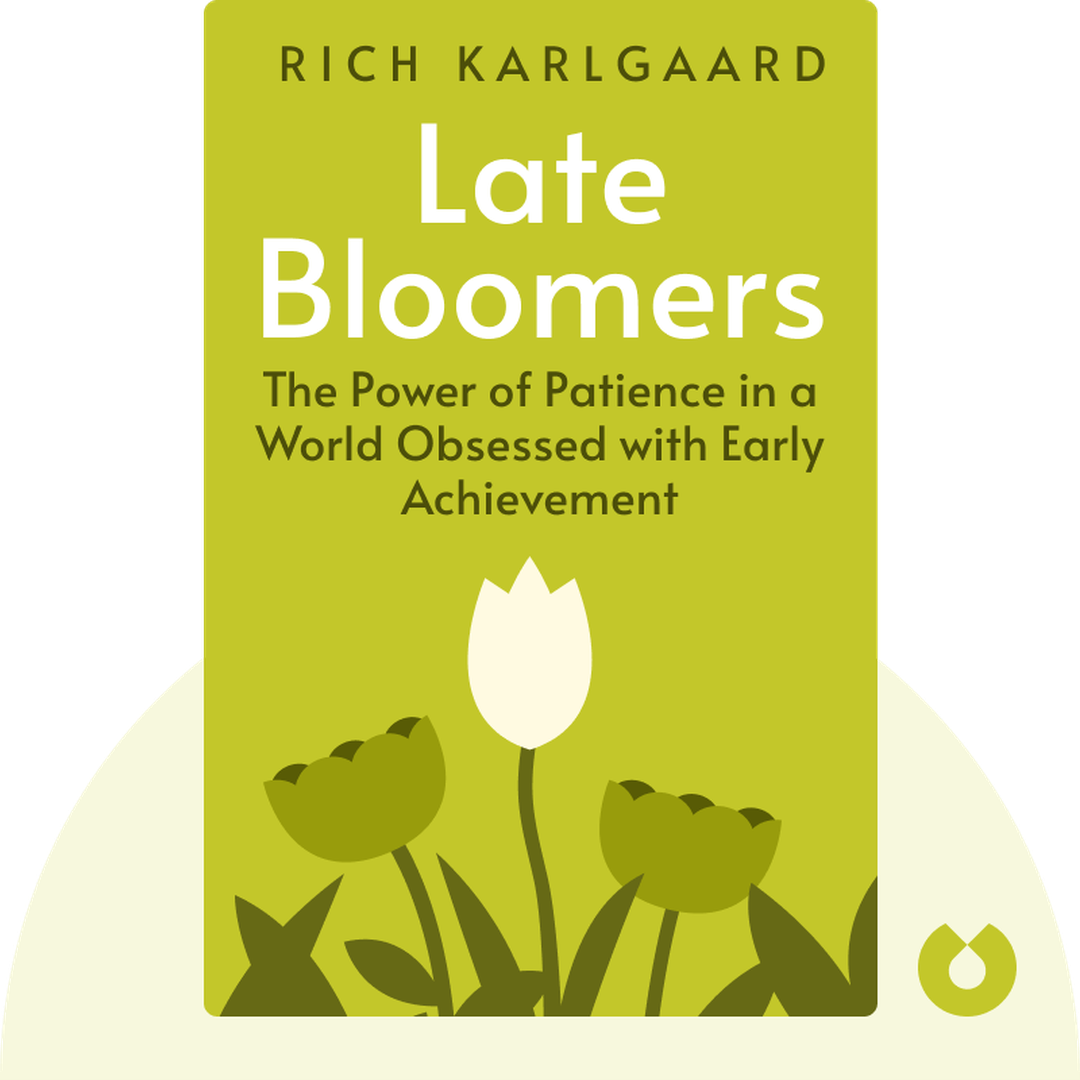
Late Bloomers (2019) explores why modern society is obsessed with early achievement. It explains the damaging effects a super-charged education can have on young people’s mental health, as well as how our family, our peers, and the media influence the life paths we take. Drawing on his own experiences, author Rich Karlgaard suggests that blooming later in life is not something to be ashamed of, but something to be celebrated instead.
Who Should Listen to Late Bloomers?
- Anyone feeling stuck in their life and career
- Parents concerned about the pace of their children’s development
- Graduates unsure about what to do next
Books Similar to Late Bloomers
Readers who enjoyed this also liked these titles.