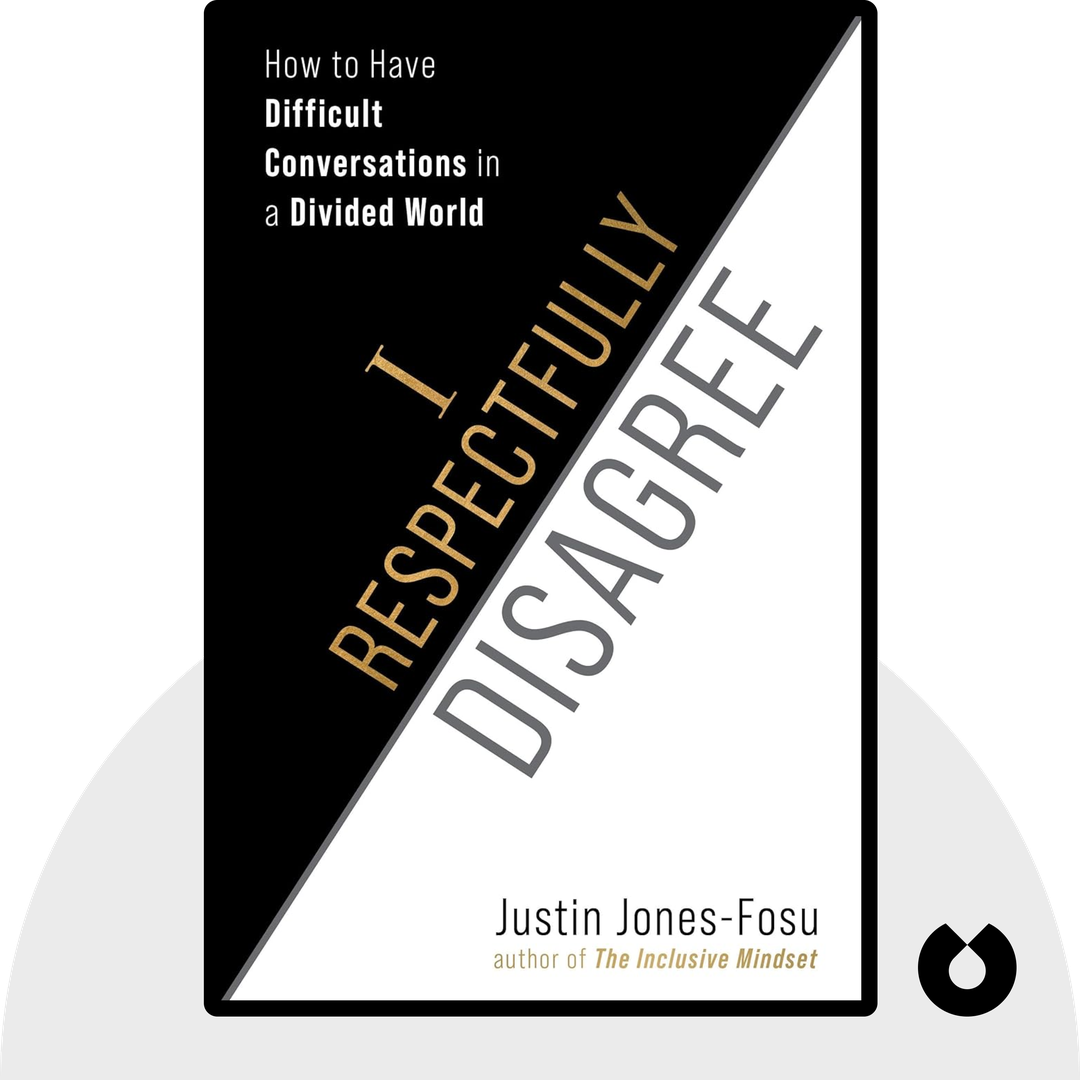
I Respectfully Disagree
Start ListeningDownload Try free on iPhoneScan to start in 5 seconds
Categories:
If You're Curious About These Questions...
You should listen to this audiobook
- Have you ever wondered why our brains are wired for 'us versus them' thinking, and how you can break that cycle to find common ground with almost anyone?
- What if you could navigate your next heated family gathering or workplace debate with total confidence and grace, even when opinions clash?
- Are you curious about the specific mindset shift that allows you to respectfully disagree without damaging your most important relationships?
Listen to I Respectfully Disagree — Free Audiobook
Loading player...
Key Takeaways from I Respectfully Disagree
- Discover why "agreeing to disagree" is an ineffective cop-out, and learn how respectful disagreement can actually strengthen relationships instead of damaging them.
- Understand the power of "golden respect" by treating respect as a freely given gift rather than a reward that opposing parties must earn.
- Identify your "Life Disagreement Markers" (LDMs) to uncover how past experiences unconsciously dictate your current defensive responses to conflict.
- Overcome "naïve realism"—the toxic assumption that your worldview is objective reality while differing opinions are inherently flawed—to foster genuine empathy.
- Master the technique of cognitive reframing to consciously challenge your own biases and approach differing perspectives with open-minded curiosity instead of quick judgment.
Learning Tools
Reinforce what you learned from I Respectfully Disagree
Mind Map
I Respectfully Disagree
Core Philosophy+
Breaking Down Barriers+
The Five Pillars+
Quiz — Test Your Understanding
Question 1 of 7
According to the author, why is the common phrase 'Let's agree to disagree' problematic?
Question 2 of 7
How does the author define the concept of 'golden respect'?
Question 3 of 7
What are 'life disagreement markers' (LDMs) as described in the book?
Question 4 of 7
Which of the following best describes the psychological trap of 'naïve realism'?
Question 5 of 7
In the context of the first pillar ('challenge your perspective'), what is the purpose of cognitive reframing?
Question 6 of 7
What mindset shift is essential for the fourth pillar, 'seek the gray'?
Question 7 of 7
Why does the author use the analogy of a drum circle when discussing the fifth pillar ('agree to respect')?
I Respectfully Disagree — Full Chapter Overview
- 1Recommendation
- 2The five foundations of respectful disagreement
- 3Building bridges and breaking down barriers
- 4Questioning your perspective with curiosity
- 5Embracing the complexity of the world
- 6Final summary
I Respectfully Disagree Summary & Overview
I Respectfully Disagree (2024) offers practical strategies for seeing beyond black-and-white thinking, embracing empathy, and fostering respectful dialogue. With engaging insights and real-life examples, it provides the tools you need to navigate conflicts with understanding and grace.
Who Should Listen to I Respectfully Disagree?
- Anyone who’s suffered silently through a family reunion
- People who struggle with differing opinions
- Diplomatic individuals eager to build bridges
Books Similar to I Respectfully Disagree
Readers who enjoyed this also liked these titles.