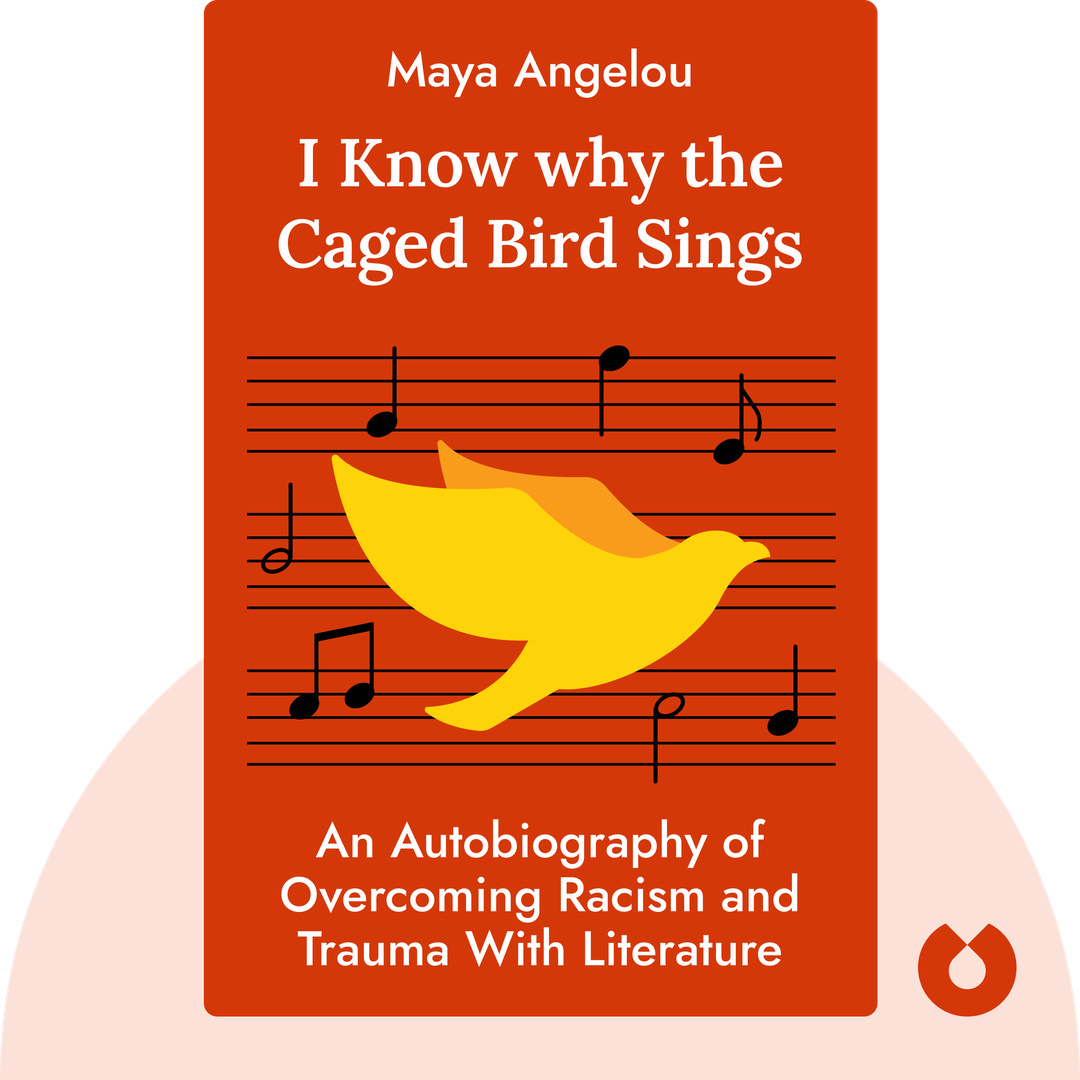
I Know why the Caged Bird Sings
Start ListeningDownload Try free on iPhoneScan to start in 5 seconds
Categories:
If You're Curious About These Questions...
You should listen to this audiobook
- Have you ever wondered how a young girl finds the courage to reclaim her voice after years of traumatic silence and displacement?
- Did you know that one of the most influential memoirs in history explores the profound secret to finding hope and dignity in the face of systemic oppression?
- Are you curious about how a childhood shaped by the harsh realities of the Depression-era South could produce one of the most resilient voices in American literature?
Listen to I Know why the Caged Bird Sings — Free Audiobook
Loading player...
Key Takeaways from I Know why the Caged Bird Sings
- Discover how cultivating inner strength and self-love can help you overcome profound childhood trauma and find your personal freedom.
- Understand the harsh realities of segregation in the 1930s American South and how marginalized communities navigated systemic oppression through resilience.
- Learn why establishing an unshakable support system, much like Maya's bond with her brother Bailey, is absolutely essential for surviving loneliness and emotional pain.
- Explore how Maya's grandmother built a vital community hub and modeled quiet dignity and a steadfast work ethic in the face of constant racial hostility.
- Find out how shifting environments and reconnecting with estranged family can dramatically transform a child's self-image from feeling unwanted to experiencing profound belonging.
Learning Tools
Reinforce what you learned from I Know why the Caged Bird Sings
Mind Map
I Know why the Caged Bird Sings
Core Themes+
Stamps, Arkansas (Early Childhood)+
St. Louis, Missouri (Trauma & Silence)+
Mrs. Flowers (Healing & Literature)+
San Francisco (Coming of Age)+
Quiz — Test Your Understanding
Question 1 of 7
The title of Maya Angelou’s memoir is derived from a poem by Paul Laurence Dunbar. In the context of Angelou's early life, what does the 'cage' primarily represent?
Question 2 of 7
During her early childhood in Stamps, Arkansas, Maya struggles with feelings of being an 'unlovable outsider.' Who provides her with the 'unshakable support' she needs to survive this loneliness?
Question 3 of 7
After the tragic events in St. Louis involving her mother's boyfriend, Mr. Freeman, why does eight-year-old Maya choose to stop speaking entirely?
Question 4 of 7
How does Mrs. Bertha Flowers help Maya overcome her muteness and trauma after she returns to Stamps?
Question 5 of 7
What primary event or realization prompts Momma to send Bailey and Maya away from Stamps, Arkansas, to live in California?
Question 6 of 7
In San Francisco, how does fifteen-year-old Maya respond to the unwritten racist rule preventing Black people from working as streetcar conductors?
Question 7 of 7
Near the end of her memoir, how does Maya Angelou explain the emergence of the adult Black female as a 'formidable character'?
I Know why the Caged Bird Sings — Full Chapter Overview
- 1Recommendation
- 2Chapter 1: Life in Stamps, Arkansas
- 3Chapter 2: Life in St. Louis, Missouri
- 4Chapter 3: Meeting Mrs. Flowers
- 5Chapter 4: Life in California
- 6Final summary
I Know why the Caged Bird Sings Summary & Overview
I Know Why the Caged Bird Sings (1969) is the first part of a critically acclaimed seven-volume autobiography by the American writer and poet Maya Angelou. A vivid account of growing up in America during the Depression, it documents Maya’s life between the ages of three and sixteen. Hailed for its unflinching portrayal of displacement, discrimination, and trauma, it is also a life-affirming study of how hope can prevail amidst death and despair.
Who Should Listen to I Know why the Caged Bird Sings?
- History buffs fascinated by the United States
- Fans of true-life stories and larger-than-life memoirs
- Anyone who loves classic literature
Books Similar to I Know why the Caged Bird Sings
Readers who enjoyed this also liked these titles.