If You're Curious About These Questions...
You should listen to this audiobook
- What’s the secret to maintaining your humanity and hope after spending thirty years on death row for a crime you didn't commit?
- Did you know how one man turned a 5-by-7-foot cell into a place of transformation, and what can his story teach us about the power of the human spirit?
- Have you ever wondered how an innocent person navigates a justice system that seems determined to fail them, and what it truly takes to win back your freedom?
Listen to The Sun Does Shine — Free Audiobook
Loading player...
Key Takeaways from The Sun Does Shine
- Discover how to cultivate mental freedom and resilience in the darkest of circumstances by using the power of your imagination to escape physical confines.
- Learn why choosing forgiveness and compassion over resentment is a vital tool for survival that allows you to maintain hope when facing appalling injustice.
- Understand how systemic racism and blatant police prejudice can manufacture a wrongful conviction, even when an innocent person has a rock-solid alibi.
- Recognize the devastating role that money plays in the justice system, where the inability to afford competent experts and a dedicated lawyer can literally cost a life.
- Find out how extreme, dehumanizing environments like death row can actually strip away ideological differences and foster profound empathy among fellow inmates.
Learning Tools
Reinforce what you learned from The Sun Does Shine
Mind Map
The Sun Does Shine
Systemic Racism & Injustice+
Enduring Death Row+
The Legal Battle for Justice+
Life After Exoneration+
Quiz — Test Your Understanding
Question 1 of 11
Why was Hinton initially unafraid when the police arrived to arrest him while he was mowing his mother's lawn?
Question 2 of 11
What was a major factor that severely undermined Hinton's defense during his initial trial?
Question 3 of 11
How did Hinton's relationship with fellow death row inmate Henry Hays demonstrate a key theme of the book?
Question 4 of 11
How did Hinton primarily maintain his sanity and find a sense of freedom while locked in his 7-by-5-foot cell?
Question 5 of 11
What initiative did Hinton start on death row to help his fellow inmates experience a mental escape?
Question 6 of 11
Who was the tenacious lawyer that finally helped secure Hinton's release after taking his case in 1998?
Question 7 of 11
How did the state of Alabama react to the new, credible ballistics evidence presented by Hinton's appeals lawyer?
Question 8 of 11
What breakthrough eventually forced the state of Alabama to reconsider Hinton's case?
Question 9 of 11
What unusual behavior did Hinton exhibit on his first night home after being released from prison?
Question 10 of 11
Why does Hinton now intentionally walk in front of security cameras and collect receipts everywhere he goes?
Question 11 of 11
Despite losing 30 years of his life to a profound miscarriage of justice, what is Hinton's ultimate stance toward those who put him on death row?
The Sun Does Shine — Full Chapter Overview
- 1Recommendation
- 2Hinton was raised in Alabama amid deep, pervasive racial discrimination and tension everywhere.
- 3Hinton was seized for crimes he never committed and saw blatant police racism.
- 4Hinton, penniless, was failed by his attorney and ultimately found guilty on two counts of murder in court.
- 5Existence on death row lacks any dignity and basic freedom.
- 6On death row, execution remained a constant and terrifying threat.
- 7Hinton realized that, despite many differences, everyone there on death row shared more in common than not.
- 8Through imagination and reading, Hinton discovered a kind of freedom on death row.
- 9A relentless attorney devoted to justice brought Hinton renewed hope.
- 10Eventually, a Supreme Court decision delivered Hinton the breakthrough he had long been awaiting.
- 11Hinton stepped free into the Alabama sunshine after the state dismissed his charges.
- 12Back in the outside world, Hinton has discovered uneasy freedom and a deep commitment to forgiveness.
The Sun Does Shine Summary & Overview
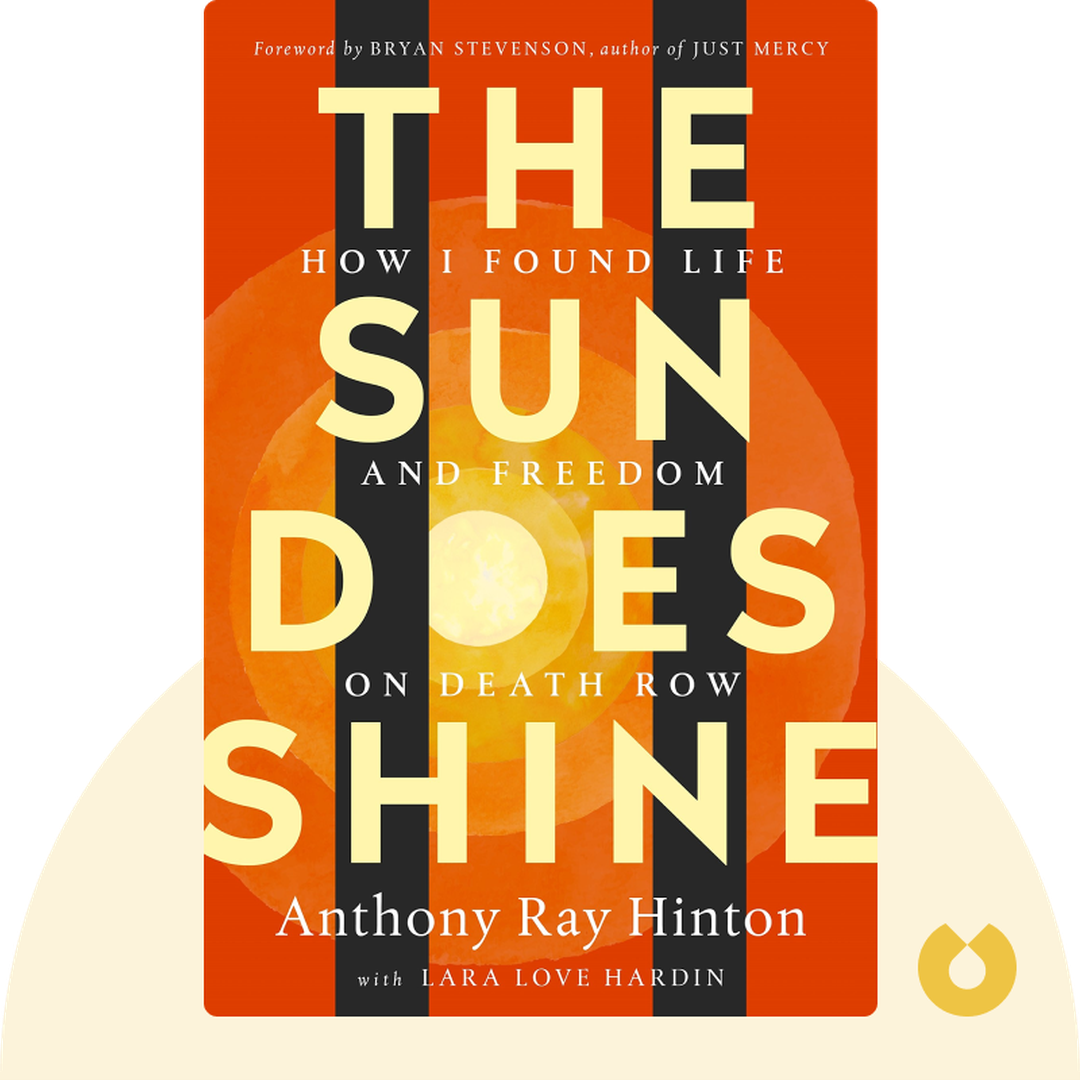
The Sun Does Shine (2018) is the shocking, tragic and, ultimately, inspiring tale of an innocent man’s fight for freedom. Found guilty of two murders he didn’t commit, Anthony Ray Hinton spent almost thirty years on death row. Not only did he never give up hope; he found a way to live, to find friendship and to gain freedom.
Who Should Listen to The Sun Does Shine?
- Anyone who cares about justice
- Readers interested in racial inequality
- People who love an inspiring story of the human spirit
Books Similar to The Sun Does Shine
Readers who enjoyed this also liked these titles.