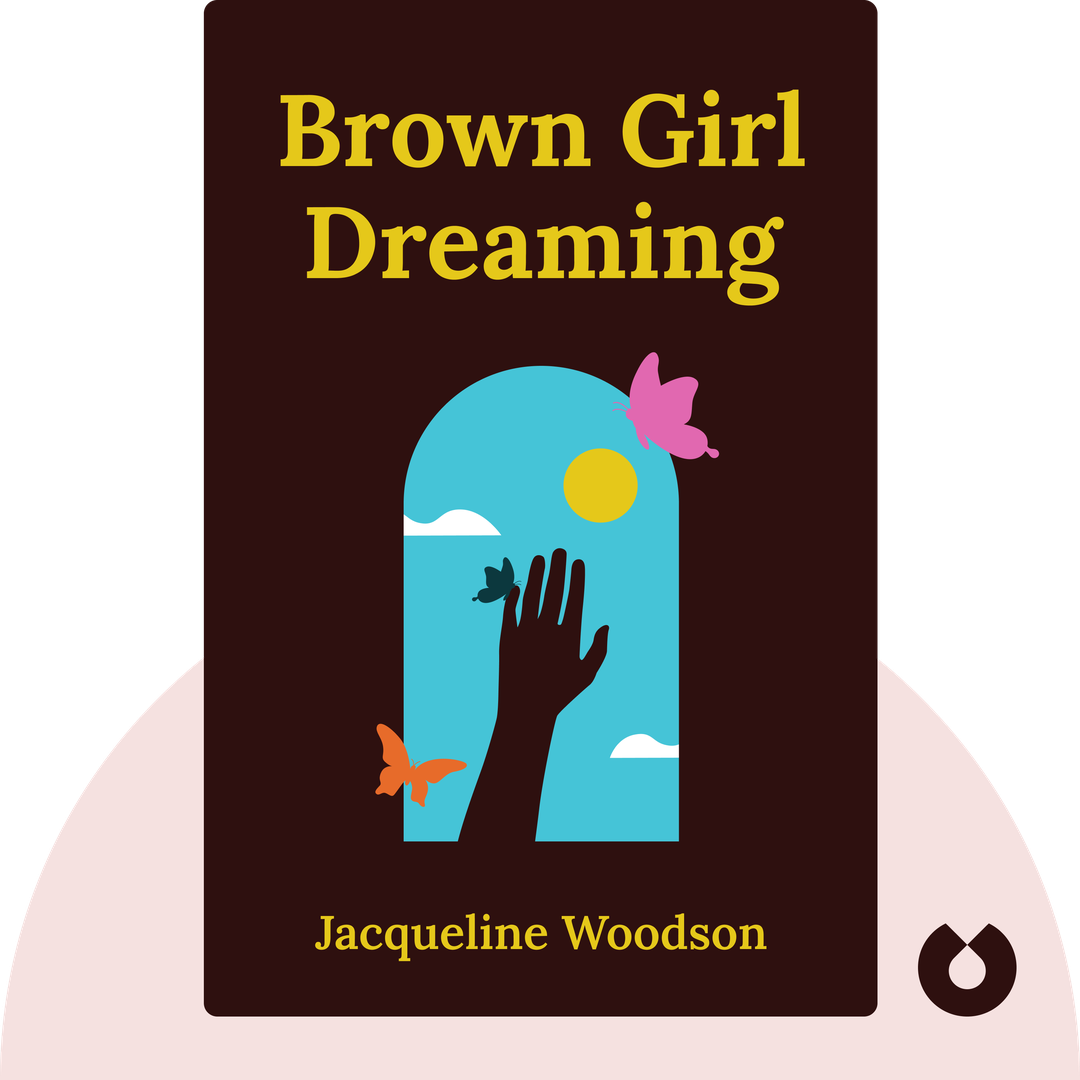
If You're Curious About These Questions...
You should listen to this audiobook
- Have you ever wondered what it felt like to grow up with one foot in the Jim Crow South and the other in the urban North during the peak of the Civil Rights movement?
- Are you curious about how a child’s simple dreams can transform into a powerful sense of identity and belonging amidst a country in turmoil?
- What if you could see the monumental shifts of the 1960s and 70s through the eyes of a young girl searching for her own place in history?
Listen to Brown Girl Dreaming — Cinematic Audio Edition
Loading player...
Key Takeaways from Brown Girl Dreaming
- Discover how an intentional name choice and a rich, complex family lineage can set the stage for a life defined by adaptability and resilience.
- Learn how deep family roots and strict parental guidance can shield children from the harsh realities of racial prejudice while instilling a profound sense of pride.
- Understand the challenges of transitioning from the segregated South to the bustling streets of New York City, and how holding onto family heritage helps bridge two vastly different worlds.
- Find out how a simple composition notebook became a sanctuary for a young girl, illustrating the power of writing to process change and forge a unique personal voice.
- Explore the profound journey of navigating intersecting identities, from growing up Black during the Civil Rights era to practicing as a Jehovah's Witness in a complex urban landscape.
Learning Tools
Reinforce what you learned from Brown Girl Dreaming
Mind Map
Brown Girl Dreaming
Birth & Heritage (Ohio)+
Childhood in the Segregated South+
Transition to New York City+
Cultural Diversity & Growth+
Coming of Age & Self-Discovery+
Quiz — Test Your Understanding
Question 1 of 6
Why did Jacqueline Woodson's mother insist on naming her 'Jacqueline' rather than her father's choice of 'Jack'?
Question 2 of 6
During her childhood in South Carolina, why did Woodson's mother strongly emphasize proper speech and conduct for her children?
Question 3 of 6
What becomes a crucial sanctuary and tool for Woodson as she navigates the alienation and challenges of moving to New York City?
Question 4 of 6
How does Woodson's friendship with her best friend, Maria, impact her development in New York?
Question 5 of 6
What symbolic action does Woodson's grandmother take in Brooklyn to represent the blending of their southern roots with their new northern environment?
Question 6 of 6
What is the powerful realization Woodson reaches at the culmination of her coming-of-age story?
Brown Girl Dreaming — Full Chapter Overview
- 1Recommendation
- 2Born in Columbus: A legacy of resilience and hopes for the future
- 3Childhood under segregation: Lessons from South Carolina
- 4Moving to New York: Embracing identity in a new landscape
- 5Cultural diversity and family ties: Growing up in New York City
- 6Coming of age: Reflections on loss, heritage, and self-discovery
- 7Final summary
Brown Girl Dreaming Summary & Overview
Brown Girl Dreaming (2014) is a story of childhood as an African American in the 1960s and 1970s. It explores themes of family, identity, and belonging, set against the backdrop of the Civil Rights movement. The narrative weaves a rich tapestry of personal and historical moments, highlighting the struggles and joys of growing up in a time of social change.
Who Should Listen to Brown Girl Dreaming?
- Students studying African American literature and history
- Young adults exploring their racial and cultural identity
- Anyone interested in memoirs and personal narratives
Books Similar to Brown Girl Dreaming
Readers who enjoyed this also liked these titles.