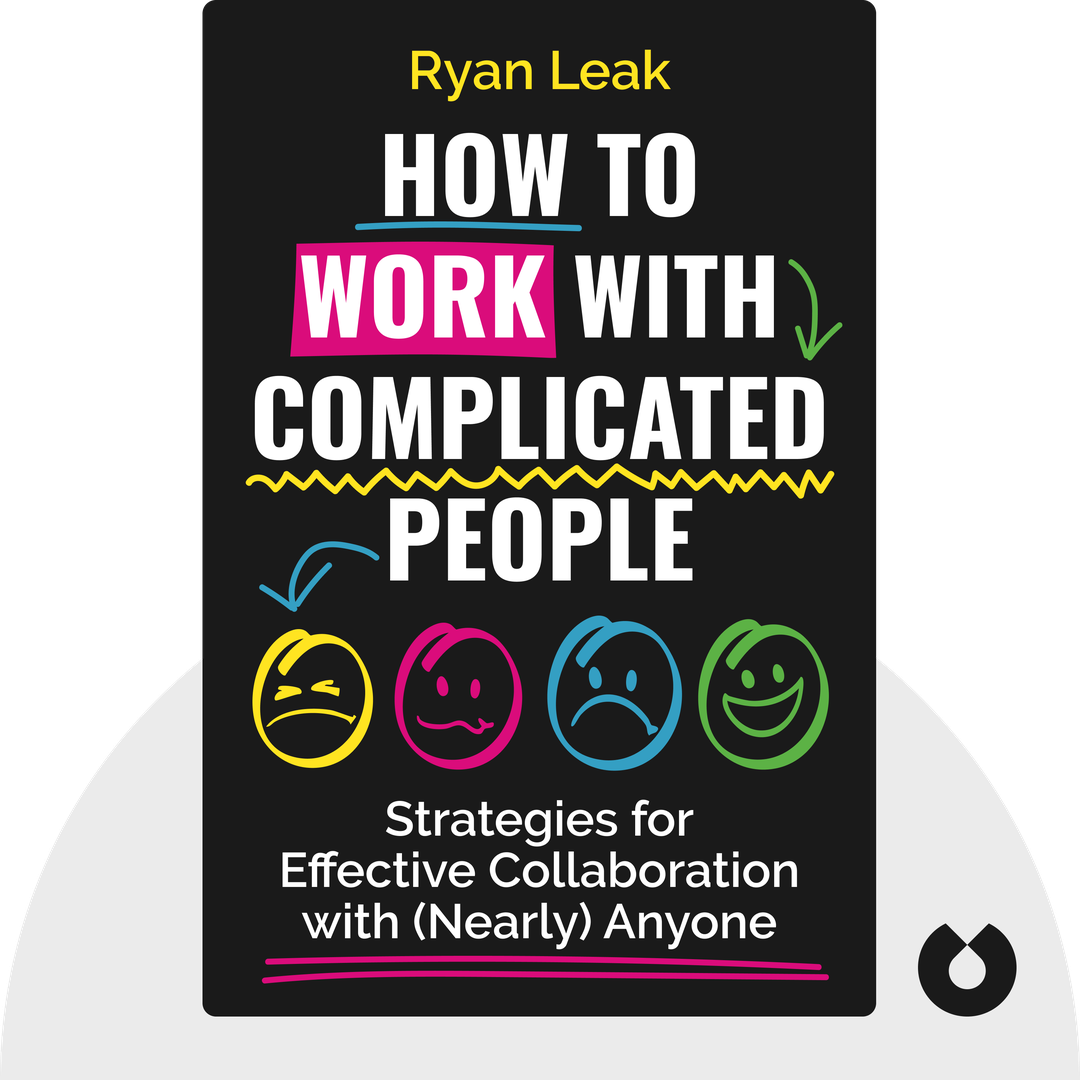
How to Work with Complicated People
Start ListeningDownload Try free on iPhoneScan to start in 5 seconds
Categories:
If You're Curious About These Questions...
You should listen to this audiobook
- What if the most difficult person in your office wasn’t actually an obstacle, but a hidden catalyst for your own professional growth?
- Have you ever wondered why traditional communication often fails with high-conflict personalities, and what specific shift can turn those interactions around?
- What’s the secret to collaborating effectively with even the most 'impossible' people while actually improving your own leadership skills?
Listen to How to Work with Complicated People — Cinematic Audio Edition
Loading player...
Key Takeaways from How to Work with Complicated People
- Discover why accepting your own complexity and realizing that you are someone else's 'complicated person' is the crucial first step to building empathy at work.
- Learn how to shift your internal narrative to view difficult colleagues through a more generous lens. Doing so can transform frustrating flaws into valuable strengths, like seeing stubbornness as fierce passion.
- Master the four essential habits of self-awareness, ownership, curiosity, and connection to proactively improve challenging dynamics. Practicing these consistently will turn emotional landmines into productive collaborations.
- Understand why you actually need complicated people on your team instead of avoiding them. The natural tension and diverse perspectives they bring are often the exact ingredients needed to fuel real innovation.
- Find out how to strategically tailor your communication style based on hierarchical direction. You will learn specific approaches for speaking upward to leadership, across to peers, and downward to your team as a 'Chief Repeating Officer'.
Learning Tools
Reinforce what you learned from How to Work with Complicated People
Mind Map
How to Work with Complicated People
The Core Premise+
The ROI of Collaboration+
Communication Strategies+
Controlling the Controllables+
When All Else Fails+
Quiz — Test Your Understanding
Question 1 of 7
What is the 'hard truth' the author reveals about complicated people at work?
Question 2 of 7
According to the book, what unexpected benefit can come from working with complicated people?
Question 3 of 7
What are the four key habits needed to positively change your mindset when dealing with difficult colleagues?
Question 4 of 7
How does the author suggest leaders should approach communicating downward to their team?
Question 5 of 7
What 'powerful mental unlock' does the author recommend to reduce frustration with coworkers?
Question 6 of 7
How does the author frame the concept of forgiveness in the workplace?
Question 7 of 7
What is the primary purpose of setting boundaries with impossible collaborators?
How to Work with Complicated People — Full Chapter Overview
- 1Recommendation
- 2A difficult truth
- 3The return on your investment
- 4Communicating with complicated people
- 5Managing what you can control
- 6When everything else fails...
- 7Final summary
How to Work with Complicated People Summary & Overview
How to Work with Complicated People (2025) provides practical strategies for effectively collaborating with almost any difficult individual, by emphasizing empathy, clear communication, and personal accountability. Through actionable advice, it equips readers to transform relational conflicts into opportunities for personal and professional growth.
Who Should Listen to How to Work with Complicated People?
- Anyone struggling with an interpersonal conflict
- Team leaders and managers
- Human resources workers
Books Similar to How to Work with Complicated People
Readers who enjoyed this also liked these titles.