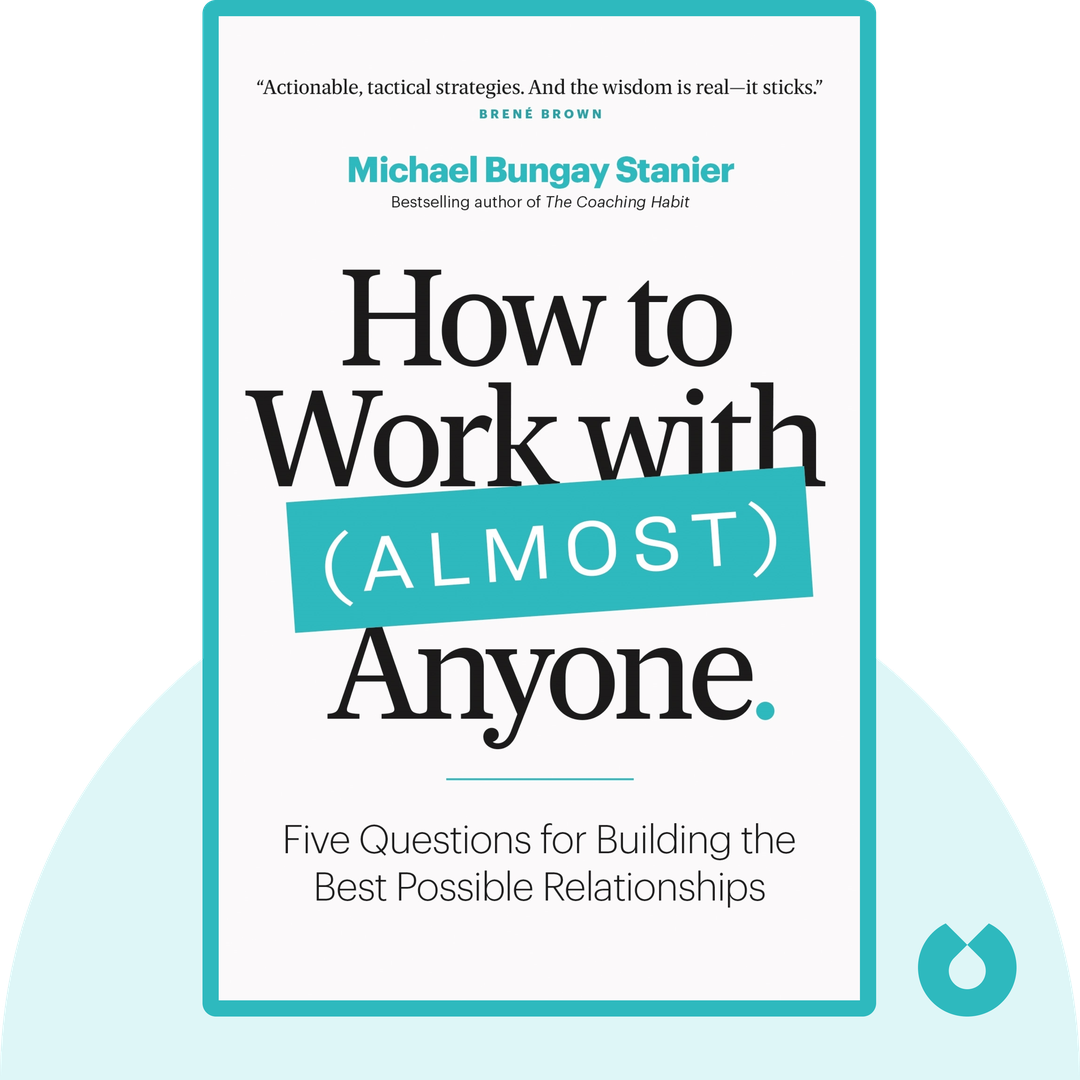
How to Work with (Almost) Anyone
Start ListeningDownload Try free on iPhoneScan to start in 5 seconds
Categories:
If You're Curious About These Questions...
You should listen to this audiobook
- Have you ever wondered why some work relationships feel effortless while others are a constant struggle—and how you can fix the difficult ones before they even start?
- What if you could transform any professional dynamic by mastering the 'Keystone Conversation' and asking five specific questions?
- Are you curious about the secret to building resilient, high-trust partnerships that don't just survive workplace stress, but actually thrive under it?
Listen to How to Work with (Almost) Anyone — Free Audiobook
Loading player...
Key Takeaways from How to Work with (Almost) Anyone
- Discover how to initiate a 'keystone conversation' to establish a strong, stable foundation for your Best Possible Relationship with any colleague.
- Learn the five essential questions—covering strengths, work habits, past experiences, and repair strategies—that unlock powerful workplace collaboration.
- Understand how to safely invite coworkers into productive dialogues by communicating clear intent instead of using ominous phrases like 'we need to talk.'
- Find out how to navigate uncomfortable workplace topics effectively by maintaining curiosity and using open-ended questions to explore past disappointments.
- Master the ongoing maintenance of professional relationships through a practical blueprint of nurturing curiosity, embracing vulnerability, and exhibiting everyday kindness.
Learning Tools
Reinforce what you learned from How to Work with (Almost) Anyone
Mind Map
How to Work with (Almost) Anyone
The Keystone Conversation+
Structuring the Dialogue+
Maintaining the Relationship+
Mapping Relational Terrain+
Handling Conflict & Endings+
Quiz — Test Your Understanding
Question 1 of 6
In a 'keystone conversation,' what is the primary purpose of the 'Amplify Question'?
Question 2 of 6
According to the text, what is the recommended approach for initiating a keystone conversation with a colleague?
Question 3 of 6
Which of the following is one of the three internal compass principles for maintaining a Best Possible Relationship (BPR), alongside nurturing curiosity and embracing vulnerability?
Question 4 of 6
When mapping out an uncharted relational landscape, how does the book define the 'judgments' bucket?
Question 5 of 6
What does the concept of a 'controlled burn' refer to when navigating workplace relationships?
Question 6 of 6
After sorting your information into facts, judgments, feelings, and wants, what is the second key question you should ask to navigate your relational terrain?
How to Work with (Almost) Anyone — Full Chapter Overview
- 1Recommendation
- 2Building Stronger Workplace Relationships
- 3Keystone Conversations
- 4Sustaining Your Best Possible Relationship
- 5Mapping Facts, Judgments, Feelings, and Wants
- 6Navigating Adjustments, Repairs, and Fresh Starts
- 7Final summary
How to Work with (Almost) Anyone Summary & Overview
How to Work with (Almost) Anyone (2023) is a compelling guide to mastering workplace dynamics and nurturing professional relationships. It shows how you can enable more effective collaboration by facilitating open dialogue, nurturing curiosity, and fostering trust.
Who Should Listen to How to Work with (Almost) Anyone?
- Leaders who manage projects or coordinate teams
- Employees who want to boost their workplace relationships
- Young adults learning to interact with varying personalities in academic and professional environments
Books Similar to How to Work with (Almost) Anyone
Readers who enjoyed this also liked these titles.