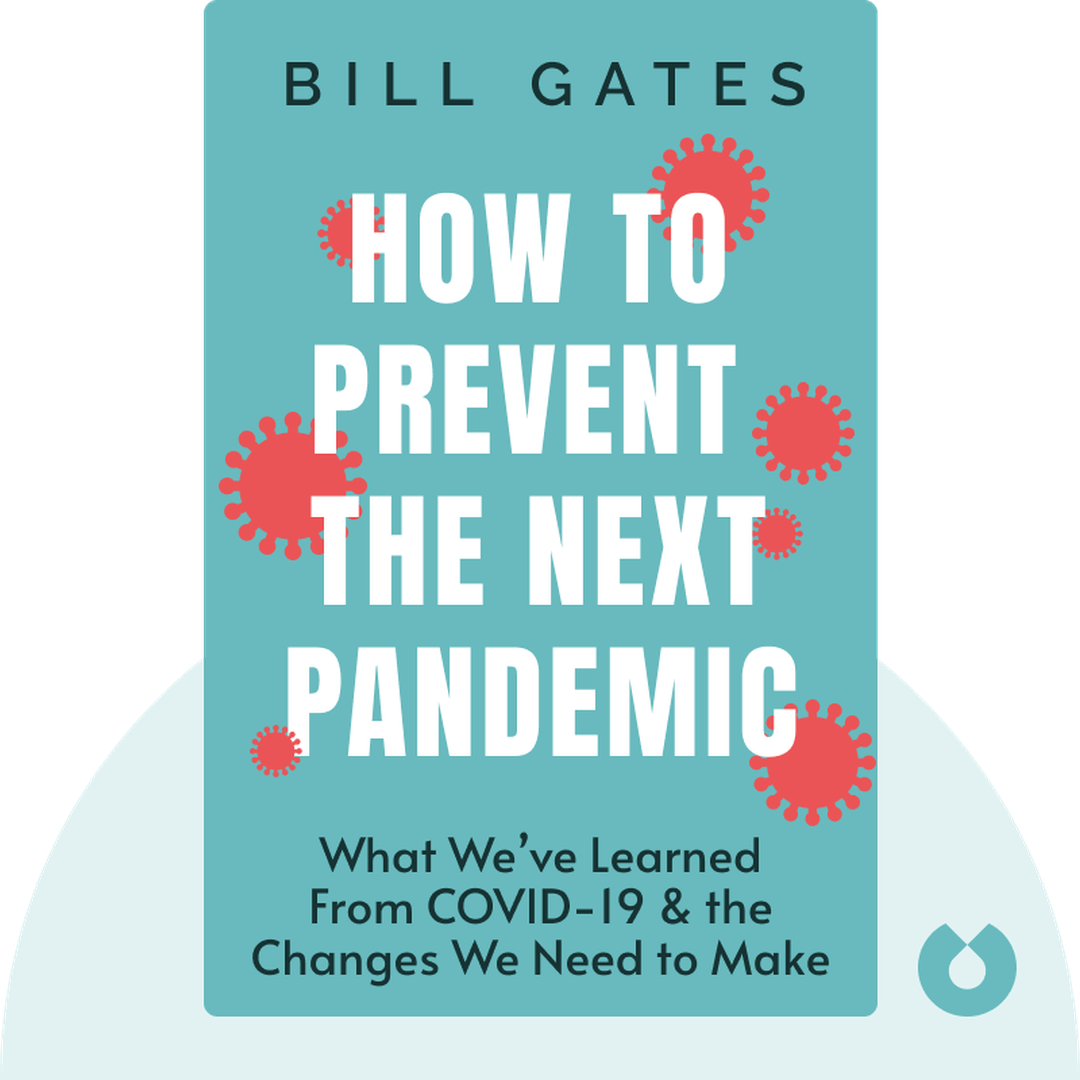
How to Prevent the Next Pandemic
Start ListeningDownload Try free on iPhoneScan to start in 5 seconds
Categories:
If You're Curious About These Questions...
You should listen to this audiobook
- What if a specialized global team of 3,000 experts was all it took to stop the next outbreak from ever becoming a pandemic?
- Have you ever wondered why we don't run regular 'pandemic fire drills' to ensure the world is ready for the next health crisis?
- Are you curious about the specific technological breakthroughs that could detect and stop a new virus in just 100 days?
Listen to How to Prevent the Next Pandemic — Free Audiobook
Loading player...
Key Takeaways from How to Prevent the Next Pandemic
- Recognize the urgent need to overcome post-pandemic complacency and establish a solid prevention plan before COVID-19 becomes old news.
- Learn how countries with prior outbreak experience successfully contained COVID-19 by immediately implementing widespread testing, contact tracing, and isolation.
- Understand why prioritizing centralized testing and data sharing is essential to avoid the chaotic, every-state-for-itself approach seen in the US.
- Discover the blueprint for GERM (Global Epidemic Response and Mobilization), a proposed international task force that would function like a global fire department for infectious diseases.
- Find out how investing in a global disease surveillance system serves as our crucial first line of defense to detect new outbreaks and shape effective public policy.
Learning Tools
Reinforce what you learned from How to Prevent the Next Pandemic
Mind Map
How to Prevent the Next Pandemic
The Urgent Need for Preparation+
Lessons from Successful Countries+
GERM: A Global Response Team+
Global Disease Surveillance+
Accelerating Medical Innovations+
Pandemic Practice Simulations+
Tackling Global Health Inequality+
Individual Responsibilities+
Quiz — Test Your Understanding
Question 1 of 8
According to the text, what were the three key actions taken by countries that successfully limited new COVID-19 cases early on?
Question 2 of 8
The author compares the financial and organizational need for a global pandemic prevention team to which existing emergency service?
Question 3 of 8
What would be the primary function of the proposed Global Epidemic Response and Mobilization (GERM) team?
Question 4 of 8
Which of the following is mentioned as an innovative method for early disease surveillance?
Question 5 of 8
What is the ideal timeline proposed in the text for getting new vaccines from the lab to the public during a future outbreak?
Question 6 of 8
Why does the text argue for conducting international pandemic simulations or 'drills'?
Question 7 of 8
According to the text, why is it in the self-interest of wealthy countries to invest in the health infrastructure of poorer countries?
Question 8 of 8
According to the final summary, what is the most important thing individuals can do to help prevent the next pandemic?
How to Prevent the Next Pandemic — Full Chapter Overview
- 1Recommendation
- 2The countries that managed Covid best already had testing and tracing plans in place.
- 3The world needs a global team dedicated to pandemic prevention.
- 4A worldwide disease surveillance system would be our first defense against an outbreak.
- 5We need a system to fund better tools, treatments, and vaccines.
- 6GERM would help organize international pandemic simulations to prepare for outbreaks.
- 7Addressing global health inequality is essential to protecting everyone from pandemics.
- 8Final summary
How to Prevent the Next Pandemic Summary & Overview
How to Prevent the Next Pandemic (2022) is a blueprint for the international pandemic prevention plan the world sorely needs. Learning from the mistakes of the Covid 19 pandemic, Gates lays down a series of steps governments need to take if we’re to protect ourselves and ensure another global health catastrophe of this scale never happens again.
Who Should Listen to How to Prevent the Next Pandemic?
- Casual science readers with an interest in epidemiology
- Business leaders and philanthropists looking for good places to invest
- Anyone who doesn’t want to live through another Covid 19
Books Similar to How to Prevent the Next Pandemic
Readers who enjoyed this also liked these titles.