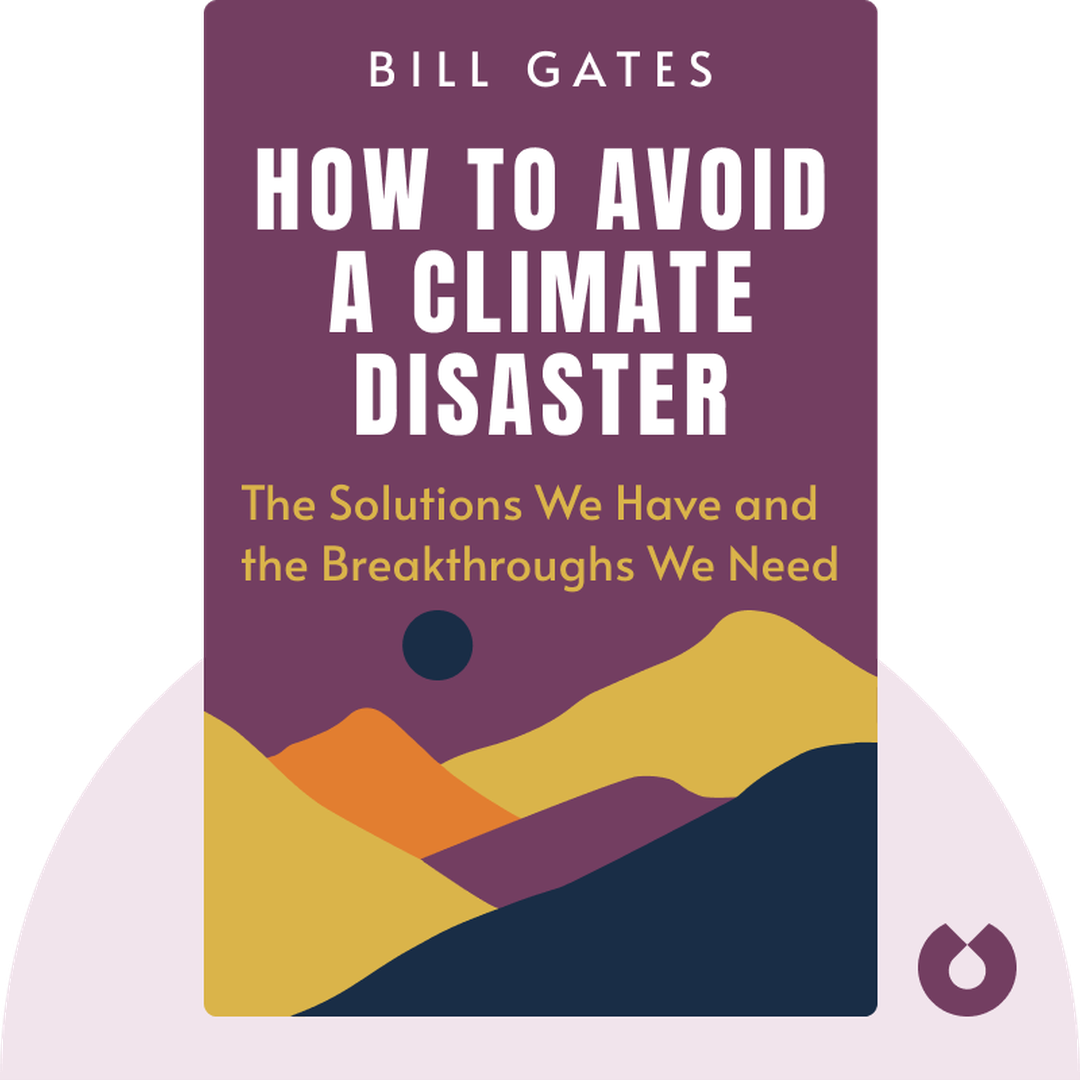
How to Avoid a Climate Disaster
Start ListeningDownload Try free on iPhoneScan to start in 5 seconds
Categories:
If You're Curious About These Questions...
You should listen to this audiobook
- Did you know that when it comes to greenhouse gas emissions, there is only one specific number that can actually save our planet?
- What's the secret to making green energy cheaper than fossil fuels, and why is this the key to our survival?
- Are you curious about which breakthrough technologies are the most critical for investors and leaders to watch in the coming decade?
Listen to How to Avoid a Climate Disaster — Free Audiobook
Loading player...
Key Takeaways from How to Avoid a Climate Disaster
- Understand why reducing 51 billion tonnes of annual emissions to near zero isn't an 'all-or-nothing' exam, and how every incremental reduction builds a safer future.
- Discover the sobering lesson the COVID-19 pandemic taught us about climate change, revealing that reaching near-zero emissions requires purposeful, systemic changes rather than temporary disruptions.
- Learn how greenhouse gas emissions are deeply woven into everyday items, and why overcoming our reliance on cheap fossil fuels is both a technical and financial challenge.
- Recognize the central role of electricity in the climate crisis, and how transitioning to a carbon-free grid is the critical key to decarbonizing other major sectors like transportation.
- Find out why the global mission to create cleaner electricity must go beyond simply decarbonizing the current grid to include expanding crucial energy access to underserved regions.
Learning Tools
Reinforce what you learned from How to Avoid a Climate Disaster
Mind Map
How to Avoid a Climate Disaster
The Core Challenge+
The 5 Emission Categories+
Sector Solutions & Obstacles+
Economics & Policy+
Evaluating Climate Ideas+
Quiz — Test Your Understanding
Question 1 of 9
According to the text, what is the ultimate goal we must achieve regarding greenhouse gas emissions, and what is our current annual global output?
Question 2 of 9
Which of the following categories is responsible for the largest percentage (31%) of the world's 51 billion tons of greenhouse gas emissions?
Question 3 of 9
Why does the author argue that current battery technology is not the ultimate solution for storing excess wind and solar energy for entire cities?
Question 4 of 9
What 'silver lining' does the text identify regarding the production of plastics?
Question 5 of 9
Aside from cattle producing methane and deforestation, what is identified as a major, highly potent hidden cause of food-related greenhouse gas emissions?
Question 6 of 9
In the context of sustainable transportation and manufacturing, what does the term 'Green Premium' refer to?
Question 7 of 9
Why are electric batteries currently unsuitable for powering airplanes, cargo ships, and long-haul trucks?
Question 8 of 9
What is recommended as an immediate, cost-saving step homeowners can take to reduce emissions from heating and cooling?
Question 9 of 9
According to the actionable advice provided for understanding power scales, which of the following statements is correct?
How to Avoid a Climate Disaster — Full Chapter Overview
- 1Recommendation
- 2To pull our planet back from the brink, we need to cut greenhouse gas emissions to zero.
- 3Reaching zero emissions will be difficult, but it is both possible and necessary.
- 4Getting electricity to zero emissions will require major innovations.
- 5Making steel, concrete, and plastic produces greenhouse gases – but there may be a silver lining.
- 6We can lower food industry emissions by living more consciously.
- 7Sustainable transportation options include clean fuels with high price tags.
- 8There are immediate actions we can take to cut heating and cooling emissions.
- 9Reaching zero will require government policy changes and international cooperation.
- 10Final summary
How to Avoid a Climate Disaster Summary & Overview
How to Avoid a Climate Disaster (2021) is a guidebook to getting the world to an important milestone: zero greenhouse gas emissions. Bill Gates shares the knowledge he’s gained through his role on international climate commissions and as a go-to source of funding for climate solution startups. He pinpoints the ideas that show the most promise and explains the work that still needs to be done.
Who Should Listen to How to Avoid a Climate Disaster?
- Anyone concerned about climate change
- Investors interested in new funding opportunities
- Business leaders looking for ways to help
Books Similar to How to Avoid a Climate Disaster
Readers who enjoyed this also liked these titles.