If You're Curious About These Questions...
You should listen to this audiobook
- What’s the secret to truly loving another person, and why is deep understanding often more vital than the feeling of love itself?
- Have you ever wondered why your ability to love others is actually limited by how you love yourself?
- Are you curious about the four essential elements of Zen wisdom that can transform even the most difficult relationships into sources of peace?
Listen to How to Love — Free Audiobook
Loading player...
Key Takeaways from How to Love
- Discover how to expand your capacity for compassion by nourishing love with the deep, lasting happiness born from everyday mindfulness.
- Understand the four defining traits of true love—loving-kindness, compassion, joy, and equanimity—and how recognizing another's suffering creates profound empathy.
- Learn why trusting and respecting yourself is the essential foundation for loving others, allowing you to embrace your unique beauty and find sanctuary within.
- Find out how to achieve true intimacy and transform relationship struggles into joy by actively verbalizing your appreciation and treating your partner with deep reverence.
- Master the art of being completely present in the moment so you can cultivate your own inner peace and share that healing energy with those you love.
Learning Tools
Reinforce what you learned from How to Love
Mind Map
How to Love
The Nature of True Love+
The Four Elements+
Self-Love & Respect+
Intimacy & Sex+
Communication & Unity+
Healing & Conflict+
Quiz — Test Your Understanding
Question 1 of 9
In the book, what does the metaphor of adding a spoonful of salt to a river illustrate about love?
Question 2 of 9
According to Thich Nhat Hanh, which of the following is NOT one of the four defining traits of true love?
Question 3 of 9
Why does the author compare humans to a meadow covered in unique flowers?
Question 4 of 9
How does the text define 'equanimity' in the context of true love?
Question 5 of 9
What is the author's perspective on using physical sex to cure loneliness?
Question 6 of 9
What rule of thumb does the author suggest for maintaining loving communication and navigating conflict?
Question 7 of 9
In Sanskrit, the word for compassion is 'karuna.' Beyond simply empathizing with someone, what deeper meaning does 'karuna' hold in a mindful relationship?
Question 8 of 9
When dealing with a difficult argument, Thich Nhat Hanh recommends relying on three key sentences. Which of the following is one of those sentences?
Question 9 of 9
Why does the author use the scientific reality of a sunset as an analogy for relationships?
How to Love — Full Chapter Overview
- 1Recommendation
- 2Love needs to be nourished with happiness and shared with others.
- 3To grasp the true nature of love, you must recognize its four qualities.
- 4Love asks you to trust and respect both yourself and your partner.
- 5Spiritual practice can teach us to love and build true intimacy.
- 6Sex alone doesn’t create true intimacy, so it should be practiced wisely.
- 7Partners should share the same aspirations and communicate lovingly with each other.
- 8Loving means becoming mindful and learning to act as a healer.
- 9Question your assumptions about your relationship and use these key insights.
- 10Final summary
How to Love Summary & Overview
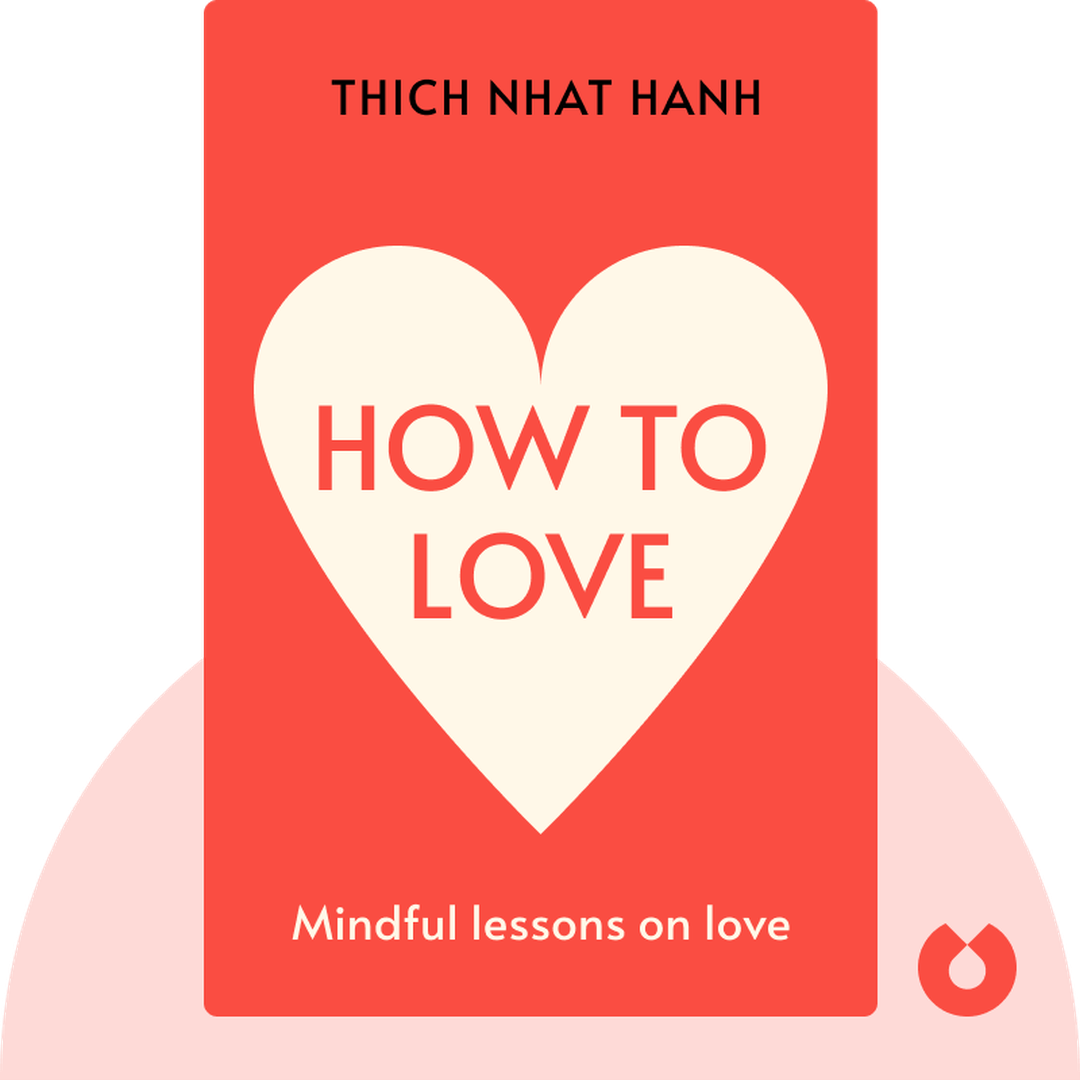
How to Love (2015) is an indispensable collection of teachings on the subject of love from the world-renowned Zen Buddhist master Thich Nhat Hanh. Packed full of wisdom and insight, this aphoristic handbook unlocks the mysteries of true love in its exploration of what it means to love ourselves, our partners and the world itself.
Who Should Listen to How to Love?
- Star-crossed lovers
- Singles looking for their Mr – or Ms – Darcy
- Anyone searching for mindful answers to the conundrums of love
Books Similar to How to Love
Readers who enjoyed this also liked these titles.