If You're Curious About These Questions...
You should listen to this audiobook
- Have you ever wondered why some of the world's most profitable companies are also the ones doing the most good?
- What if you could transform your brand’s social initiatives into a powerful engine for business growth and customer loyalty?
- Are you curious about the specific strategies that allow corporations and nonprofits to create a 'win-win' partnership that fuels both social change and the bottom line?
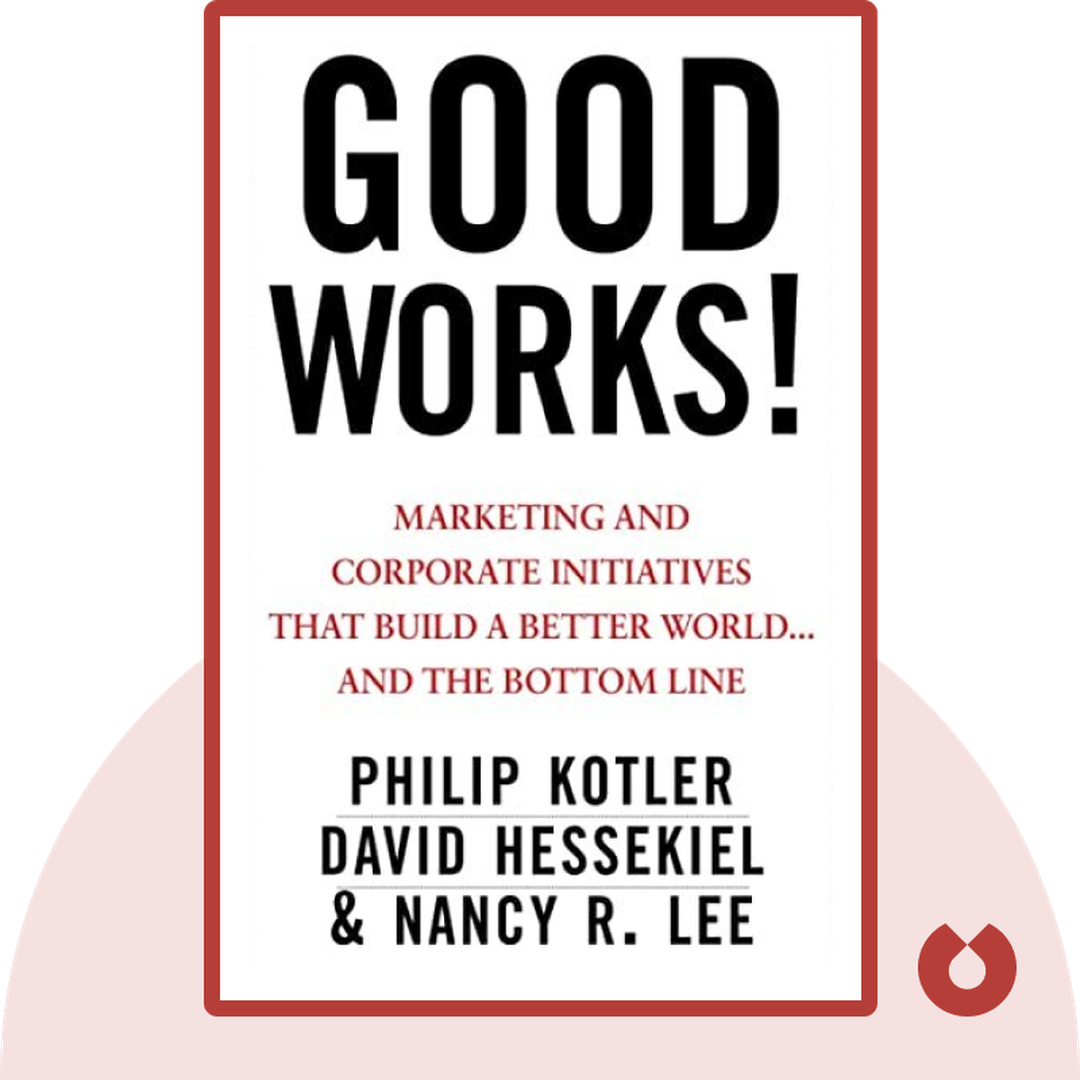
Listen to Good Works! — Free Audiobook
Loading player...
Key Takeaways from Good Works!
- Discover why Corporate Social Responsibility is a powerful tool to increase sales, reduce operational costs, and attract highly motivated employees.
- Learn how to boost brand recognition by focusing your charitable efforts on untapped, long-term social issues rather than saturated or short-term causes.
- Understand why aligning social initiatives with your company's business interests—like investing in local infrastructure where you operate—creates a win-win for the community and your bottom line.
- Find out how to execute an effective Cause Promotion campaign that generates great publicity by raising awareness and providing customers with an effortless way to participate.
- Master Cause-Related Marketing strategies that drive significant sales growth by allowing consumers to support global charities simply by purchasing your products.
Learning Tools
Reinforce what you learned from Good Works!
Mind Map
Good Works!
The Business Case for CSR+
Strategic Cause Selection+
Cause Promotion+
Cause-Related Marketing+
Behavior Change Initiatives+
Workforce Volunteering+
Socially Responsible Practices+
Quiz — Test Your Understanding
Question 1 of 6
According to the text, what is a primary business benefit of implementing Corporate Social Responsibility (CSR) initiatives beyond just generating good PR?
Question 2 of 6
Why does the book recommend that companies focus on 'untapped' and long-term social issues?
Question 3 of 6
What condition makes Cause-Related Marketing—where a donation is made for every product purchased—most effective?
Question 4 of 6
How does the book describe the limitation of purely monetary donations to social causes?
Question 5 of 6
What is a key corporate benefit of Workforce Volunteering, as demonstrated by the Luxottica Group's initiative to conduct eye exams in developing countries?
Question 6 of 6
According to the final chapters, what is the fundamental, long-term reason companies must engage in Socially Responsible Business Practices?
Good Works! — Full Chapter Overview
- 1Recommendation
- 2Businesses can boost sales, cut costs, and attract better employees by addressing social issues.
- 3Focus on overlooked social issues that can create long-term partnerships.
- 4Companies can gain strong publicity by supporting the right cause promotion.
- 5Cause-related marketing lets companies and consumers work together to do good.
- 6Creating lasting change can require changing consumer behavior for the better.
- 7Workforce volunteering helps companies do good while improving employee morale and skills.
- 8Socially responsible business practices are essential to your company’s future.
- 9Final summary
Good Works! Summary & Overview
Good Works! (2012) offers an insightful look into the way doing good can actually help companies prosper. Based on contemporary, real-life examples, it provides business-minded people with the tools and strategies they need to make a difference in the world and turn a profit at the same time.
Who Should Listen to Good Works!?
- Anyone who wants to improve the potency of their marketing campaigns
- Business leaders, CEOs and board members
- Members of nonprofit organizations who want to learn about how business and charity can work together for the common good
Books Similar to Good Works!
Readers who enjoyed this also liked these titles.