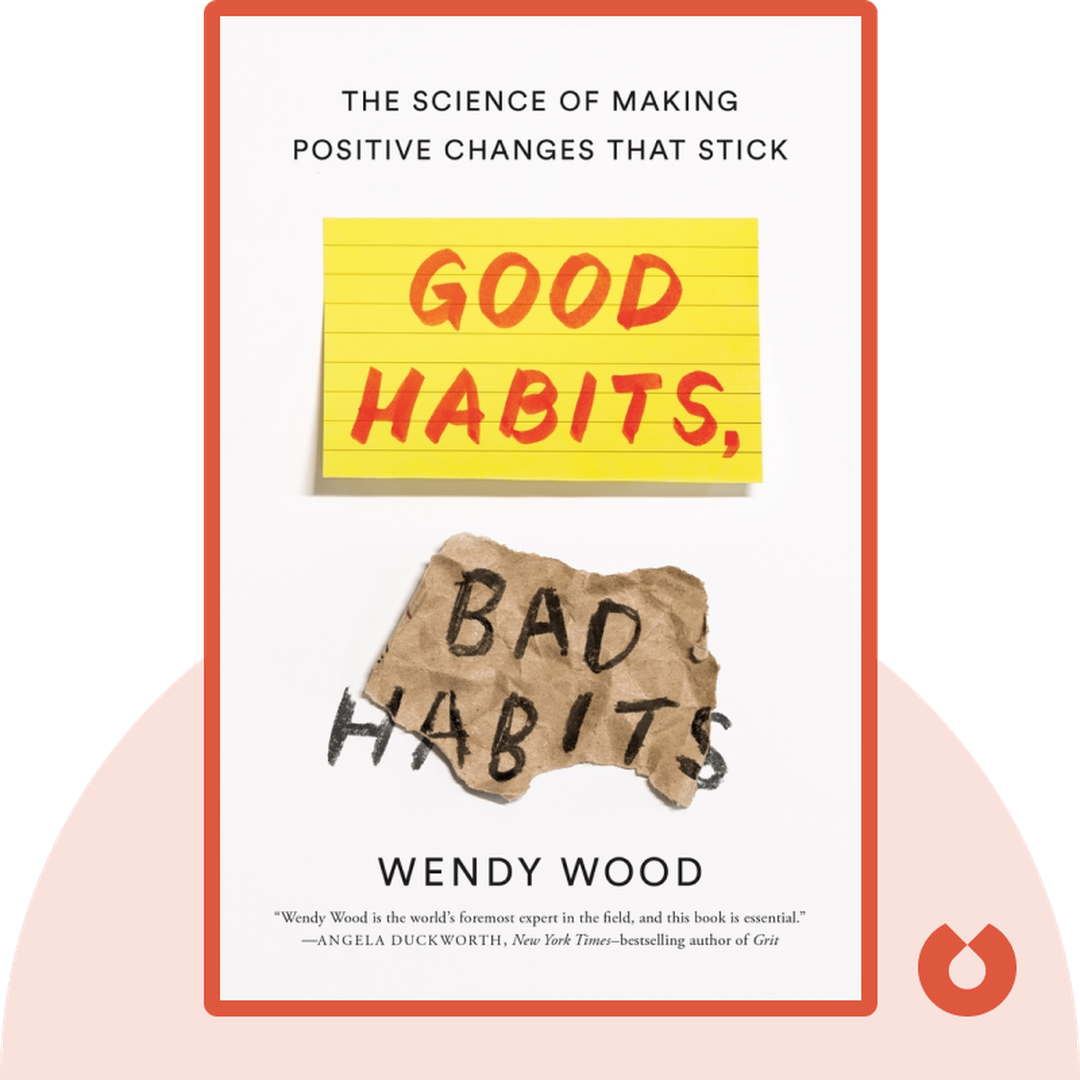
Good Habits, Bad Habits
Start ListeningDownload Try free on iPhoneScan to start in 5 seconds
Categories:
If You're Curious About These Questions...
You should listen to this audiobook
- Did you know that relying on willpower is actually the least effective way to change your behavior—and what you should be using instead?
- Have you ever wondered why some people seem to have effortless self-control while others struggle, and how it all comes down to the hidden 'friction' in your daily life?
- What if you could bypass your conscious mind and trigger 'autopilot' for your most ambitious goals, making success as automatic as brushing your teeth?
Listen to Good Habits, Bad Habits — Cinematic Audio Edition
Loading player...
Key Takeaways from Good Habits, Bad Habits
- Understand how nearly half of our daily actions operate completely below the level of conscious thought, driving our behavior automatically.
- Discover why relying solely on willpower causes most resolutions to fail, and why focusing on habit formation is a far superior strategy for lasting lifestyle change.
- Learn how to strategically use your self-control only during the initial stages of habit formation, rather than exhausting it by trying to resist daily temptations.
- Master the use of environmental forces to redesign your surroundings, making good habits effortless to maintain and bad habits difficult to practice.
- Find out why pairing a thoughtfully redesigned environment with consistent repetition is the ultimate key to cementing lasting, positive behaviors.
Learning Tools
Reinforce what you learned from Good Habits, Bad Habits
Mind Map
Good Habits, Bad Habits
The Nature of Habits+
The Limits of Self-Control+
Environmental Design+
The Power of Repetition+
The Science of Rewards+
Stress and Habits+
Leveraging Disruption+
Quiz — Test Your Understanding
Question 1 of 7
According to the text, what is the primary difference between habits and mental processes like decision-making and willpower?
Question 2 of 7
How do people with high self-control successfully achieve their goals, according to the meditation retreat study?
Question 3 of 7
In the context of shaping habits, what is a 'restrictive force' as described by psychologist Kurt Lewin?
Question 4 of 7
What did Dr. Pippa Lally's research reveal about the time it takes to form a new habit?
Question 5 of 7
Which type of reward is most effective for making a new habit stick?
Question 6 of 7
How does chronic stress affect our daily behavior and decision-making?
Question 7 of 7
Why does the author recommend taking advantage of life disruptions, such as moving or changing jobs?
Good Habits, Bad Habits — Full Chapter Overview
- 1Recommendation
- 2Habits shape our lives, whether we notice them or not.
- 3Habits influence our actions more than self-control does.
- 4Your environment can shape the habits you build.
- 5Repeating an action consistently is key to forming a habit.
- 6To form a habit, you need to feel rewarded.
- 7Under stress, we naturally fall back on our habits.
- 8Final summary
Good Habits, Bad Habits Summary & Overview
Good Habits, Bad Habits (2019) lays out the workings of human habits, drawing on groundbreaking new research into the psychology of human behavior. Combining the insights of neuroscience and lab-based experiments, it shows how we can harness our habits to change our lives for the better.
Who Should Listen to Good Habits, Bad Habits?
- Ambitious planners who lack follow-through
- Serial dieters trying to change their eating habits for good
- Anyone trying to kick a stubborn bad habit
Books Similar to Good Habits, Bad Habits
Readers who enjoyed this also liked these titles.