Theme Song
If You're Curious About These Questions...
You should listen to this audiobook
- What's the secret to achieving your goals without relying on motivation or ambition?
- Are you curious about how tiny, almost ridiculously small, habits can lead to massive changes in your life?
- What if you could transform your daily routine into a powerful engine for success, without feeling overwhelmed or stuck?
Listen to Mini Habits — Free Audiobook
Loading player...
Key Takeaways from Mini Habits
- Discover why setting absurdly small goals, like reading just one page a day, bypasses mental resistance and builds long-lasting confidence.
- Learn how to gradually expand your comfort zone rather than jumping far outside of it, allowing you to avoid burnout while pursuing personal development.
- Understand the brain science behind habit automation, and why taking three seconds to celebrate tiny victories trains your brain to crave more success.
- Find out why relying on fleeting motivation sets you up for failure, and how to harness dependable willpower instead to make habit changes that stick.
- Master the strategy of using mini habits to overcome mental exhaustion, requiring so little willpower that you can easily maintain them even on your hardest days.
Learning Tools
Reinforce what you learned from Mini Habits
Mind Map
Mini Habits
The Science of Habits+
Willpower vs. Motivation+
The Power of Mini Habits+
Implementation Strategy+
Quiz — Test Your Understanding
Question 1 of 9
Why do people tend to revert to habitual behaviors when they are stressed?
Question 2 of 9
According to the book, what is the major flaw of the prefrontal cortex compared to the basal ganglia?
Question 3 of 9
Why does the author argue that willpower is a better tool for building habits than motivation?
Question 4 of 9
How do mini habits successfully bypass the main threats to our willpower?
Question 5 of 9
How does the author apply Newton's first law of motion to the concept of mini habits?
Question 6 of 9
How do mini habits help boost a person's self-esteem?
Question 7 of 9
When choosing which mini habits to develop, what is a crucial piece of advice given by the author?
Question 8 of 9
What should you do if you significantly exceed your mini habit goal for the day (e.g., writing 500 words instead of 50)?
Question 9 of 9
According to the book, what does it mean if completing your mini habit starts to feel boring?
Mini Habits — Full Chapter Overview
- 1Recommendation
- 2Much of Our Lives Is Shaped by Habit
- 3Our Brains Have a Powerful System for Forming Habits
- 4Willpower, Not Motivation, Is the Best Tool for Building Good Habits
- 5Mini Habits Make the Best Use of Your Limited Willpower
- 6Mini Habits Come with Many Extra Benefits
- 7Plan and Build Your Mini Habits Carefully
- 8Track Your Progress and Remember to Reward Yourself
- 9Final summary
Mini Habits Summary & Overview
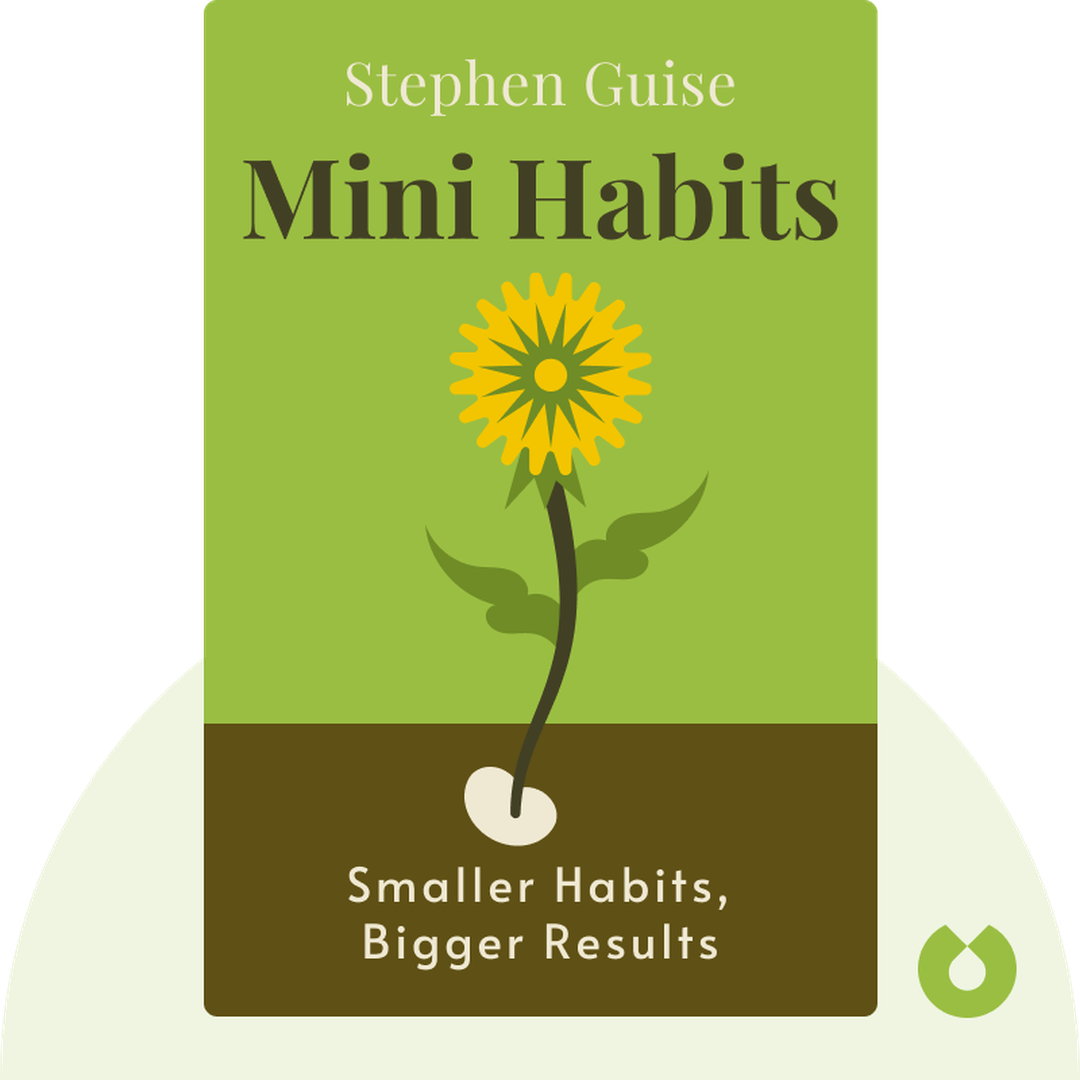
Mini Habits (2013) explains the logic behind an innovative approach to achieving your goals. Motivation and ambition aren’t necessarily what will drive you to success; rather, it’s your small day-to-day habits that will really get you on the right track. Learn how to harness their power with these blinks.
Who Should Listen to Mini Habits?
- People finding it difficult to keep up with their health or weight loss goals
- Anyone looking for ways to build new skills with minimal effort
- People hoping to make changes in their lives, but with no idea where to start
Books Similar to Mini Habits
Readers who enjoyed this also liked these titles.