If You're Curious About These Questions...
You should listen to this audiobook
- Have you ever wondered how a thriving, middle-class powerhouse could transform into a cautionary tale of American decline in just a few short decades?
- Did you know that the downfall of an entire town can be traced back to the boardroom decisions of a single glass factory?
- Are you curious about the hidden economic forces that dismantled the social fabric of the American heartland and what they mean for our political future?
Listen to Glass House — Free Audiobook
Loading player...
Key Takeaways from Glass House
- Discover why the downfall of once-thriving middle-American towns is driven by corporate greed and private-equity buyouts rather than the cultural decay of the working class.
- Learn how post-WWII Lancaster embodied the American Dream with lifelong employment, strong pensions, and cross-class community bonds centered around a single factory.
- Understand the devastating impact of 'greenmailing' and how corporate raiders extracted millions from a local company, paving the way for its ultimate destruction by investment firms.
- Uncover the tragic human toll of hostile corporate takeovers, where relentless cost-cutting stripped workers of secure pensions and fueled a devastating local opioid crisis.
- Find out why political pundits mistakenly blame working-class residents for their own struggles, ignoring the destructive actions of the executives and politicians who actually dismantled their economy.
Learning Tools
Reinforce what you learned from Glass House
Mind Map
Glass House
The Golden Era (Post-WWII Lancaster)+
The Downfall (Corporate Raiding)+
Impact on Workers and Town+
Misplaced Blame vs. Reality+
Political Consequences (2016 Election)+
Quiz — Test Your Understanding
Question 1 of 6
What characterized the relationship between executives and factory workers in Lancaster during its post-WWII peak?
Question 2 of 6
According to the text, what initial event in the 1980s signaled to corporate sharks that Anchor Hocking was vulnerable to exploitation?
Question 3 of 6
How did the series of corporate buyouts and hostile takeovers fundamentally alter the operations of Anchor Hocking?
Question 4 of 6
What was a major civic consequence of relocating the company's container division headquarters to Florida?
Question 5 of 6
According to the author, why is it overly simplistic to blame the residents of Lancaster for the town's current drug addiction and economic despair?
Question 6 of 6
What irony does the author point out regarding the political beliefs of many modern Lancaster residents?
Glass House — Full Chapter Overview
- 1Recommendation
- 2Lancaster, Ohio was a classic American town in the decades after World War II.
- 3Today, Lancaster is a shadow of its former self, and its history helps explain why.
- 4Once Anchor Hocking became a company to be bought and sold, workers’ lives changed.
- 5Though residents are often blamed, Lancaster’s decline was really caused by politicians and executives.
- 6Lancaster has much to teach us about the wider effects of the free market.
- 7Final summary
Glass House Summary & Overview
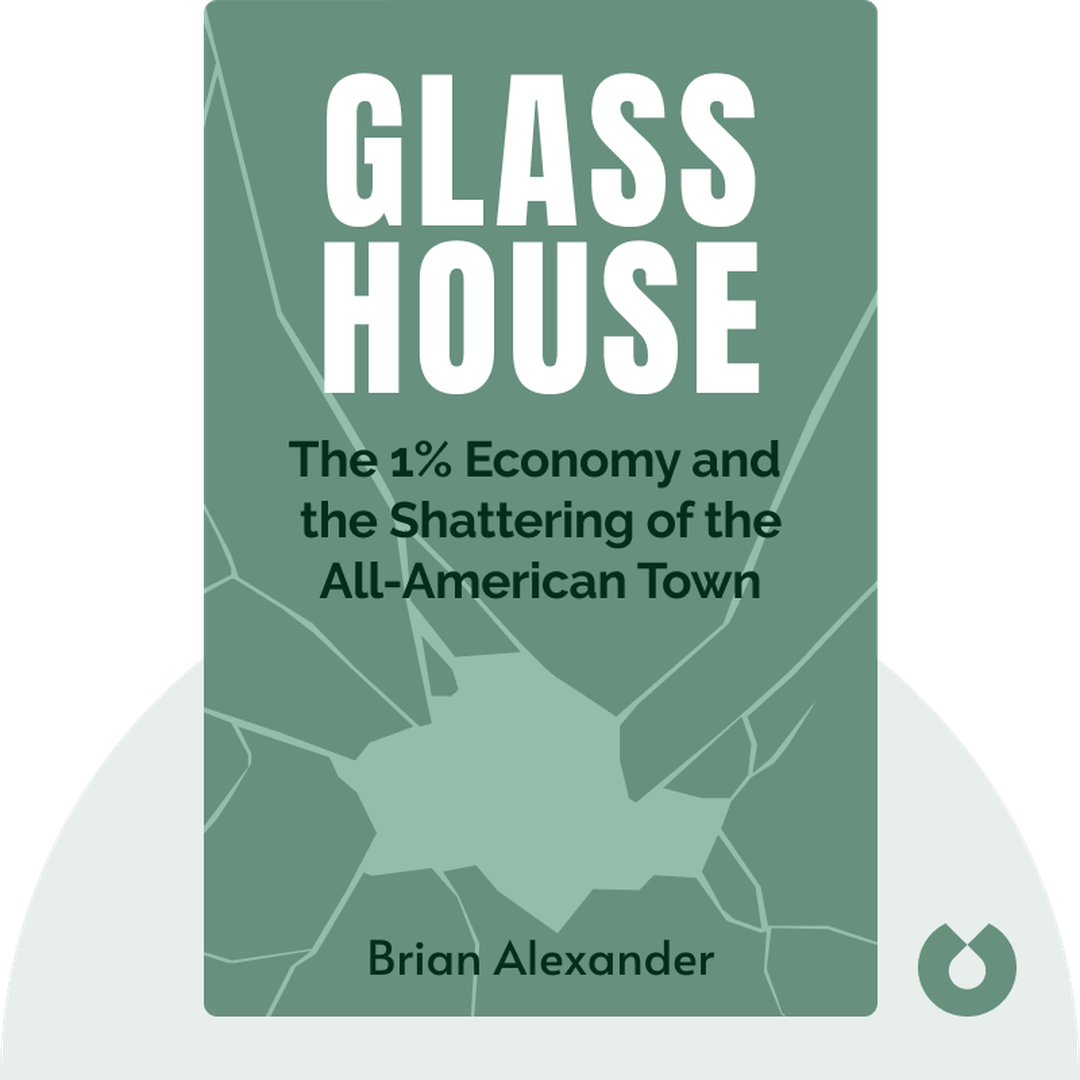
Glass House (2017) tells the cautionary tale of Lancaster, Ohio, a town that went from boom to bust over the course of the past fifty years. At the heart of this downfall is the Anchor Hocking glass factory, a major source of employment that turned into a bitter disappointment. This story is essential reading for anyone wishing to understand the current state of affairs in American society and politics.
Who Should Listen to Glass House?
- Politicians and policy-makers
- Students of history and American studies
- People interested in the current state of American affairs
Books Similar to Glass House
Readers who enjoyed this also liked these titles.