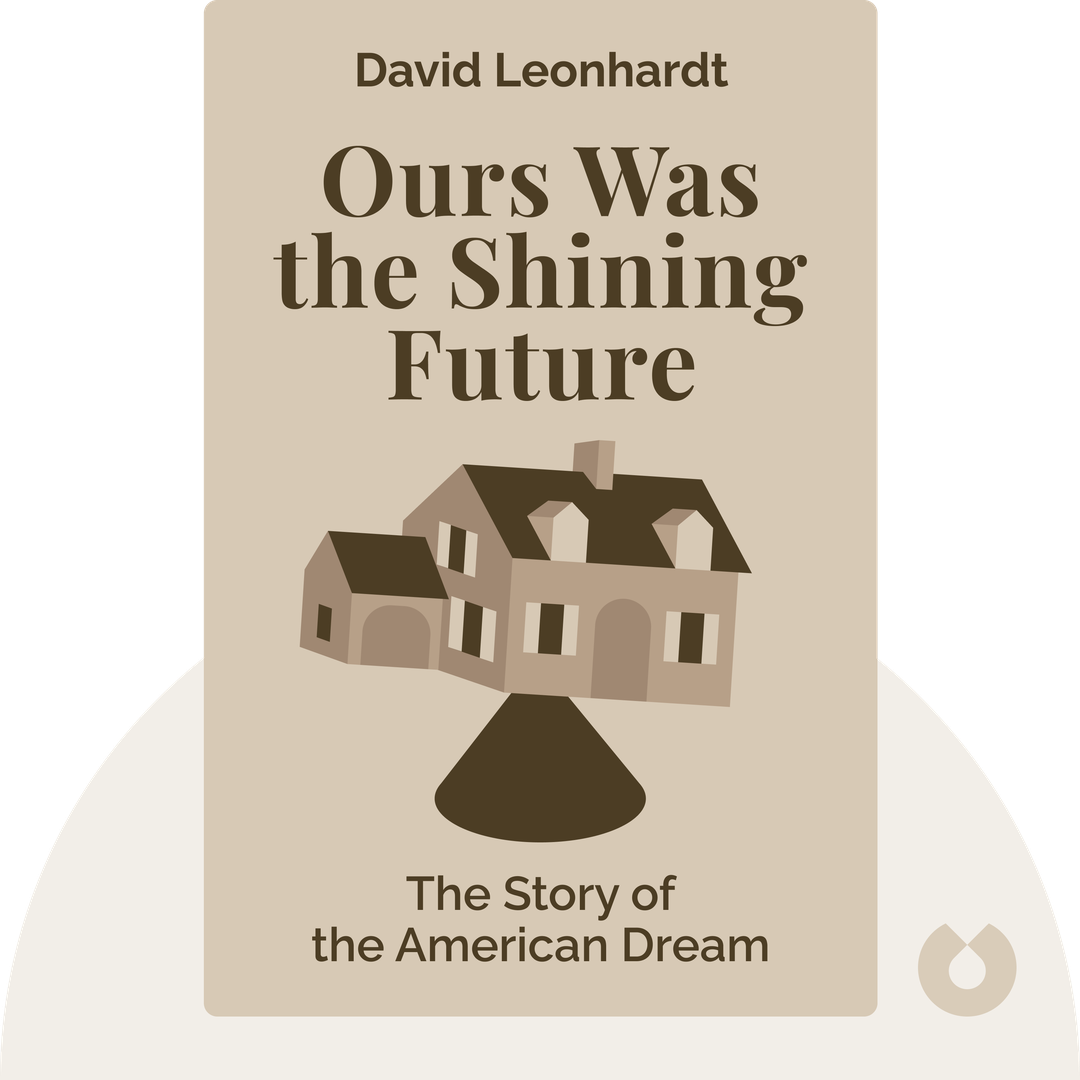
Ours Was the Shining Future
Start ListeningDownload Try free on iPhoneScan to start in 5 seconds
Categories:
If You're Curious About These Questions...
You should listen to this audiobook
- Have you ever wondered why the American Dream felt so reachable for previous generations, yet seems like a vanishing prospect for so many today?
- Are you curious about the specific turning point in history when American politics began to prioritize corporate interests over the economic stability of the working class?
- Did you know that the era of 'shared prosperity' in the United States wasn't an accident, but the result of a deliberate system that has since been dismantled?
Listen to Ours Was the Shining Future — Free Audiobook
Loading player...
Key Takeaways from Ours Was the Shining Future
- Understand how the Great American Stagnation replaced the American Dream due to slower economic growth, increased income inequality, and a misalignment of power, culture, and investment.
- Discover why the historic success of the 1930s labor movement depended heavily on political backing from leaders like Franklin Roosevelt to effectively redistribute wealth without harming the economy.
- Learn how post-war 'democratic capitalism' thrived when business leaders realized that prioritizing national interests and good wages ultimately fueled long-term corporate prosperity.
- Explore how President Eisenhower sacrificed short-term profits for long-term infrastructure investments, proving that economic moderation and political compromise can transform a nation.
- Find out how the rise of the intellectual 'New Left' in the 1960s alienated working-class voters, inadvertently fracturing union power and drastically shifting America's political landscape.
Learning Tools
Reinforce what you learned from Ours Was the Shining Future
Mind Map
Ours Was the Shining Future
The Great American Stagnation+
Rise of Democratic Capitalism (1930s-1950s)+
The Dream in Decline (1960s-1980s)+
Neoliberalism & Modern Challenges+
Restoring the American Dream+
Quiz — Test Your Understanding
Question 1 of 8
What does the author identify as the two fundamental causes of the 'Great American Stagnation'?
Question 2 of 8
According to the text, what was the historical significance of the 1934 Minneapolis coal drivers strike?
Question 3 of 8
How does the author define 'democratic capitalism' as it emerged during the mid-20th century?
Question 4 of 8
Why did the emergence of the 'New Left' in the 1960s ultimately harm the political power of the working class?
Question 5 of 8
What 1970s event catalyzed the shift away from democratic capitalism and opened the door for the 'Reagan Revolution'?
Question 6 of 8
How does the text evaluate the economic legacy of the Clinton presidency in the 1990s?
Question 7 of 8
According to the text, what is a key reason modern liberals struggle to mobilize the working class today?
Question 8 of 8
According to the author, what is necessary for the United States to regain the promise of the American Dream?
Ours Was the Shining Future — Full Chapter Overview
- 1Recommendation
- 2A dream on the ascent
- 3A dream in downturn
- 4Where should we go from here?
Ours Was the Shining Future Summary & Overview
Ours Was the Shining Future (2023) reflects on the rise and fall of democratic capitalism and the American Dream. It highlights the growing disparity between political representation and the economic interests of the working class in the United States.
Who Should Listen to Ours Was the Shining Future?
- History buffs and political junkies
- Anyone interested in American economics
- People wondering how US politics got to where it is today
Books Similar to Ours Was the Shining Future
Readers who enjoyed this also liked these titles.