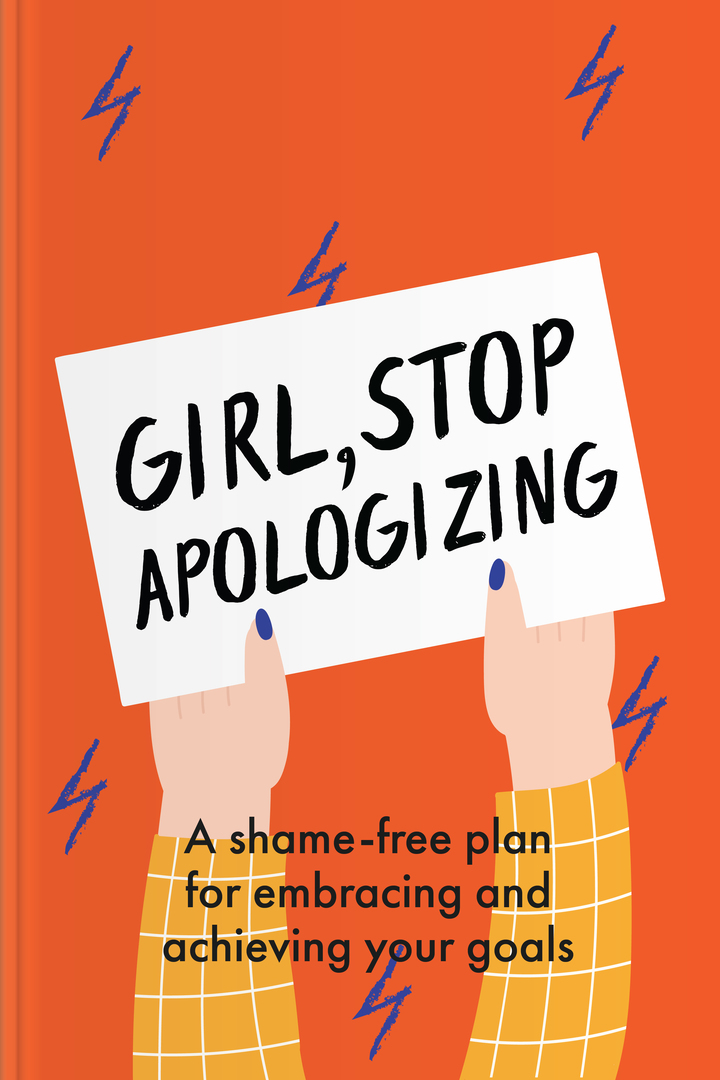
Girl, Stop Apologizing
If You're Curious About These Questions...
You should listen to this audiobook
- Have you ever wondered why the strategies you used to get attention as a child might be the very things holding your adult dreams hostage today?
- What if the secret to finally achieving your biggest ambitions wasn't working harder, but having the courage to choose just one goal to center your life around?
- Are you curious about how to replace the exhausting need for approval with a sustainable set of habits that allow you to pursue your path without the weight of guilt?
Listen to Girl, Stop Apologizing — Free Audiobook
Key Takeaways from Girl, Stop Apologizing
- Understand why wanting more joy, meaning, or freedom in your life is a sign of aliveness rather than a mark of selfishness.
- Discover how childhood survival skills and strategies for gaining attention secretly shape your adult habits, and how to gently rewire them.
- Learn to prioritize personal fulfillment instead of self-abandonment, using the 'two vases' analogy to see how pursuing your own goals naturally nourishes those around you.
- Realize that staying within your comfort zone doesn't actually protect you from failure, but merely prevents you from experiencing necessary growth and fresh perspectives.
- Master the habit of reframing failure by choosing mistakes that expand your capacity, treating long-term success as a resilient numbers game of repeated attempts.
Learning Tools
Reinforce what you learned from Girl, Stop Apologizing
Mind Map
Quiz — Test Your Understanding
Girl, Stop Apologizing — Full Chapter Overview
- 1Recommendation
- 2Why women often neglect their dreams: reasons and excuses.
- 3It’s okay to be different from other women and become goal-oriented.
- 4You can create time for your goals and overcome insecurity through growth.
- 5Don’t let fear of failure or others’ opinions hold you back.
- 6Adopt useful habits, such as focusing on one goal at a time and asking for help.
- 7Create a strong foundation for success through a series of steps.
- 8Anyone can learn helpful skills for lasting success.
- 9Final summary
Girl, Stop Apologizing Summary & Overview
This narration is a supportive walk through familiar inner obstacles—needing approval, fearing mistakes, and carrying cultural myths that keep people small—and it offers a kinder, clearer way forward. It begins by looking at how early strategies for earning attention can follow us into adulthood, then gradually loosens the grip of failure-fear and judgment.
From there, the focus turns practical: clarifying what someone truly wants, choosing one goal to center on, and breaking that goal into manageable steps. The final chapters build a foundation of habits—energy, gratitude, order, community, efficiency, and confidence—so progress can feel sustainable, not punishing.
Who Should Listen to Girl, Stop Apologizing?
- Anyone who feels pulled between personal dreams and the pressure to meet others’ expectations, and wants a calmer way to choose themselves without guilt.
- People who start goals with enthusiasm but stall because of fear of failure, perfectionism, or feeling “not ready yet.”
- Listeners who want simple, concrete tools for goal-setting, planning, and building supportive habits—without harsh self-talk.
Books Similar to Girl, Stop Apologizing
Readers who enjoyed this also liked these titles.