If You're Curious About These Questions...
You should listen to this audiobook
- Did you know that the very thing many women are taught to strive for—perfection—might actually be the biggest obstacle holding them back from success?
- Have you ever wondered why society conditions girls to be "perfect" while boys are taught to be "brave," and how this gap affects our adult lives?
- What if you could trade the exhausting weight of people-pleasing for a single habit that unlocks your true potential and freedom?
Listen to Brave, Not Perfect — Free Audiobook
Loading player...
Key Takeaways from Brave, Not Perfect
- Discover how societal conditioning trains girls to be agreeable perfectionists from a young age, while boys are encouraged to embrace risk and learn from failure.
- Learn why failing is a necessary life experience that can spark your greatest successes, just as a crushing political defeat led the author to found Girls Who Code.
- Understand why the drive for perfection that earns straight A's in school fails to equip women for the messy, real-world challenges of adult life and career advancement.
- Realize that maintaining a flawless exterior won't shield you from criticism, and that facing challenges with bravery is far more effective than clinging to the illusion of perfection.
- Recognize that bravery is not an inherently male biological trait, but a universal skill that empowers women to make bold life choices and stand up to injustice.
Learning Tools
Reinforce what you learned from Brave, Not Perfect
Mind Map
Brave, Not Perfect
The Problem with Perfectionism+
Why Bravery Beats Perfection+
Redefining Bravery+
Developing a Bravery Mindset+
Sisterhood and Surviving Failure+
Quiz — Test Your Understanding
Question 1 of 7
According to the text, what is a primary difference in how society conditions boys and girls from a young age?
Question 2 of 7
What did the University of California lemonade stand study reveal about the social conditioning of young girls?
Question 3 of 7
What valuable lesson did the author learn after her failure while running for Congress?
Question 4 of 7
According to the author, what is the first and most important step in adopting a 'bravery mindset'?
Question 5 of 7
Which of the following does the author recommend as a 'daily bravery challenge'?
Question 6 of 7
What concept is illustrated by the 'Shalane Flanagan effect'?
Question 7 of 7
How does the author suggest women should handle failure after taking a brave risk?
Brave, Not Perfect — Full Chapter Overview
- 1Recommendation
- 2Rather than being encouraged to be brave and take risks, girls are taught to please others and pursue perfection.
- 3Bravery, not perfection, is what helps women move forward.
- 4Bravery isn’t a male trait, but a universal skill women should feel free to embrace.
- 5To become brave, women need to develop a specific mindset.
- 6Greater bravery comes from building sisterhoods with other women and learning to recover from failure.
- 7Final summary
Brave, Not Perfect Summary & Overview
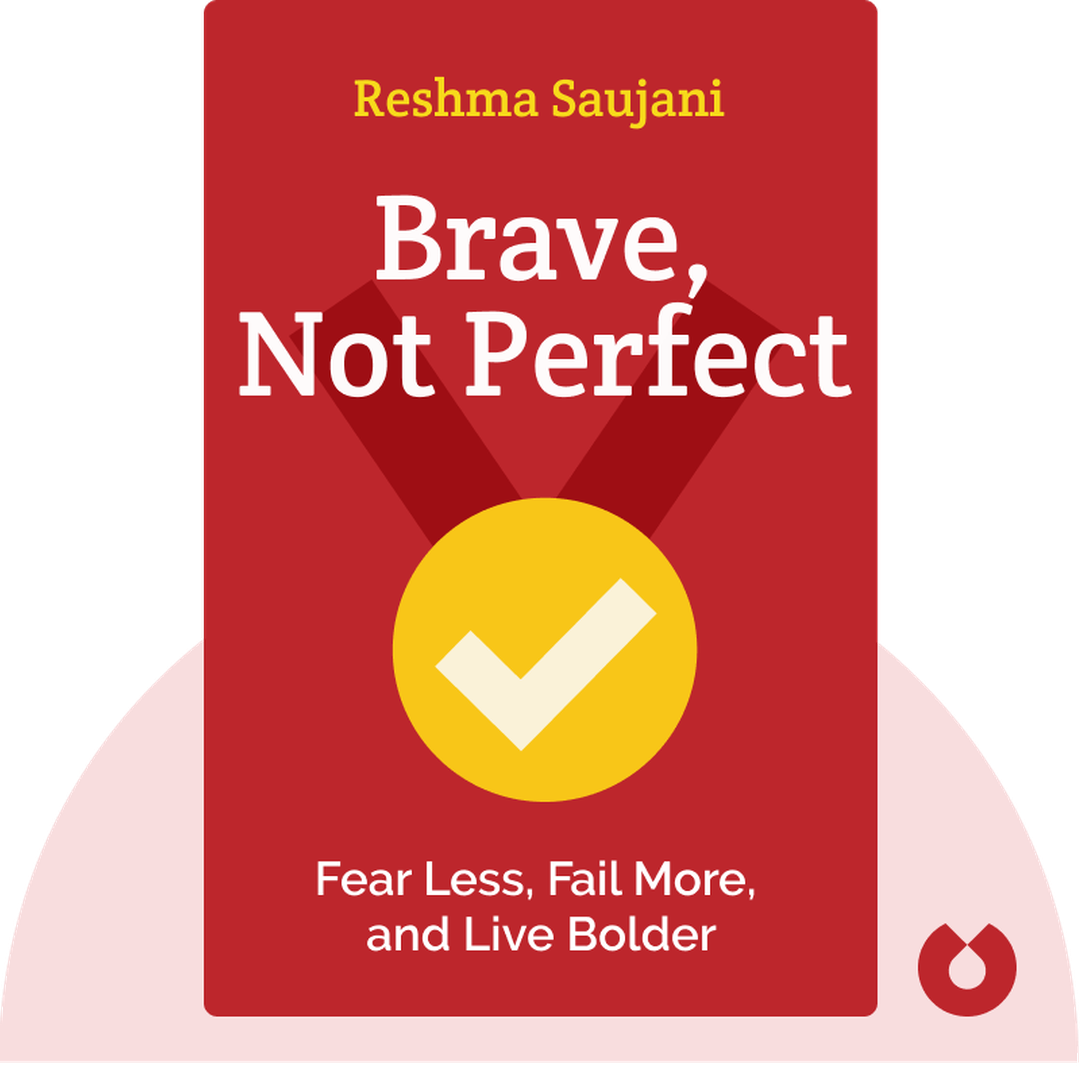
Brave, Not Perfect (2019) opens up a new world to those women socialized from a young age to strive for perfection and please everyone around them. Perfection doesn’t always help you get ahead in the modern world – but bravery does. By embracing the power of bravery, women can emancipate themselves from the servitude of perfectionism, embrace the power of failure and achieve their dreams.
Who Should Listen to Brave, Not Perfect?
- Women suffering under the weight of socially enforced perfectionism
- Female entrepreneurs trying to get their business on the right track
- Men who want to better learn how society conditions women
Books Similar to Brave, Not Perfect
Readers who enjoyed this also liked these titles.