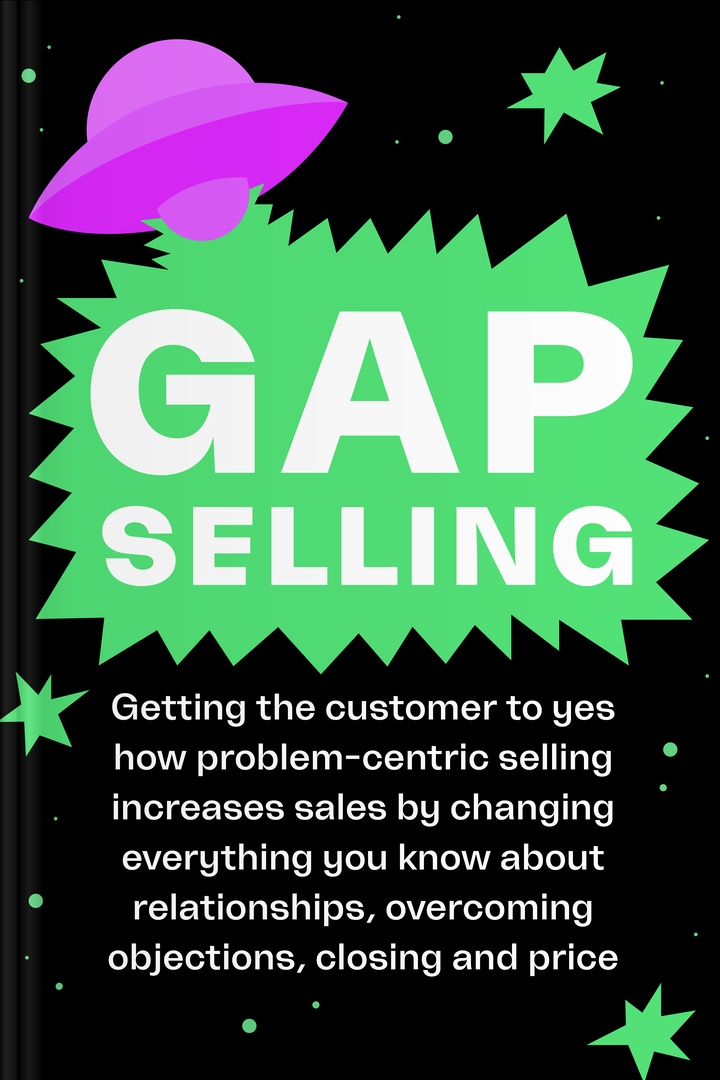
Gap Selling (Summary) audiobook cover - If sales has ever felt like pressure and performance, this warm summary reframes it as calm, skillful help—learning a customer’s real problems, clarifying the “gap” between today and a better future, and choosing integrity over chasing every deal.

Gap Selling (Summary)

If sales has ever felt like pressure and performance, this warm summary reframes it as calm, skillful help—learning a customer’s real problems, clarifying the “gap” between today and a better future, and choosing integrity over chasing every deal.

Jim Keenan

4.4 / 5(5 ratings)
Start ListeningDownloadQR code that opens AudiobookHub on the App StoreTry free on iPhoneScan to start in 5 seconds

If You're Curious About These Questions...

You should listen to this audiobook

Listen to Gap Selling (Summary) — Free Audiobook

Loading player...

Key Takeaways from Gap Selling (Summary)

Learning Tools

Reinforce what you learned from Gap Selling (Summary)

Mind Map

Gap Selling
The Core Philosophy+
Pre-Call Preparation+
4 Steps to Customer Clarity+
Diagnosing the Current State+
Bridging the Gap+

Quiz — Test Your Understanding

Question 1 of 7
What is the core philosophy of 'gap selling' compared to traditional sales tactics?
  • A. Focusing primarily on building rapport and offering discounts to close deals.
  • B. Prioritizing discovery and understanding the buyer's real-world problems over pitching products.
  • C. Overwhelming the buyer with technical specifications and product features to prove superiority.
  • D. Using high-pressure closing techniques to create a sense of urgency for the buyer.
Question 2 of 7
In the plumbing supplier example, why did the 'old-school' sales approach fail?
  • A. The salesperson forgot to qualify the buyer's budget and authority.
  • B. The competitor offered a much lower price for the exact same piping.
  • C. The salesperson focused on product specs and features instead of uncovering the customer's real problems.
  • D. The contractor was already highly satisfied with the existing galvanized steel pipes.
Question 3 of 7
According to the text, what is the fourth and final step to achieving 'customer clarity' during discovery?
  • A. Unveiling the true root causes beneath the obvious symptoms.
  • B. Gauging the tangible financial and temporal impacts of the issues.
  • C. Gathering facts to understand the basic contours of the buyer's challenges.
  • D. Pitching the product's features that align with the buyer's stated needs.
Question 4 of 7
When gauging the tangible impacts of a prospect's problem (Step 3), what should a salesperson focus on?
  • A. Only the immediate financial cost of repairing the current issue.
  • B. The concrete costs in time and money, including indirect consequences like reputational damage.
  • C. The emotional state of the buyer and their personal career aspirations.
  • D. The exact specifications of the competitor's product they are currently using.
Question 5 of 7
What are the two primary purposes of conducting thorough pre-call research in gap selling?
  • A. To memorize a script and find the buyer's personal contact information.
  • B. To bypass the discovery phase entirely and immediately pitch a tailored solution.
  • C. To craft smarter discovery questions and build immediate credibility with the buyer.
  • D. To determine the buyer's maximum budget and identify their cheapest competitors.
Question 6 of 7
During active discovery, the text distinguishes between technical problems and business problems. Which of the following best describes a 'business problem'?
  • A. The specific limitations that exist within the customer's current software tools.
  • B. The lack of integration between two pieces of hardware used by the IT team.
  • C. The processes, workflows, or constraints driving technical gaps and how they tie to company objectives.
  • D. The physical corrosion of galvanized steel pipes in a 50-year-old high rise building.
Question 7 of 7
According to the gap selling approach, how do you know if your discovery process has been truly successful?
  • A. You have convinced the buyer to sign the contract on the very first call.
  • B. You can describe the buyer's headaches and problems as comprehensively as they can.
  • C. The buyer asks for a discount based on the value you presented.
  • D. You have successfully delivered your entire feature presentation without interruption.

Gap Selling (Summary) — Full Chapter Overview

Gap Selling (Summary) Summary & Overview

This audio summary explores a gentler, clearer way to sell—one that treats sales as professional guidance rather than persuasion. Instead of leading with features and pitches, the approach starts with diagnosis: understanding a customer’s current reality, the impact of what isn’t working, and the future they actually want.

Through practical principles like identifying the “gap,” building credibility through expertise, and using the first meeting to ask thoughtful questions, the summary shows how selling can become more ethical and more effective. It also offers something many people find relieving: permission to step back when the fit isn’t right, and to keep growing as markets evolve.

Who Should Listen to Gap Selling (Summary)?

  • Salespeople who want to replace pressure and pushing with a calmer, more consultative way of helping buyers make change.
  • Entrepreneurs and small business owners who want a reliable framework for understanding what customers truly value—and when to walk away.
  • Managers and teams who want a shared language for discovery, decision-making, and long-term sales consistency.

About the Author: Jim Keenan

Jim Keenan is a sales leader and the author of Gap Selling, known for teaching a practical, customer-centered framework that focuses on diagnosing problems, clarifying the distance between a buyer’s current and desired future state, and building credibility through expertise.

🎧
Listen in the AppOffline playback & background play
Get App