If You're Curious About These Questions...
You should listen to this audiobook
- Did you know that the 'relationship builder'—long considered the gold standard in sales—is actually the least likely to be a top performer in complex deals?
- What if you could close more sales not by agreeing with your customers, but by purposefully creating 'constructive tension' during the conversation?
- Are you curious about the secret quality that allows the world’s most successful sales reps to take control of a deal and completely change a customer's perspective?
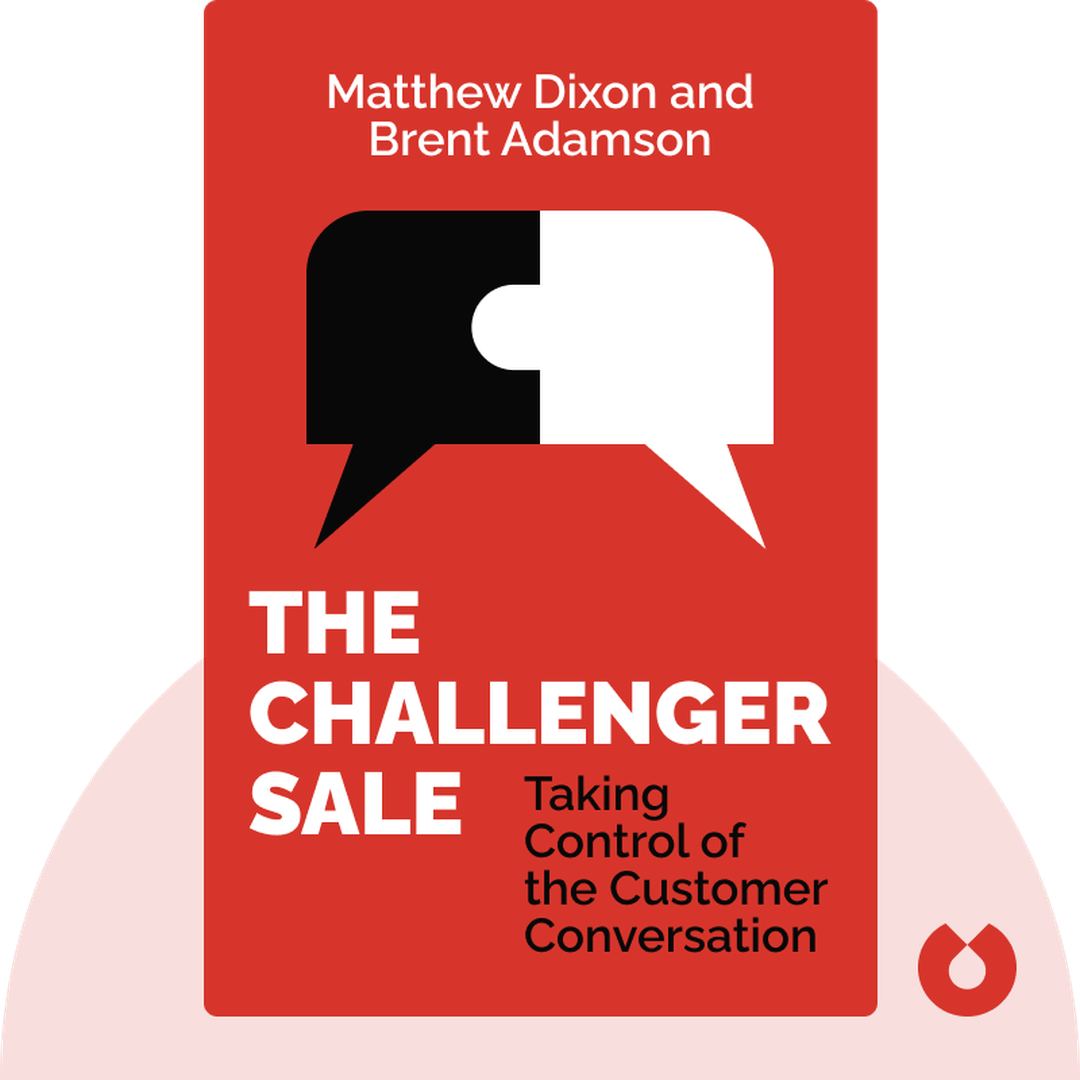
Listen to The Challenger Sale — Free Audiobook
Loading player...
Key Takeaways from The Challenger Sale
- Discover why B2B sales representatives fall into one of five distinct profiles, and understand why the "Challenger" consistently outperforms the traditional "Relationship Builder."
- Understand the evolution of "solution selling" and how shifting from single-product transactions to a consultative approach helps solve complex customer problems.
- Master the core skills that set Challengers apart by learning how to teach customers valuable insights, tailor your message, and take control of the sales experience.
- Find out how to transform your sales team into top-tier performers, utilizing the principle that Challengers are made through comprehensive organizational training rather than simply being born.
- Learn how to drive customer loyalty by telling clients what they need instead of asking, leveraging profound insights that connect directly to your unique business strengths.
Learning Tools
Reinforce what you learned from The Challenger Sale
Mind Map
The Challenger Sale
The New Sales Paradigm+
Solution Selling+
The 5 Sales Profiles+
Pillar 1: Teach+
Pillar 2: Tailor+
Pillar 3: Take Control+
Scaling the Model+
Managerial Execution+
Quiz — Test Your Understanding
Question 1 of 8
What is the primary difference between a traditional salesperson and a 'challenger'?
Question 2 of 8
According to the text, what is a major advantage of 'solution selling'?
Question 3 of 8
Based on the authors' study of 90 companies, they identified five types of sales reps. Which of the following is NOT one of them?
Question 4 of 8
What did the authors' research reveal about customer loyalty?
Question 5 of 8
In the six-step process of a good sales conversation, when should a challenger introduce their specific product or solution?
Question 6 of 8
When dealing with multiple stakeholders in a company, what is the most effective approach for a challenger?
Question 7 of 8
Why is it important for a challenger to take control of the sale from the very beginning?
Question 8 of 8
Why is manager buy-in considered crucial for implementing the challenger sales model across an organization?
The Challenger Sale — Full Chapter Overview
- 1Recommendation
- 2Effective salespeople engage the customer and tailor the offering.
- 3In solution selling, innovative 'challenger' sales representatives are the ones who consistently close deals.
- 4Challenger salespeople are teachers at heart; they clearly illuminate the best solutions for each prospect.
- 5A challenger steers the conversation, structuring it expertly to clearly guide the customer toward a solution.
- 6It’s vital to make your solution appealing to everyone involved in the decision process.
- 7Don’t retreat from the wheel; a challenger seizes firm control of the sale right from the very start.
- 8Share insights and solutions across your whole sales team, so everyone can truly succeed together.
- 9If you’re set on turning your company into a challenger shop, ensure your managers are on board.
The Challenger Sale Summary & Overview
Sales strategies have changed. Instead of shilling “one-size-fits-all” products, today’s top sales reps excel by providing a customized solution to a unique problem. To do this, these sales reps follow the “challenger” selling model. In this book you’ll learn what this model is and how it can revolutionize your sales organization.
Who Should Listen to The Challenger Sale?
- Sales managers and salespeople eager to improve their techniques
- Entrepreneurs curious about how to best present a product to customers
- Business leaders who want to stay current with new sales strategies
Books Similar to The Challenger Sale
Readers who enjoyed this also liked these titles.