Theme Song
If You're Curious About These Questions...
You should listen to this audiobook
- Why did philosopher Hannah Arendt argue that crossing an international border effectively strips a refugee of their fundamental human rights?
- How do modern governments use geographic loopholes, such as airport transit zones and leased military bases, to legally deny asylum seekers their basic rights?
- What specific legal precedent did Canada establish in 1989 that transformed its asylum process into a potential model for global refugee policy?
Listen to Frontier Justice — Free Audiobook
Loading player...
Key Takeaways from Frontier Justice
- The modern refugee crisis reveals a tragic flaw in international law, where fundamental human rights are often treated as conditional upon the legal status of citizenship.
- Governments frequently exploit geographic loopholes, such as maritime interdiction or holding refugees in ambiguous territories like Guantanamo Bay, to bypass the 1951 UN Refugee Convention.
- Because they lack the legal protections of citizenship, asylum seekers are often subjected to harsher detention conditions and longer holding periods than convicted criminals.
- Restrictive policies like the Dublin Regulation and the use of lawless airport transit zones have created a 'Fortress Europe' that isolates refugees and disproportionately burdens border nations.
- Canada’s 'portable-procedural' approach, which guarantees refugees the constitutional right to a face-to-face hearing, offers a viable, human-rights-based blueprint for global policy reform.
Learning Tools
Reinforce what you learned from Frontier Justice
Mind Map
Frontier Justice
Historical Context+
Hannah Arendt's Philosophy+
Restrictive Global Policies+
The Canadian Model+
Future Solutions+
Quiz — Test Your Understanding
Question 1 of 7
According to Hannah Arendt's experiences and writings, what is the fundamental dilemma refugees face regarding their rights?
Question 2 of 7
Why did the United States government use Guantanamo Bay to hold Haitian refugees during the 1980s crisis?
Question 3 of 7
What paradox did Hannah Arendt note regarding the treatment of refugees, which was later exemplified by Australia's detention centers?
Question 4 of 7
What is a major consequence of the European Union's Dublin Regulation?
Question 5 of 7
How have inexpensive air travel and restrictive immigration laws affected the modern refugee experience in Europe?
Question 6 of 7
What was the monumental result of the 1989 Canadian Supreme Court case Singh v. Minister of Employment and Immigration?
Question 7 of 7
What does the author suggest is the 'portable-procedural approach' for future refugee policy reform?
Frontier Justice — Full Chapter Overview
- 1Recommendation
- 2Hannah Arendt’s ordeal in war-torn early twentieth-century Europe still reflects the modern refugee experience.
- 3America’s response to Haitian refugees offers an example of modern refugee policy.
- 4Too often, refugees like Mohammad Al Ghazzi are treated as criminals after arriving in a new country.
- 5Europe has become a maze of borders, restrictions, and complex transit zones.
- 6Canada’s refugee system could serve as a future model for refugee policy reform.
- 7History and a revised version of Canada’s policy offer hope for the future.
- 8Final summary
Frontier Justice Summary & Overview
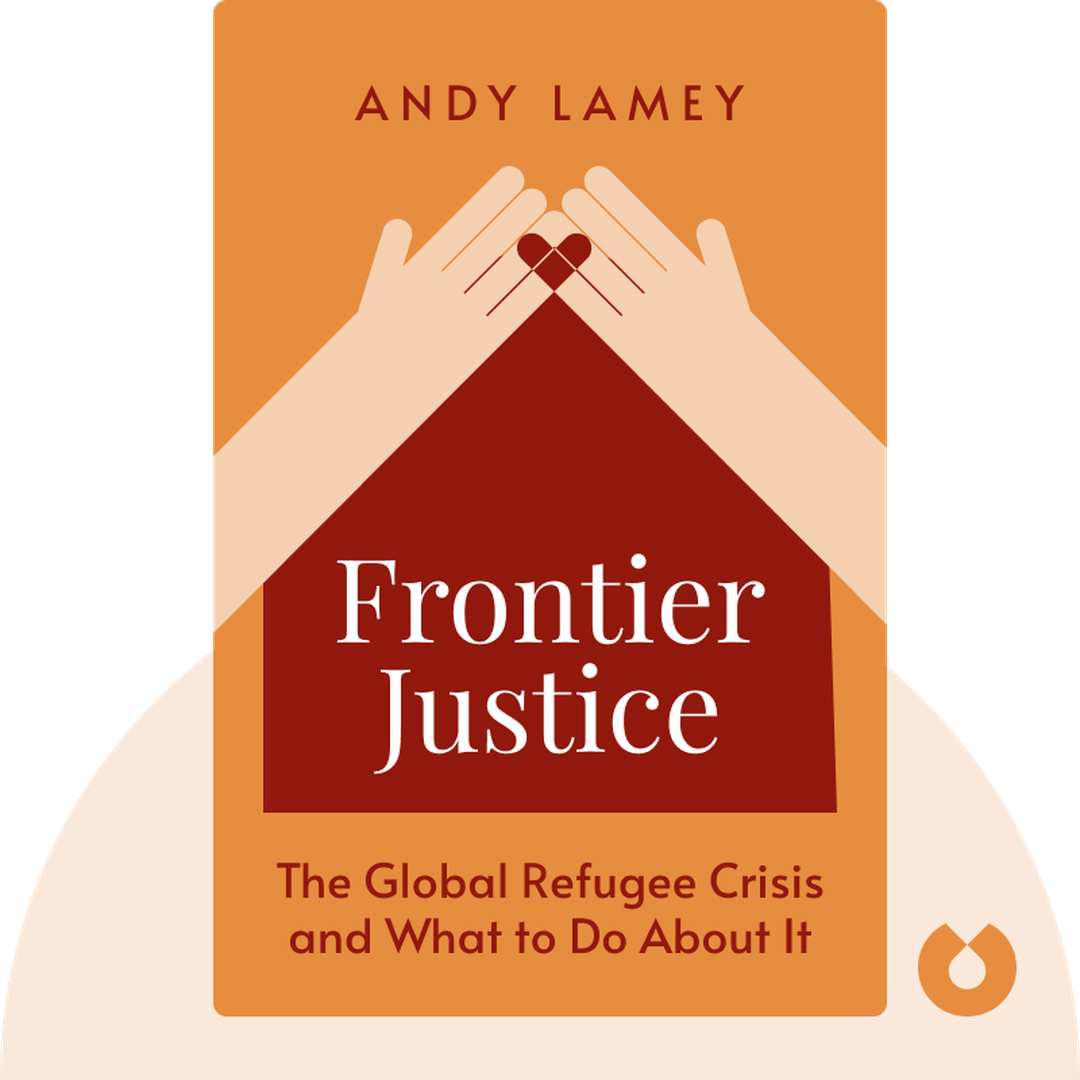
Frontier Justice (2011) offers a detailed historical account of the plight of refugees. It also presents viable solutions that could improve the lives of refugees while ensuring a higher degree of safety for their host countries.
Who Should Listen to Frontier Justice?
- Anyone with an interest in global politics
- People interested in the origins and impacts of international refugee crises
- Anyone concerned about human rights violations and humanitarian efforts
Books Similar to Frontier Justice
Readers who enjoyed this also liked these titles.