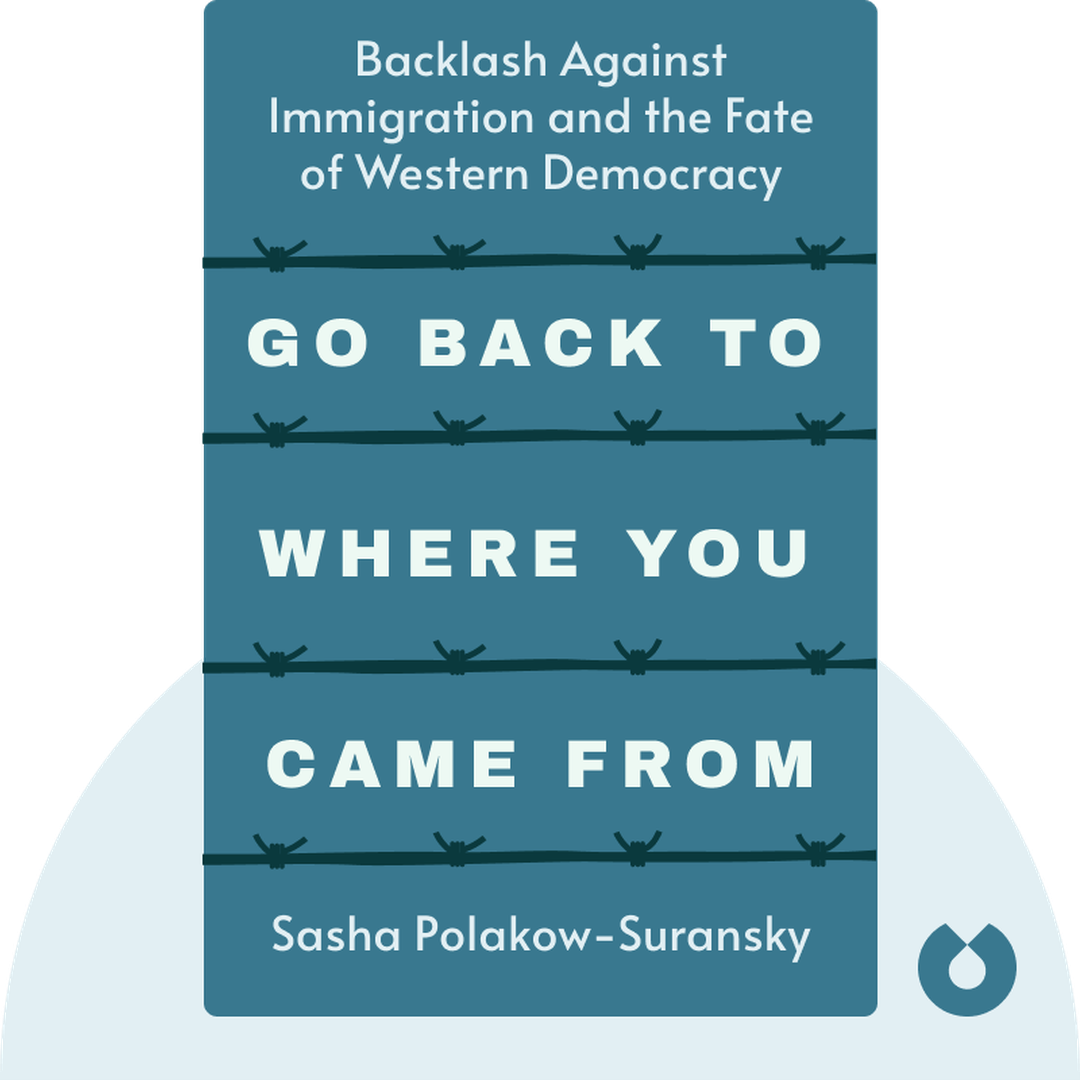
Go Back to Where You Came From
Start ListeningDownload Try free on iPhoneScan to start in 5 seconds
Categories:
If You're Curious About These Questions...
You should listen to this audiobook
- Have you ever wondered how the influx of refugees in Europe became the ultimate catalyst for the global rise of right-wing populism?
- Did you know that the political demonization of Muslim immigrants is actually a strategic tool that has fundamentally strengthened political extremism?
- Are you curious about why the current populist movement might be the single biggest threat to democracy as we know it today?
Listen to Go Back to Where You Came From — Free Audiobook
Loading player...
Key Takeaways from Go Back to Where You Came From
- Understand how today's extreme right-wing political climate and anti-immigrant rhetoric share chilling similarities with the anti-Semitism of 1930s Europe.
- Discover why the post-9/11 political landscape unfairly frames all Muslim immigrants as threats to Western democracy and secularism.
- Learn how extreme right-wing parties co-opt liberal values, such as feminism, to legitimize their Islamophobia and gain political credibility.
- Recognize the dangerous political tactic of using isolated acts of terrorism to demonize an entire religious demographic and justify exclusionary policies.
- Find out how trapping immigrants in the no-win situation of becoming marginalized 'counter-citizens' ultimately fuels extremist recruitment and further violence.
Learning Tools
Reinforce what you learned from Go Back to Where You Came From
Mind Map
Go Back to Where You Came From
Post-9/11 Islamophobia+
Bipartisan Fueling of Prejudice+
Historical Parallels (1930s)+
The Counter-Citizen Dilemma+
Abandonment of the Working Class+
Identity Politics & Authoritarianism+
Protecting Democracy+
Quiz — Test Your Understanding
Question 1 of 8
According to the author, the current political climate in Europe surrounding immigration shares the most similarities with which historical period?
Question 2 of 8
How do some far-right politicians, like Marine Le Pen, hypocritically utilize the concept of secularism?
Question 3 of 8
How did right-wing media unexpectedly respond to the New Year's Eve 2015 assaults in Cologne, Germany?
Question 4 of 8
What historical event does the author use to debunk the right-wing claim that today's Islamophobia is different from 1930s anti-Semitism because 'Jews didn't commit terrorist attacks'?
Question 5 of 8
In the context of the book, what defines a 'counter-citizen'?
Question 6 of 8
Why did many working-class voters shift their support from the political left to the right during the 1990s and early 2000s?
Question 7 of 8
According to political psychologist Karen Stenner, what primarily triggers a desire for authoritarian leadership in voters?
Question 8 of 8
Why might a populist far-right party actually prefer NOT to hold ultimate political power?
Go Back to Where You Came From — Full Chapter Overview
- 1Recommendation
- 2Since 9/11, Muslims have been viewed as a threat to democracy and Western culture.
- 3The left has helped fuel Islamophobia, while the right has embraced some liberal issues to gain credibility.
- 4Today’s Islamophobia has similarities to Nazi-era anti-Semitism.
- 5Making Muslims feel marginalized only fuels more violence.
- 6The left’s neglect of the working class has pushed voters toward the right.
- 7Identity politics draw on fears that spark an authoritarian response.
- 8Populist parties can pull the political center rightward – but we can, and must, pull it back.
- 9Final summary
Go Back to Where You Came From Summary & Overview
Go Back to Where You Came From (2017) takes a look at the current international political landscape and explains how the increase in refugees in Europe has contributed to the rise of the right-wing populist movement. It also explains why Muslim immigrants are the subject of such political demonization, how this issue has strengthened political extremism and why the populist movement is a serious threat to democracy as we know it.
Who Should Listen to Go Back to Where You Came From?
- Political science students or avid news readers
- Immigrants, refugees and activists
- Legislators and political decision makers
Books Similar to Go Back to Where You Came From
Readers who enjoyed this also liked these titles.