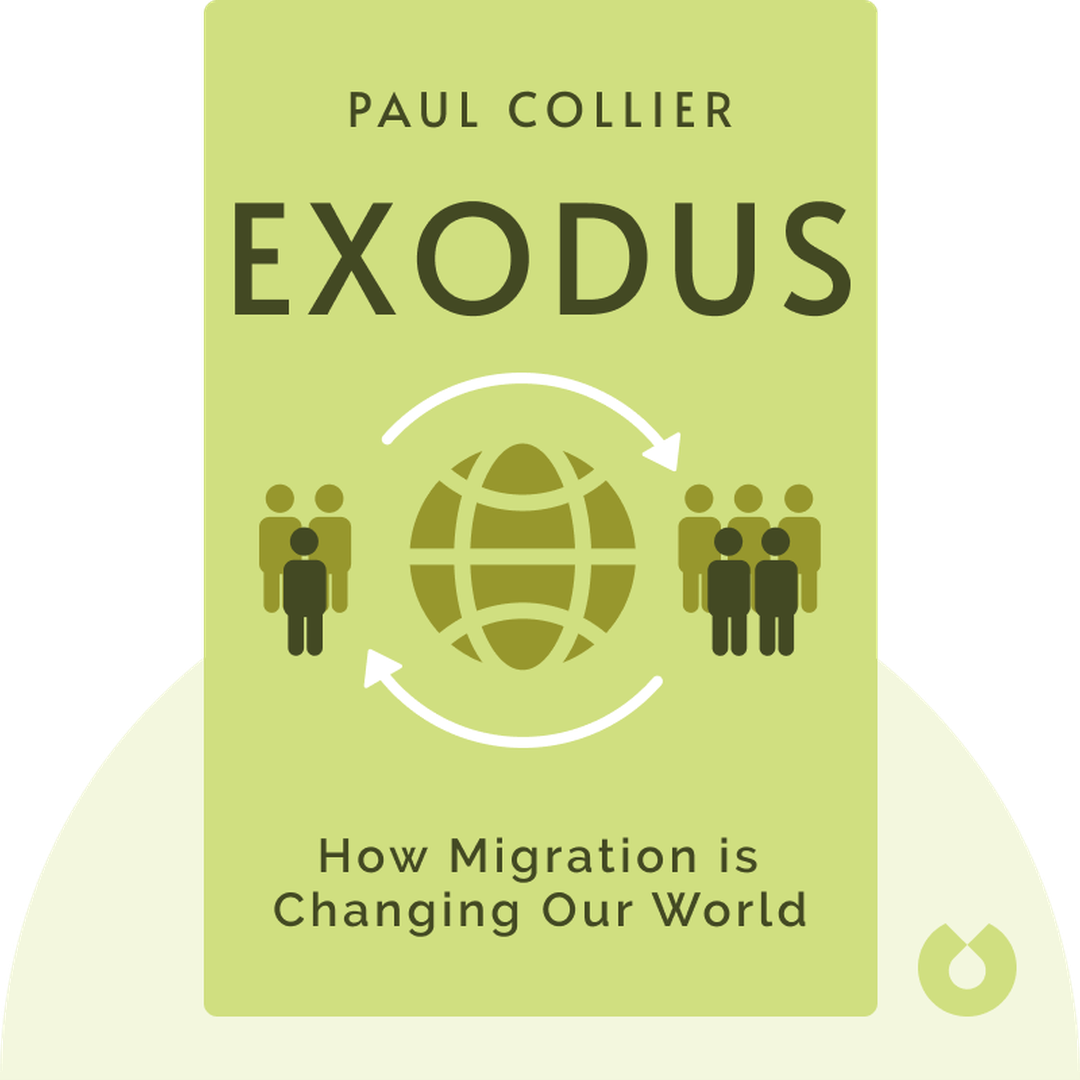
If You're Curious About These Questions...
You should listen to this audiobook
- Have you ever wondered why mass migration can sometimes hurt the very countries that people are leaving behind?
- Did you know that the real impact of immigration on a society depends on a specific social "tipping point" that most politicians ignore?
- Are you curious about the surprising secret to balancing migration so it benefits the migrant, the host country, and the country of origin all at once?
Listen to Exodus — Free Audiobook
Loading player...
Key Takeaways from Exodus
- Understand why global migration has surged due to income disparities, and how established diaspora communities make settling easier for new arrivals.
- Discover why policymakers avoid discussing migration due to complex moral dilemmas, a lack of comprehensive data, and the fear of appearing prejudiced.
- Learn how the speed of migration dictates social integration, and why a steady influx fosters the mutual regard necessary for harmony between locals and newcomers.
- Explore the dual economic impacts of immigration on host countries, balancing short-term hurdles like rising housing costs with long-term boosts to native productivity.
- Find out why migrating is an expensive investment that ultimately rewards individuals with access to functioning social and economic institutions absent in their home nations.
Learning Tools
Reinforce what you learned from Exodus
Mind Map
Exodus
Drivers of Migration+
Host Country Impacts+
Migrant Experience+
Origin Country Impacts+
Future Outlook & Policy+
Quiz — Test Your Understanding
Question 1 of 9
Why do politicians often avoid discussing migration policies, according to the text?
Question 2 of 9
According to the text, what primarily determines the degree to which migrants socially impact their host country?
Question 3 of 9
What is one negative economic effect that a high influx of migrants can have on a host country?
Question 4 of 9
What is the primary reason migrants can rapidly increase their standard of living in rich host countries?
Question 5 of 9
Why might it be in an immigrant's rational self-interest to support stricter anti-immigration laws in their host country?
Question 6 of 9
What did the 2012 study on migrants moving from Tonga to New Zealand reveal about the psychological impact of migration?
Question 7 of 9
How does the emigration of wealthy and educated citizens often affect dictatorial regimes in their home countries?
Question 8 of 9
What does the author describe as a "silver lining" to the brain drain experienced by small countries?
Question 9 of 9
What does the author predict about the future of global mass migration?
Exodus — Full Chapter Overview
- 1Recommendation
- 2Although migration has risen in recent decades, few politicians want to discuss the issues around it.
- 3Migrants have major social effects on their host country.
- 4Migration also affects the economies of host countries.
- 5Many migrants benefit enormously from moving to a new country.
- 6Migrants themselves can also lose the most in the migration process.
- 7Migrants can have mixed political effects on their country of origin.
- 8Migration can seriously drain small countries.
- 9Migration policies must adapt to today’s migration challenges.
- 10Final summary
Exodus Summary & Overview
Exodus (2013) offers insights into one of the most contested social and political issues of our time: human migration. By looking at the effects of migration on everyone concerned, you’ll gain insights into the dangers and benefits that migration, and immigration, hold for our economies and societies.
Who Should Listen to Exodus?
- Anyone interested in politics and economics
- Anyone whose ancestors once migrated to a new country
- Anyone who has strong opinions about immigration policy
Books Similar to Exodus
Readers who enjoyed this also liked these titles.