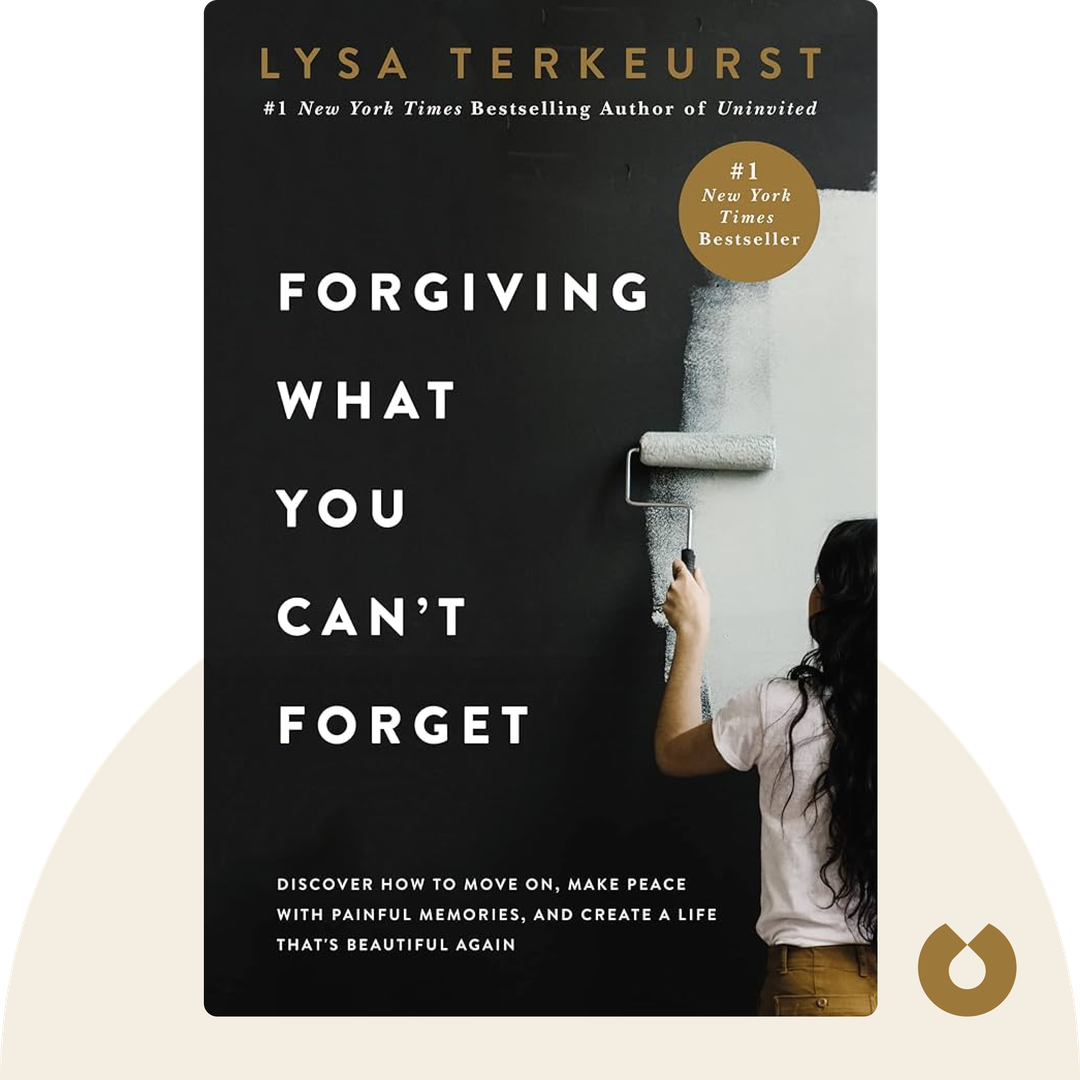
Forgiving What You Can't Forget
Start ListeningDownload Try free on iPhoneScan to start in 5 seconds
Categories:
If You're Curious About These Questions...
You should listen to this audiobook
- Have you ever wondered why it feels impossible to move on from a past hurt, even when you’ve tried your hardest to forgive and forget?
- What if you could find a way to make peace with your most painful memories without waiting for an apology that may never come?
- Are you curious about how the very experiences that broke your heart could actually become the bridge to your deepest healing and spiritual growth?
Listen to Forgiving What You Can't Forget — Free Audiobook
Loading player...
Key Takeaways from Forgiving What You Can't Forget
- Understand why forgiveness is an inner pact you make with yourself to heal, rather than a strict requirement for reconciling with the person who hurt you.
- Discover a practical card-writing exercise to consciously declare your forgiveness, allowing you to stop waiting for an offender's remorse and regain control of your closure.
- Learn how to navigate the long-term impacts of emotional trauma by embracing forgiveness as a complex, ongoing journey of self-compassion rather than an instant decision.
- Master the three-step method to collect, connect, and correct the dots of your past experiences to reveal how childhood wounds shape your current behavioral patterns.
- Identify how unprocessed pain creates isolating personas like cynicism and bitterness, and recognize how specific places or words secretly trigger your hidden memories.
Learning Tools
Reinforce what you learned from Forgiving What You Can't Forget
Mind Map
Forgiving What You Can't Forget
The Core of Forgiveness+
Overcoming Roadblocks+
The 'Dots' Framework+
Navigating Deep Trauma+
Quiz — Test Your Understanding
Question 1 of 8
According to the author, what is the primary source of strength for a person to forgive when they feel too hurt to do so on their own?
Question 2 of 8
Why does the author argue against waiting for the person who wronged you to realize their mistake before you choose to forgive?
Question 3 of 8
What was the psychological purpose of the therapy exercise involving 3x5 cards and red felt squares?
Question 4 of 8
How did the author initially use 'hyper-spiritualizing' as an unhealthy coping mechanism?
Question 5 of 8
In the author's healing framework, what does the process of 'connecting the dots' primarily involve?
Question 6 of 8
What does 'correcting the dots' mean in the context of the author's journey?
Question 7 of 8
Why does the author state that taking revenge is 'expensive'?
Question 8 of 8
How does the author suggest handling moments when an old trauma is suddenly 'triggered' by a memory or comment?
Forgiving What You Can't Forget — Full Chapter Overview
- 1Recommendation
- 2To heal, you first have to forgive.
- 3Waiting for the perfect time to forgive only postpones healing.
- 4Coping mechanisms don’t help us cope long term.
- 5To forgive in the present, we must revisit the past.
- 6Connecting the dots means revising your belief systems.
- 7Correcting the dots helps you reframe your suffering and move forward in healthy ways.
- 8The things you can’t change are often the hardest to forgive.
- 9Forgiveness isn’t a destination; it’s an ongoing process.
Forgiving What You Can't Forget Summary & Overview
Forgiving What You Can’t Forget (2020) is a guide to healing from past hurt. Drawing from her experiences of abuse in her childhood and infidelity in her marriage, author Lysa TerKeurst offers up ways to make peace with painful memories through forgiveness.
Who Should Listen to Forgiving What You Can't Forget?
- Anyone suffering from a broken heart
- Christians seeking to feel closer to God
- Those wanting to reframe their suffering as something positive
Books Similar to Forgiving What You Can't Forget
Readers who enjoyed this also liked these titles.