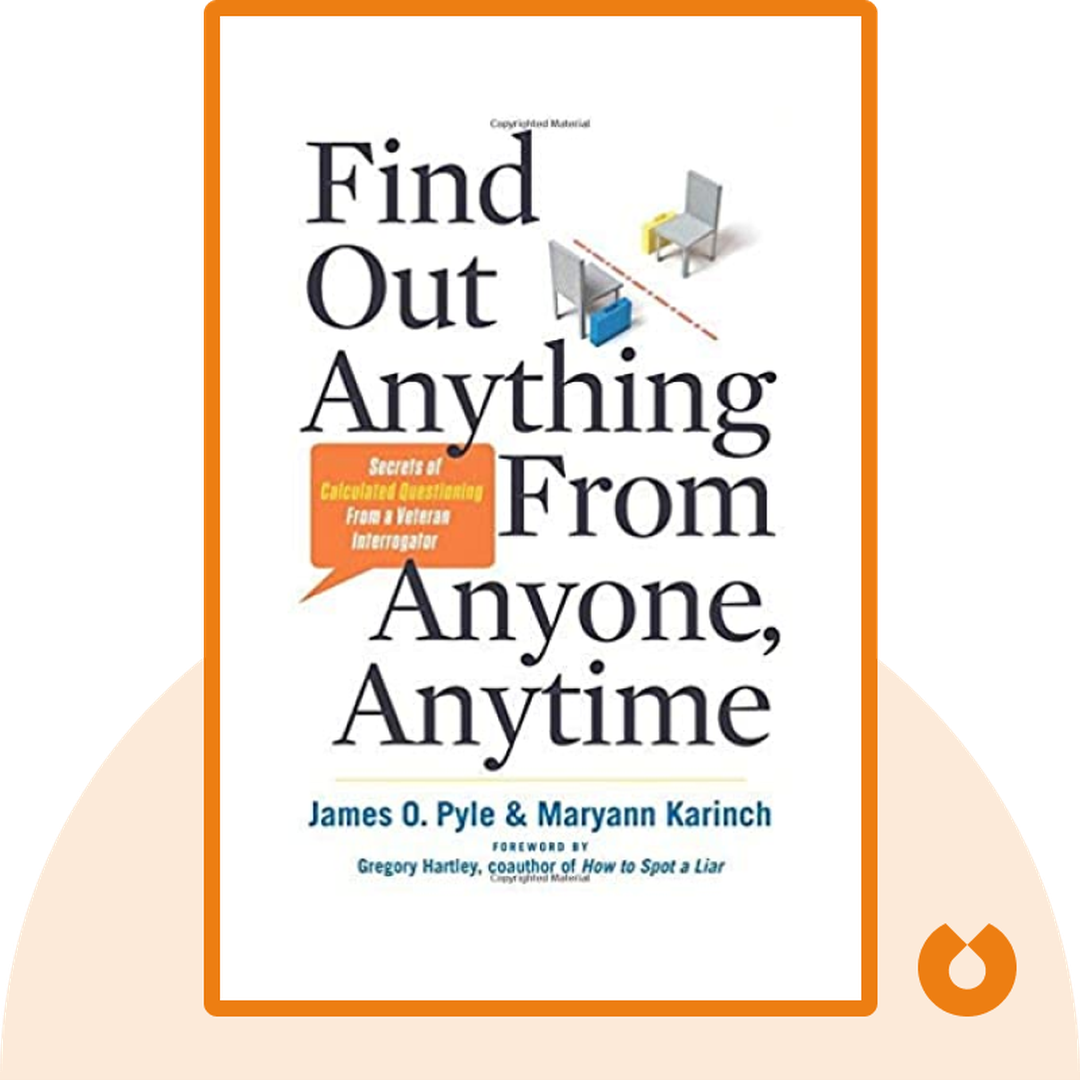
Find Out Anything From Anyone, Anytime
Start ListeningDownload Try free on iPhoneScan to start in 5 seconds
Categories:
If You're Curious About These Questions...
You should listen to this audiobook
- What if you could use the same techniques as professional interrogators to get honest, direct answers in your everyday conversations?
- Did you know that the way you phrase a question can actually determine whether someone tells you the truth or hides it from you?
- What’s the secret to uncovering the information you need without making the other person feel like they’re being put on the spot?
Listen to Find Out Anything From Anyone, Anytime — Free Audiobook
Loading player...
Key Takeaways from Find Out Anything From Anyone, Anytime
- Discover why starting your questions with 'who, what, where, why, when, and how' encourages illuminating responses and prevents conversation-killing yes or no answers.
- Learn to identify and avoid the four types of bad questions—leading, vague, negative, and compound—to ensure you receive clear and complete information.
- Master the use of the simple but powerful phrase 'What else?' to uncover crucial hidden details and accurately diagnose the root cause of a situation.
- Understand how reframing and repeating your questions from different angles allows you to bypass evasive replies and get closer to the real truth.
- Find out how considering a respondent's personal motives and putting yourself in their shoes can dramatically improve the quality of the answers you gather.
Learning Tools
Reinforce what you learned from Find Out Anything From Anyone, Anytime
Mind Map
Find Out Anything From Anyone, Anytime
The Power of W-Words+
Four Bad Questions to Avoid+
The Golden Question: 'What else?'+
Reframing and Repeating+
Understanding the Respondent+
Professional Questioning Strategies+
Actionable Advice+
Quiz — Test Your Understanding
Question 1 of 8
Why are 'W-word' questions (who, what, why, where, when, and how) considered highly effective?
Question 2 of 8
According to the text, why do compound questions often fail to yield good answers?
Question 3 of 8
What phrase is described as a 'golden nugget' question that helps investigators and tech support workers uncover a wider picture or root problem?
Question 4 of 8
If you receive an incomplete answer during an interview, what is the book's recommended strategy for uncovering the full truth?
Question 5 of 8
When questioning someone with a 'dictatorial' personality type, what should the questioner be aware of?
Question 6 of 8
How does a competent teacher's questioning strategy differ from a poorly equipped teacher's strategy?
Question 7 of 8
During a breaking news event, why do trained journalists initially focus on 'What' and 'Where' rather than 'Why'?
Question 8 of 8
What actionable advice does the book offer to help readers improve their interpersonal questioning skills?
Find Out Anything From Anyone, Anytime — Full Chapter Overview
- 1Recommendation
- 2Questions beginning with who, what, where, why, when, and how get the best answers.
- 3Four types of bad questions you should avoid.
- 4“What else?” is often the most useful question you can ask.
- 5Rephrase and repeat questions to move closer to the truth.
- 6Consider your respondent’s motives and perspective.
- 7Your profession shapes the kinds of questions you ask.
- 8To be a good reporter, focus on events as they unfold in time.
- 9Final summary
Find Out Anything From Anyone, Anytime Summary & Overview
Find Out Anything From Anyone, Anytime (2014) is a guide to asking questions that will elicit the responses you seek. The authors draw on decades of experience to show that everyone – from teachers to journalists to doctors – can benefit from asking the right questions in the right way.
Who Should Listen to Find Out Anything From Anyone, Anytime?
- Journalists, lawyers or anyone whose job involves asking a lot of questions
- People interested in the sociology of language
- Those wishing to improve their conversational techniques
Books Similar to Find Out Anything From Anyone, Anytime
Readers who enjoyed this also liked these titles.