If You're Curious About These Questions...
You should listen to this audiobook
- Have you ever wondered why two nations with similar resources can end up on completely opposite ends of the global wealth spectrum?
- What if you could pinpoint the exact political decisions that turn a potential economic superpower into a financial disaster?
- Are you curious about whether a country's success is actually due to luck, or if its fate is entirely shaped by the deliberate choices of its leaders?
Listen to False Economy — Cinematic Audio Edition
Loading player...
Key Takeaways from False Economy
- Understand why government policy, rather than geography or fate, drives a nation's prosperity by comparing the divergent historical choices of the United States and Argentina.
- Discover how a nation's cities reflect its economic health, and why diversified urban centers thrive while bloated, overpopulated capitals drain resources from the countryside.
- Learn how strategic agricultural choices and international trade agreements, like Peru's asparagus exports, can incentivize citizens and stabilize an entire economy.
- Find out how civil instability and inefficient border crossings can cripple a nation's lucrative export potential, trapping countries in poverty despite high global demand for their goods.
- Explore the hidden dangers of abundant natural resources, and see how countries like Norway use stabilization funds to avoid the economic chaos seen in other resource-rich nations.
Learning Tools
Reinforce what you learned from False Economy
Mind Map
False Economy
Core Premise+
Land & Industrial Policy+
Urbanization & Cities+
Trade & Agriculture+
Natural Resources+
Cultural & Political Myths+
Adaptation & Change+
Quiz — Test Your Understanding
Question 1 of 7
Why did the economic paths of the United States and Argentina diverge despite having similar starting conditions?
Question 2 of 7
According to the text, what does a bloated, overpopulated capital city often indicate about a nation?
Question 3 of 7
Why does Egypt choose to import water-depleting foods like wheat instead of growing them domestically?
Question 4 of 7
How did Botswana achieve economic stability with its diamond resources, unlike Sierra Leone?
Question 5 of 7
What does the text conclude about the relationship between religion and a nation's economic success?
Question 6 of 7
What lesson is drawn from the comparison of Indonesia's President Suharto and Tanzania's President Julius Nyerere?
Question 7 of 7
Why was China more successful than Russia in transitioning its economy in the late 20th century?
False Economy — Full Chapter Overview
- 1Recommendation
- 2Key choices, not fate, shaped the economies of Argentina and the United States.
- 3Cities can play a crucial role in a nation’s economic success.
- 4Farming decisions and shipping routes can strongly shape trade and the economy.
- 5Natural resources can become more trouble than they’re worth.
- 6The economy doesn’t care about religion.
- 7Even with corrupt leaders, policy choices drive economic success.
- 8With the right choices, nations can reshape their economic fate.
- 9Final summary
False Economy Summary & Overview
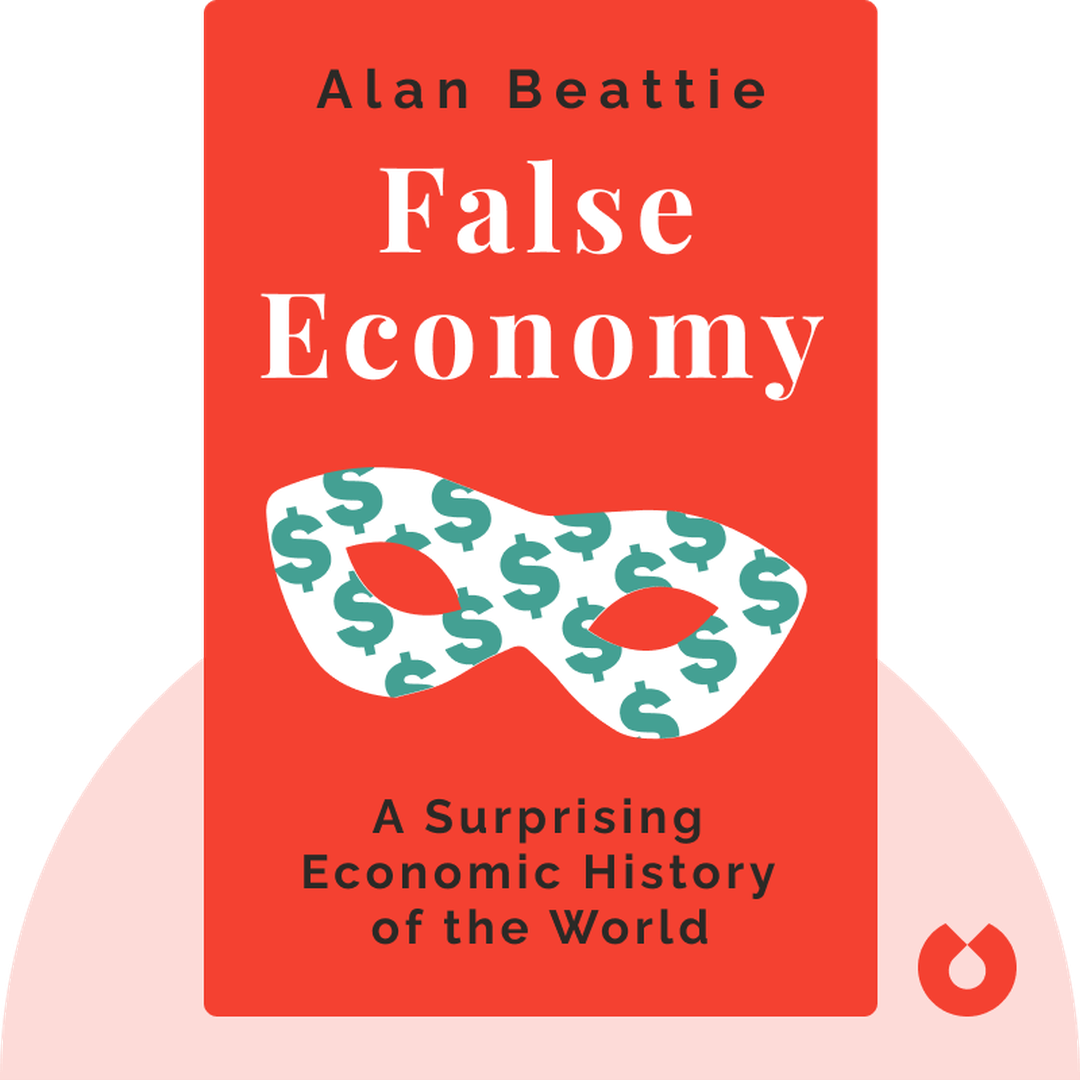
False Economy (2009) offers a fresh perspective on how and why some nations of the world have become economic powerhouses and others have ended up as financial disasters. You’ll see that nations aren’t handcuffed by fate. Rather, their economic success or failure is based on the choices they make.
Who Should Listen to False Economy?
- Anyone interested in economics
- Readers who want to learn about the politics of money
- People interested in international business
Books Similar to False Economy
Readers who enjoyed this also liked these titles.