If You're Curious About These Questions...
You should listen to this audiobook
- Have you ever wondered why the secret to a high-tech industrial revolution actually begins with how a country manages its small-scale farmers?
- What's the secret to 'export discipline' that turned small Asian nations into global manufacturing giants while others remained stuck in poverty?
- Did you know that the world’s fastest-growing economies often succeeded by doing the exact opposite of what Western economists recommended?
Listen to How Asia Works — Cinematic Audio Edition
Loading player...
Key Takeaways from How Asia Works
- Understand why transforming a developing state into an economic powerhouse requires executing specific agricultural and industrial policies in a strict, sequential order.
- Learn how promoting labor-intensive, small-scale household farming maximizes crop yields and job creation much more effectively than large-scale mechanization.
- Discover the critical role of radical land reform in economic growth, and how redistributing property to working-class farmers dramatically reduces national inequality.
- Find out why developing nations must initially rely on protectionist policies to nurture and shield early manufacturing industries before embracing global free trade.
- Explore how active government investment in technological development and state-run pilot factories can successfully kickstart a globally competitive manufacturing sector.
Learning Tools
Reinforce what you learned from How Asia Works
Mind Map
How Asia Works
Phase 1: Agriculture+
Phase 2: Manufacturing+
Phase 3: Finance+
Case Study: China+
Quiz — Test Your Understanding
Question 1 of 8
Why do successful Asian states promote small-scale household farming over large-scale mechanized farming in the early stages of development?
Question 2 of 8
What was a primary outcome of the land reforms implemented in Japan and Taiwan after World War II?
Question 3 of 8
According to the text, why should developing countries initially use protectionist policies rather than immediately embracing free trade?
Question 4 of 8
How did South Korea successfully ensure that its newly developed manufacturing companies became globally competitive?
Question 5 of 8
What was the negative consequence of Malaysia prematurely deregulating its stock exchange in 1989?
Question 6 of 8
Which policy change by Deng Xiaoping was instrumental in dramatically boosting China's agricultural output?
Question 7 of 8
According to the book, what is a major reason why China's rural-urban income gap remains high despite government stimulus programs?
Question 8 of 8
Why do China's private automotive manufacturers, like Geely and Chery, struggle to develop their own popular products?
How Asia Works — Full Chapter Overview
- 1Recommendation
- 2To begin development in poor countries, increase agricultural output by supporting household farming.
- 3Effective, wide-reaching land reform is essential for encouraging household farming.
- 4Protectionist policies are needed to shift toward a manufacturing economy.
- 5Governments must invest in technological progress and support entrepreneurs.
- 6Successful industrialization needs a system that pushes businesses to export and promotes competition.
- 7Financial deregulation too early can hold back development.
- 8Rolling back flawed communist policies sparked China’s economic development.
- 9China has made major progress, but still faces serious challenges.
- 10Final summary
How Asia Works Summary & Overview
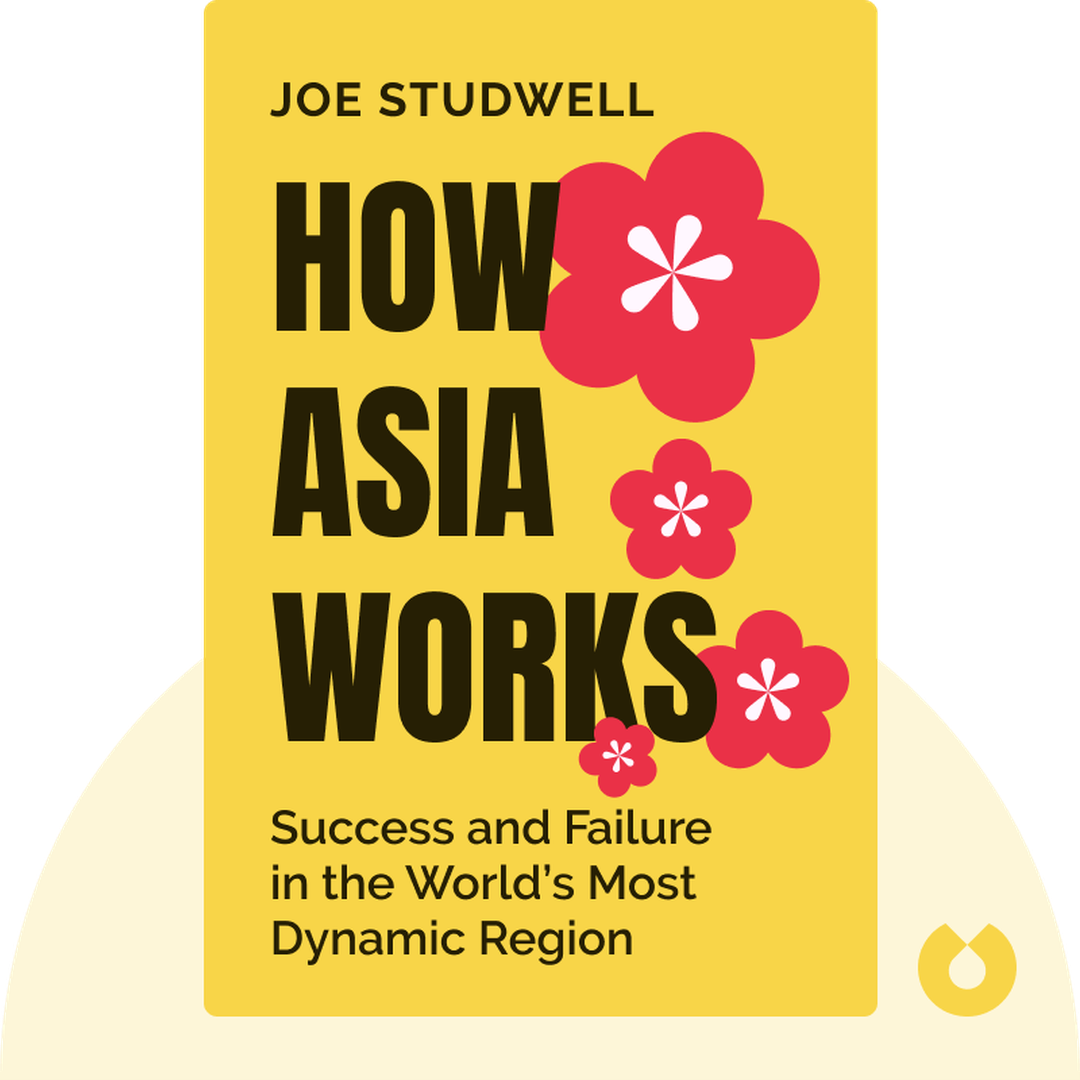
How Asia Works examines the economic development of nine Asian countries and, in the process, sketches a blueprint for other developing nations seeking to achieve sustainable economic growth. Joe Studwell explains why some Asian economies have boomed while others have fallen behind, revealing what history has proved works – and what doesn’t.
Who Should Listen to How Asia Works?
- Anyone interested in developing economies and international economics
- Asian history enthusiasts
Books Similar to How Asia Works
Readers who enjoyed this also liked these titles.