If You're Curious About These Questions...
You should listen to this audiobook
- Have you ever wondered why the rules and successes that worked in your youth suddenly seem to fail you as you get older?
- What if the biggest mistakes and 'falls' of your life were actually the secret key to reaching a higher level of spiritual maturity?
- Are you curious about how to transition from simply building your life’s 'container' to finally discovering the purpose meant to fill it?
Listen to Falling Upward — Free Audiobook
Loading player...
Key Takeaways from Falling Upward
- Understand that life is divided into two distinct halves: the first half is for building the 'container' of your identity, while the second is for filling it with true purpose.
- Discover why reaching the second half of life isn't determined by your chronological age, but is often triggered by experiencing hardship or hitting rock bottom.
- Recognize the trap of our 'first-half-of-life culture' so you can stop endlessly building boundaries and security, and finally focus on what you actually want to do with your life.
- Learn how ancient myths, like the hero's journey and the story of Odysseus, provide a universal blueprint for navigating life's ultimate transitions.
- Master the art of 'falling upward' by shedding the ego-driven tools that helped you survive your early years, allowing you to embrace the second half of life with peace.
Learning Tools
Reinforce what you learned from Falling Upward
Mind Map
Falling Upward
Core Concept+
The First Half+
The Transition+
The Second Half+
Quiz — Test Your Understanding
Question 1 of 7
According to the text, what is the primary task of the first half of life?
Question 2 of 7
How does the text describe the relationship between chronological age and the two halves of life?
Question 3 of 7
What does the metaphor of 'discharging the loyal soldier' represent in the transition between life's halves?
Question 4 of 7
According to Richard Rohr, what is absolutely necessary to transition from the first half of life to the second?
Question 5 of 7
How does a person's thinking generally change when they enter the second half of life?
Question 6 of 7
In the second half of life, how do true elders primarily exert their influence?
Question 7 of 7
What must a person lose in order to find their 'true self,' according to the text?
Falling Upward — Full Chapter Overview
- 1Recommendation
- 2The Two Halves of Life
- 3Life’s First Half
- 4Making the Transition
- 5The Fall
- 6Life’s Second Half
- 7Final summary
Falling Upward Summary & Overview
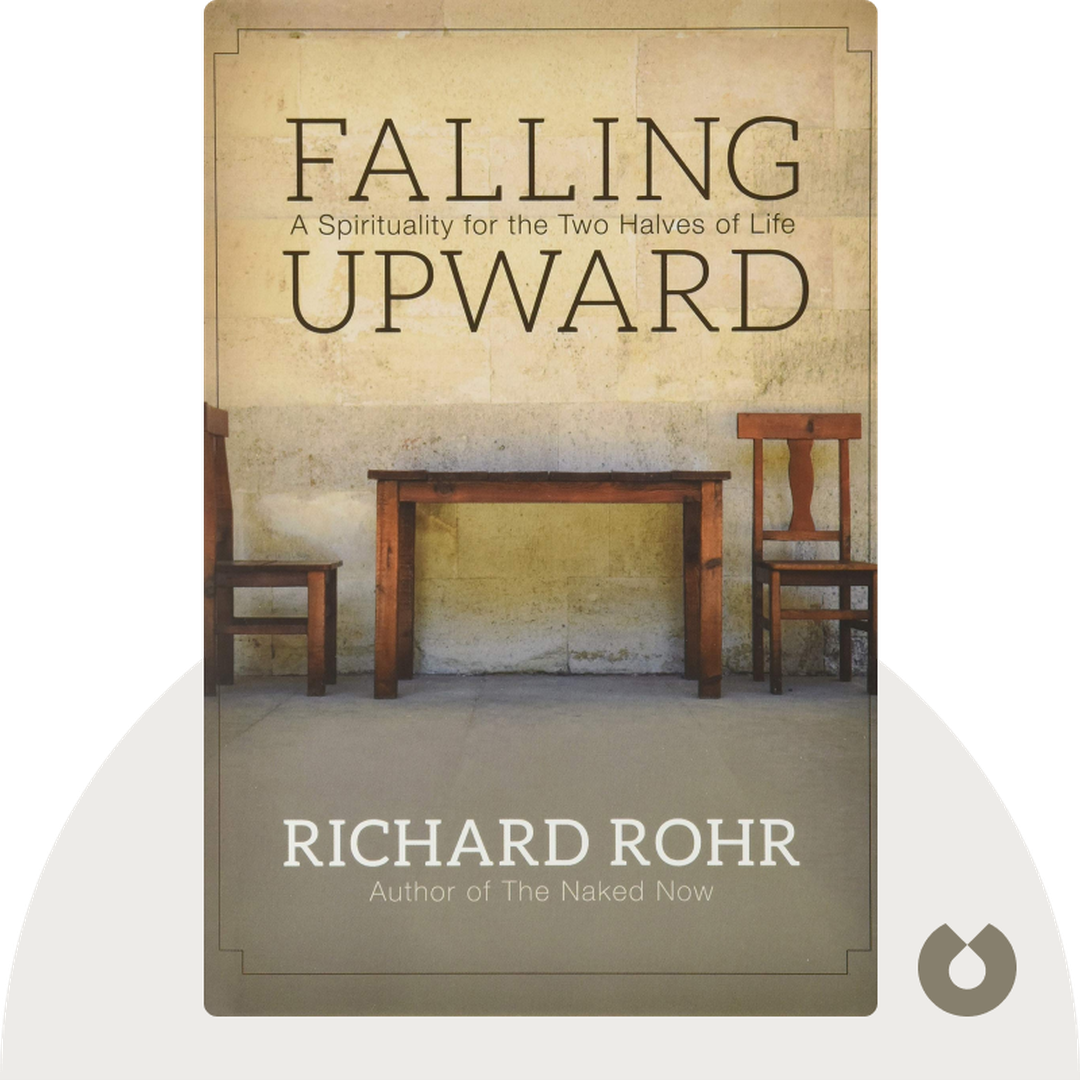
Falling Upward (2011) explores the “tasks” of the two halves of life. It explains that the second half of life isn’t about getting old; it’s about filling the “container” that we create during the first half and finding our purpose.
Who Should Listen to Falling Upward?
- First-half lifers looking for insights
- People who’ve “fallen” and need comfort
- Second-half lifers seeking reassurance
Books Similar to Falling Upward
Readers who enjoyed this also liked these titles.