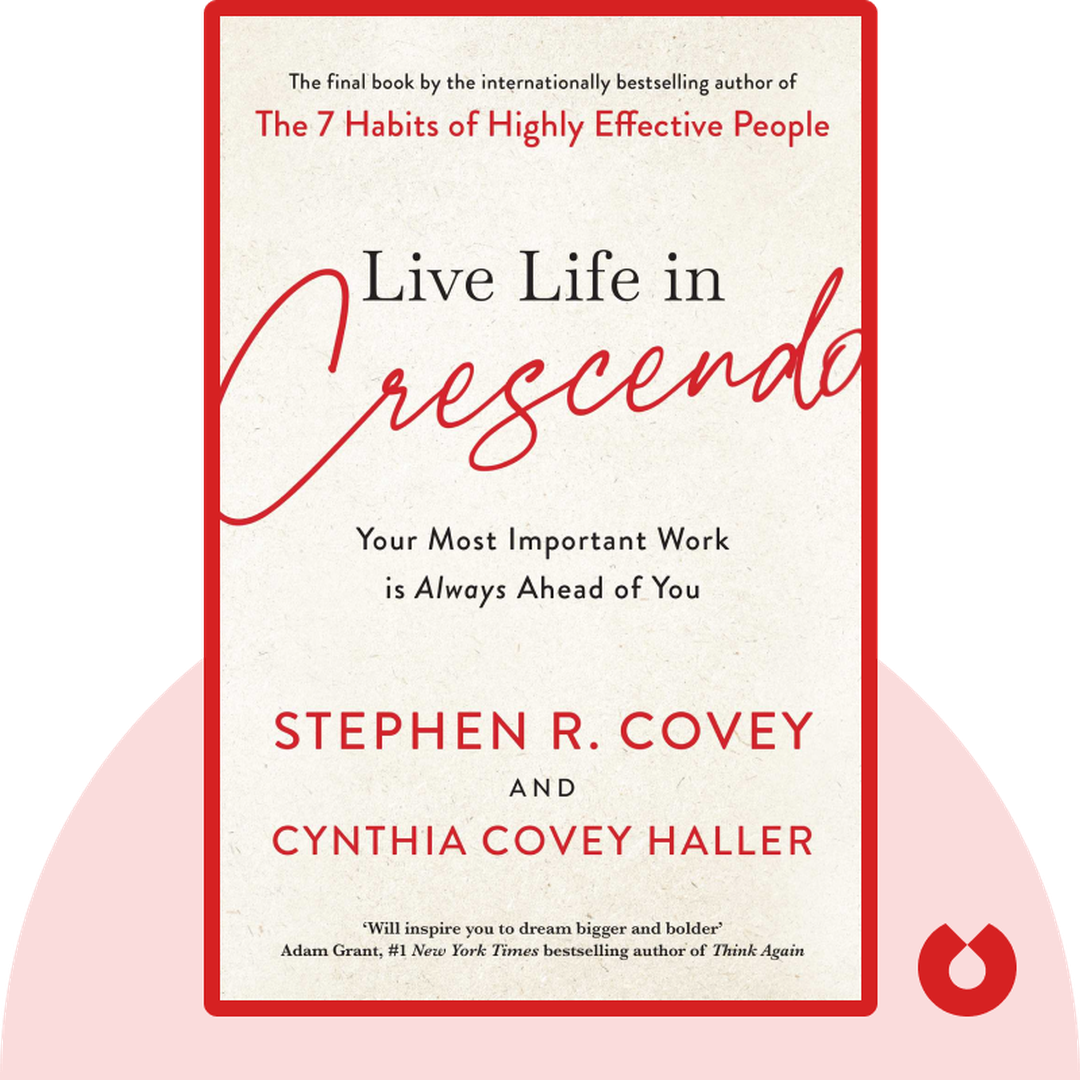
Live Life in Crescendo
Start ListeningDownload Try free on iPhoneScan to start in 5 seconds
Categories:
If You're Curious About These Questions...
You should listen to this audiobook
- What if your most significant contribution to the world hasn't happened yet, regardless of your age or past achievements?
- Are you curious about how a simple shift in perspective can transform a midlife crisis into a powerful season of growth and new purpose?
- What’s the secret to living a life that continually builds in influence and meaning, rather than fading away as the years go by?
Listen to Live Life in Crescendo — Free Audiobook
Loading player...
Key Takeaways from Live Life in Crescendo
- Understand the power of a 'crescendo mentality' by choosing to continuously grow, learn, and contribute rather than letting your life fade away.
- Discover how to navigate a midlife crisis by envisioning your funeral legacy, shifting your focus from career expectations to your life's true mission.
- Learn why you should never rest on your past achievements, and instead adopt the mindset that your greatest and most important work always lies ahead of you.
- Master the art of helping others realize their unique potential by first finding your own voice and using it to affirm and inspire the people around you.
- Apply the 'first things first' principle to prioritize your goals around the relationships that matter most, ensuring you constantly seek ways to serve and uplift others.
Learning Tools
Reinforce what you learned from Live Life in Crescendo
Mind Map
Live Life in Crescendo
Core Philosophy+
Midlife+
Success+
Setbacks+
The Second Half of Life+
Legacy and Memories+
Quiz — Test Your Understanding
Question 1 of 8
What does it mean to live your life with a 'crescendo' mentality?
Question 2 of 8
According to the text, how should we reframe our understanding of true success during a midlife crisis?
Question 3 of 8
What practical exercise is suggested to help prioritize your goals and create your best possible future?
Question 4 of 8
What is the 'eighth habit' that Stephen R. Covey felt compelled to add to his original seven habits?
Question 5 of 8
What key principle is demonstrated by the stories of Anthony Ray Hinton and Dr. Chandrasekhar Sankurathri?
Question 6 of 8
According to Dr. Hans Selye's findings, how does 'eustress' (beneficial stress) affect people in the second half of life?
Question 7 of 8
How does the book suggest you change your focus during retirement or the second half of life?
Question 8 of 8
Why does the text emphasize the importance of creating meaningful memories with family and friends?
Live Life in Crescendo — Full Chapter Overview
- 1Recommendation
- 2Middle Age
- 3Achievement
- 4Setbacks
- 5Life’s Second Half
- 6Final summary
Live Life in Crescendo Summary & Overview
Live Life in Crescendo (2022) anecdotally provides the answers to many questions about life: How do you live your best life, no matter how old you are? How do you respond to life-changing challenges? What do you do if you have a midlife crisis? It shows how to live life in crescendo – continually growing in contribution, learning, and influence.
Who Should Listen to Live Life in Crescendo?
- People experiencing a midlife (or quarterlife) crisis
- High achievers looking for a new challenge in life
- Anyone who wants to learn inspiring life lessons
Books Similar to Live Life in Crescendo
Readers who enjoyed this also liked these titles.