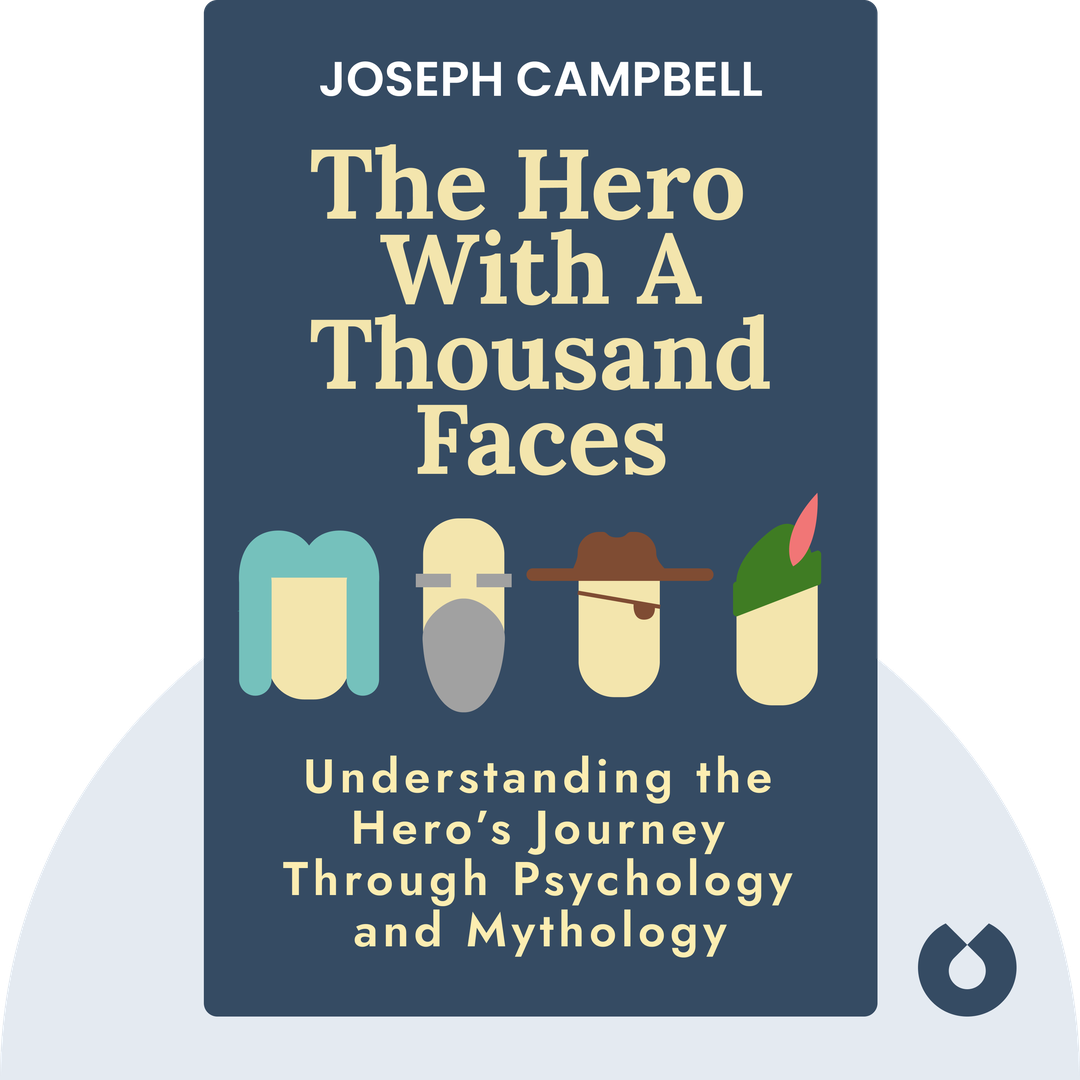
The Hero with a Thousand Faces
Start ListeningDownload Try free on iPhoneScan to start in 5 seconds
Categories:
If You're Curious About These Questions...
You should listen to this audiobook
- Have you ever wondered why the world’s most powerful stories, from ancient legends to modern blockbusters, all follow the exact same hidden blueprint?
- Did you know that ancient myths are actually secret psychological maps designed to help you navigate the greatest challenges of your own life?
- What if you could master the universal structure of storytelling to captivate any audience and unlock your own creative potential?
Listen to The Hero with a Thousand Faces — Cinematic Audio Edition
Loading player...
Key Takeaways from The Hero with a Thousand Faces
- Understand how recognizing the universal structure of ancient myths allows you to unearth deeply buried psychological lessons and hidden messages.
- Discover why our souls crave storytelling as a powerful psychological tool to heal trauma, find guidance, and navigate times of confusion.
- Learn how an accidental mistake or unexpected encounter often serves as a metaphorical 'call to action,' signaling your readiness for profound personal transformation.
- Uncover how to identify the symbolic helpers in your own life who provide the critical knowledge and tools needed to overcome your greatest trials.
- Explore the concept of symbolic rebirth and realize why returning home to share your newly acquired wisdom with your community completes the hero's journey.
Learning Tools
Reinforce what you learned from The Hero with a Thousand Faces
Mind Map
The Hero with a Thousand Faces
Core Philosophy (The Monomyth)+
Stage One: The Departure+
Stage Two: The Initiation+
Stage Three: The Return+
Quiz — Test Your Understanding
Question 1 of 7
What psychological connection did Joseph Campbell find between ancient myths and modern people?
Question 2 of 7
In the Departure stage, what is the symbolic significance of the 'Belly of the Whale' step?
Question 3 of 7
How does Campbell characterize the 'Supernatural Aid' or mentor figure in the hero's journey?
Question 4 of 7
During the Initiation stage, what is a primary psychological goal of steps like 'Meeting with the Goddess' and 'Atonement with the Father'?
Question 5 of 7
What characterizes the hero's state during the 'Apotheosis' step of the Initiation stage?
Question 6 of 7
Why is 'Crossing the Return Threshold' often considered one of the biggest challenges of the entire journey?
Question 7 of 7
According to the final summary, what ultimate purpose does completing the hero's journey serve?
The Hero with a Thousand Faces — Full Chapter Overview
- 1Recommendation
- 2Stage One: The Exit
- 3Stage Two: The Becoming
- 4Stage Three: The Homecoming
The Hero with a Thousand Faces Summary & Overview
The Hero with a Thousand Faces (1948) is a seminal work of comparative mythology. It reveals that foundational myths from around the world share similar structures and themes, which trace back to some of our earliest stories and continue to hold a strong power over us today.
Who Should Listen to The Hero with a Thousand Faces?
- Anyone interested in storytelling
- Fans of myths and fables
- Writers looking for inspiration
Books Similar to The Hero with a Thousand Faces
Readers who enjoyed this also liked these titles.