If You're Curious About These Questions...
You should listen to this audiobook
- Have you ever wondered what it takes to stay in high demand as a creative freelancer for over 20 years?
- What if the secret to a lasting business isn't chasing growth, but mastering a completely different set of rules?
- Are you curious about the counterintuitive lessons learned from two decades of working for yourself?
Listen to Everything I Know — Free Audiobook
Loading player...
Key Takeaways from Everything I Know
- Discover why copying someone else's path is like following an outdated treasure map, and learn how to forge your own authentic venture.
- Learn how embracing your unique 'weirdness' and personal imperfections attracts more loyal clients than trying to project a flawless, boring image.
- Understand the importance of anchoring your self-worth to controllable internal values, like helping others, rather than chasing unpredictable fame and wealth.
- Find out why hands-on experience and real-world mistakes offer far more valuable business lessons than traditional classroom education.
- Master the art of knowing when to hit the pause button on a struggling project, allowing you to step back, reevaluate, and overcome stagnation.
Learning Tools
Reinforce what you learned from Everything I Know
Mind Map
Everything I Know
Choosing Your Path+
Authenticity & Values+
Action & Adaptation+
Overcoming Obstacles+
Fear & Courage+
Intentions & Audience+
Focus & Process+
Inspiration vs. Mimicry+
Sustainability & Persistence+
Quiz — Test Your Understanding
Question 1 of 10
Why does Paul Jarvis advise against following someone else's established path or business model?
Question 2 of 10
What lesson does the book draw from Caren, the yoga instructor who openly discusses her depression?
Question 3 of 10
Why does Jarvis advise against aligning your core values with making money or getting famous?
Question 4 of 10
What does Jarvis recommend doing if your business has flatlined or gets off to a bad start?
Question 5 of 10
How does the book define true courage in the context of entrepreneurship?
Question 6 of 10
What is the purpose of a 'rallying flag' in your business?
Question 7 of 10
Why does Jarvis believe that 'follow your passion' is incomplete career advice?
Question 8 of 10
Why is Jarvis against setting traditional business goals?
Question 9 of 10
According to Jarvis, what is the difference between 'theft' and 'mimicry' in creative work?
Question 10 of 10
What actionable advice does Jarvis give regarding making money as an entrepreneur?
Everything I Know — Full Chapter Overview
- 1Recommendation
- 2Choosing Your Own Adventure Is Scary but Rewarding
- 3Embrace Your Weirdness and Stay True to Your Values
- 4Learn by Doing, and Step Back if Things Start Badly
- 5To Begin, Stop Worrying About Perfection or Other People’s Opinions
- 6Everyone Has Fears; Courage Means Moving Through Them and Accepting Failure
- 7Clear Intentions and a Strong Rallying Flag Help Your Work Connect with Others
- 8Find Your Intersection, Avoid Distractions, and Focus on Values Over Goals
- 9Stealing and Copying Can Help You Start, but Avoid Mimicry and Comparison
- 10Don’t Fear Saying No, Use Slow Times Well, and Keep Going
- 11Final Summary
Everything I Know Summary & Overview
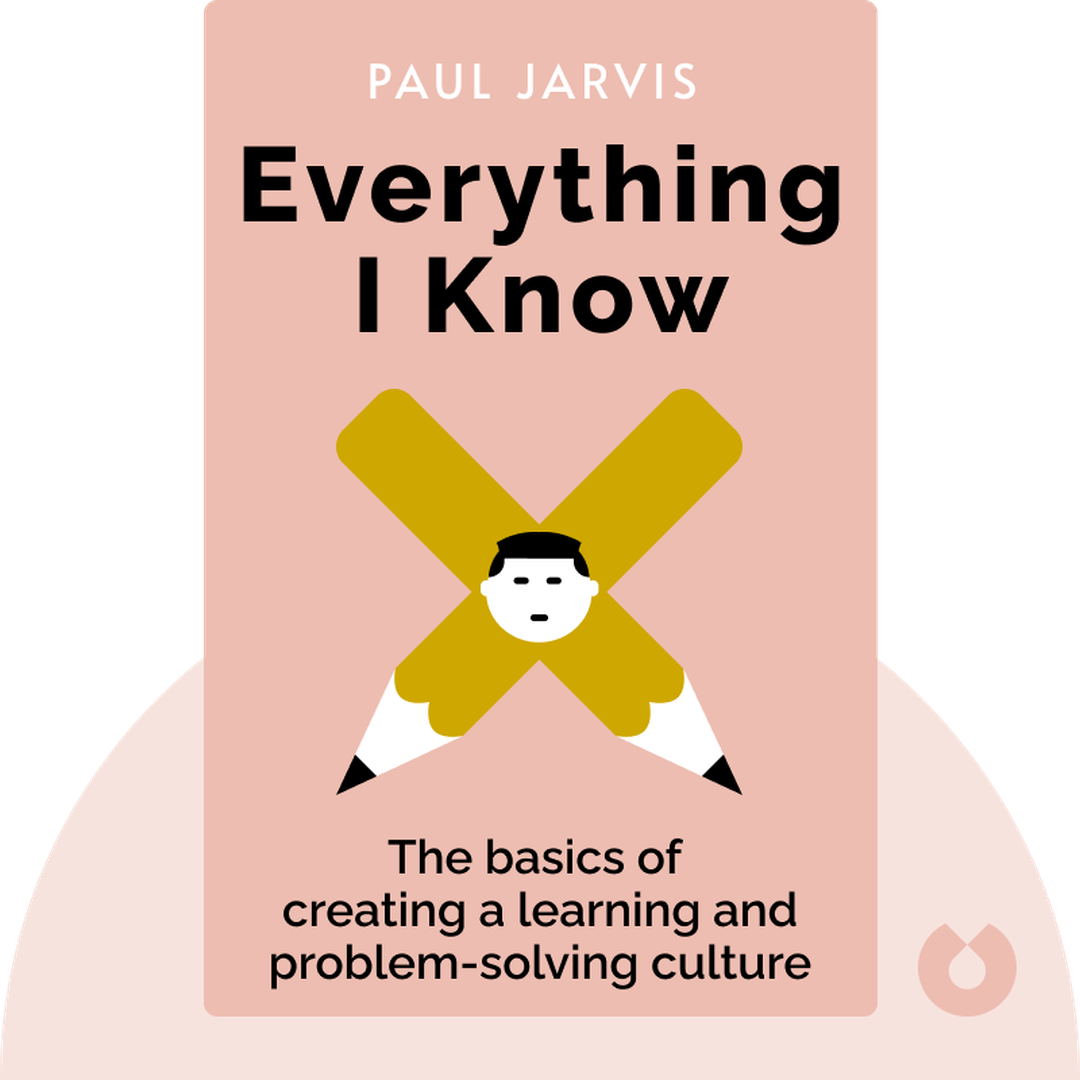
As the title suggests, Everything I Know (2013) is a collection of what author Paul Jarvis knows, after having worked as an in-demand web designer for over 20 years. This is a compendium of insight on how to be a successful, self-employed entrepreneur with a rewarding and lasting business.
Who Should Listen to Everything I Know?
- Freelancers and self-employed workers
- Artists, writers and creative types
- Anyone who wants to turn an idea into a business
Books Similar to Everything I Know
Readers who enjoyed this also liked these titles.