If You're Curious About These Questions...
You should listen to this audiobook
- What if you could spark a massive movement for change without ever having a fancy title or a corner office?
- Have you ever wondered why the most effective leaders often start from the break room instead of the boardroom?
- What’s the secret to turning leadership into an "action sport" that anyone can master, regardless of their place on the organizational chart?
Listen to Everyone Leads — Free Audiobook
Loading player...
Key Takeaways from Everyone Leads
- Understand why authentic leadership isn't reserved for elites with flashy résumés, but often emerges from everyday people with street smarts and critical thinking skills.
- Discover how to cultivate effective changemakers by engaging marginalized voices and focusing on community collaboration rather than just launching new programs.
- Learn how confronting your personal struggles and committing to growth can unlock your hidden leadership potential, as demonstrated by the author's own transformative journey.
- Find out how to leverage digital tools to accelerate on-the-ground community organizing instead of letting technology replace vital interpersonal connections.
- Master the principles of modern, inclusive leadership models like Servant Leadership, which focus on empathy, service, and empowering others to achieve shared goals.
Learning Tools
Reinforce what you learned from Everyone Leads
Mind Map
Everyone Leads
Redefining Leadership+
Grassroots & Modern Dynamics+
Asset-Based Community Development (ABCD)+
Connecting Across Cultures+
Evolving Leadership Theories+
Personal Growth & Resilience+
Quiz — Test Your Understanding
Question 1 of 7
According to the book, what is a fundamental truth about authentic leadership?
Question 2 of 7
How did the Cincinnati-based leadership program, The Strive Partnership, successfully improve high school graduation rates?
Question 3 of 7
How did Paul Schmitz's personal journey from struggling with substance abuse to becoming a CEO influence his leadership style?
Question 4 of 7
How does the 'Servant Leadership' model, developed by Robert Greenleaf, align with the book's core message?
Question 5 of 7
In the context of Asset-based Community Development (ABCD), what does viewing the glass as 'both half-empty and half-full simultaneously' mean?
Question 6 of 7
When implementing the ABCD approach, why does the author advise against putting mentors or perceived 'good' people on a pedestal?
Question 7 of 7
What is the primary purpose of the 'Privilege Walk' exercise utilized at Public Allies?
Everyone Leads — Full Chapter Overview
- 1Recommendation
- 2From Grassroots to Greatness
- 3A Zero-to-Hero Journey
- 4Leadership from the Ground Up
- 5When in Doubt, Use ABCD
- 6Connecting Across Cultures
- 7Final summary
Everyone Leads Summary & Overview
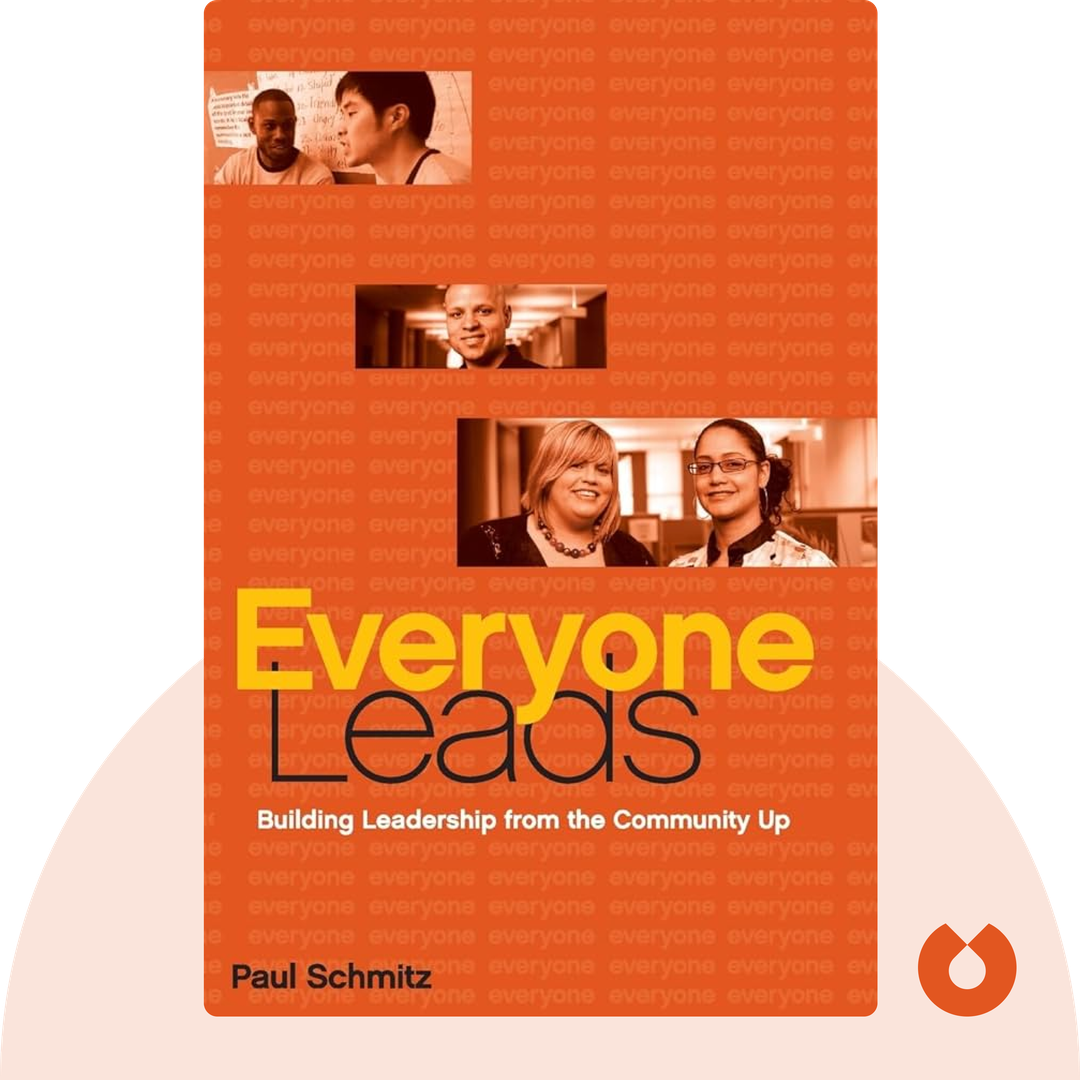
Everyone Leads (2011) turns the leadership conversation on its head, asserting that the corner office isn't the only place for leaders. It paints a world where leadership is an action sport, open to all, from boardroom bigwigs to the unsung heroes in the break room. This narrative is a rally cry for every closet leader to step into the light, harnessing the power of collaboration and shared goals, regardless of their place on the organizational chart.
Who Should Listen to Everyone Leads?
- Changemakers seeking grassroots impact
- Aspiring leaders currently upskilling themselves
- Social innovators hungry for inspiration
Books Similar to Everyone Leads
Readers who enjoyed this also liked these titles.