If You're Curious About These Questions...
You should listen to this audiobook
- Have you ever wondered why a specific shade of pink can instantly calm aggressive behavior, or how other subtle colors in your environment are secretly dictating your moods?
- Did you know that the hidden meaning behind your name could be quietly steering your major life decisions, from the city you live in to the career you pursue?
- What if the choices you think are purely rational are actually being manipulated by the weather, the symbols on your walls, or even the presence of a stranger?
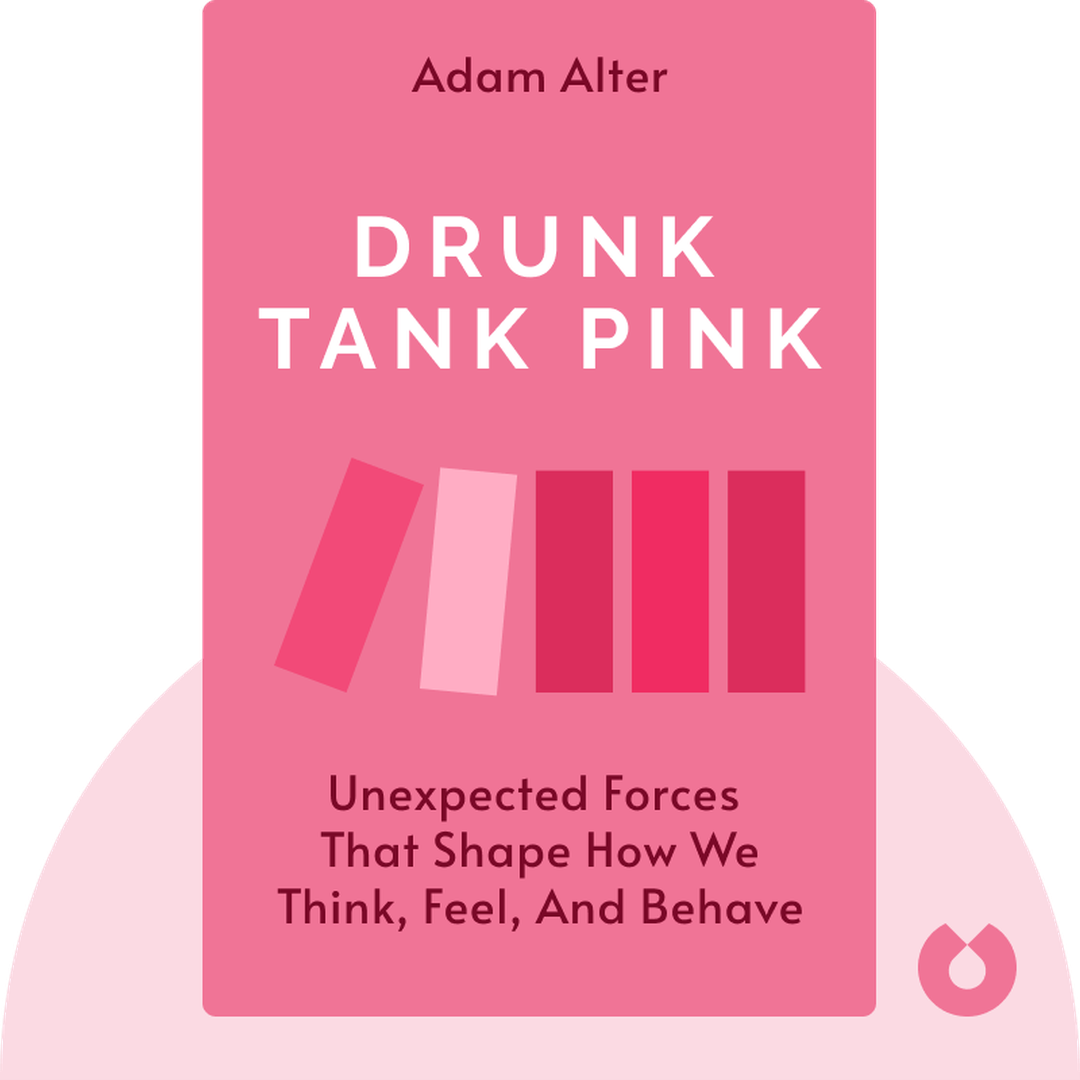
Listen to Drunk Tank Pink — Free Audiobook
Loading player...
Key Takeaways from Drunk Tank Pink
- Discover how your name and initials unconsciously shape your life, influencing everything from the job callbacks you receive to the charities you support.
- Understand how the linguistic labels you use alter your perception of reality, bias your judgments, and even implant false memories of past events.
- Learn how everyday symbols subconsciously dictate your behavior, like how the presence of money increases self-reliance or a lit lightbulb boosts creative problem-solving.
- Find out why the simple image of watching eyes can dramatically improve your honesty, demonstrating how deeply human behavior is governed by the implied presence of others.
- Uncover the surprising ways visual cues control your actions, including why bright pink acts as a natural sedative and how wearing red changes the way people interact with you.
Learning Tools
Reinforce what you learned from Drunk Tank Pink
Mind Map
Drunk Tank Pink
Names+
Labels and Language+
Symbols+
Social Presence+
Basic Drives+
Culture+
Colors+
Physical Environments+
Weather+
Quiz — Test Your Understanding
Question 1 of 10
How do our names influence our own behavior according to psychologist Jozef Nuttin?
Question 2 of 10
What did the experiment involving Russian and English speakers demonstrate about the power of labels?
Question 3 of 10
Why did students perform better at solving insight-based problems when a lightbulb was turned on?
Question 4 of 10
What is the primary cause of the 'bystander effect' observed in situations like the Kitty Genovese murder?
Question 5 of 10
According to the text, how does East Asian visual perception generally differ from Western visual perception?
Question 6 of 10
What physical effect did Professor Alexander Schauss discover the color 'bright pink' had on subjects?
Question 7 of 10
Why do female hitchhikers wearing red shirts get picked up more often by heterosexual male motorists?
Question 8 of 10
How does the density of a living environment affect helpful behavior, based on the college student experiment?
Question 9 of 10
What is a behavioral consequence of hotter weather mentioned in the text?
Question 10 of 10
How did the 'love hormone' oxytocin affect subjects in a gambling experiment?
Drunk Tank Pink — Full Chapter Overview
- 1Recommendation
- 2How your name shapes your life by triggering strong associations in others
- 3How the labels we use shape perception, bias judgment, and create false memories
- 4Why symbols can trigger reactions without our awareness
- 5How simply being around other people changes our thoughts and behavior
- 6How our basic drives for safety, love, and reproduction shape our thoughts and behavior
- 7How culture strongly influences the way we perceive the world
- 8How colors affect us physically and evoke powerful associations
- 9How our location and surroundings shape our thoughts, feelings, and behavior
- 10How weather strongly affects our mood and behavior
- 11Final summary
Drunk Tank Pink Summary & Overview
Drunk Tank Pink probes the hidden psychological and social influences that shape the way we see, think, feel, and act in the world.
Who Should Listen to Drunk Tank Pink?
- Anyone who wants to learn about the hidden influences that shape their perceptions and behavior
- Anyone interested in how the weather and scenery affect their moods
- Anyone who thinks their behavior is mostly rational and free of influence from random factors
Books Similar to Drunk Tank Pink
Readers who enjoyed this also liked these titles.