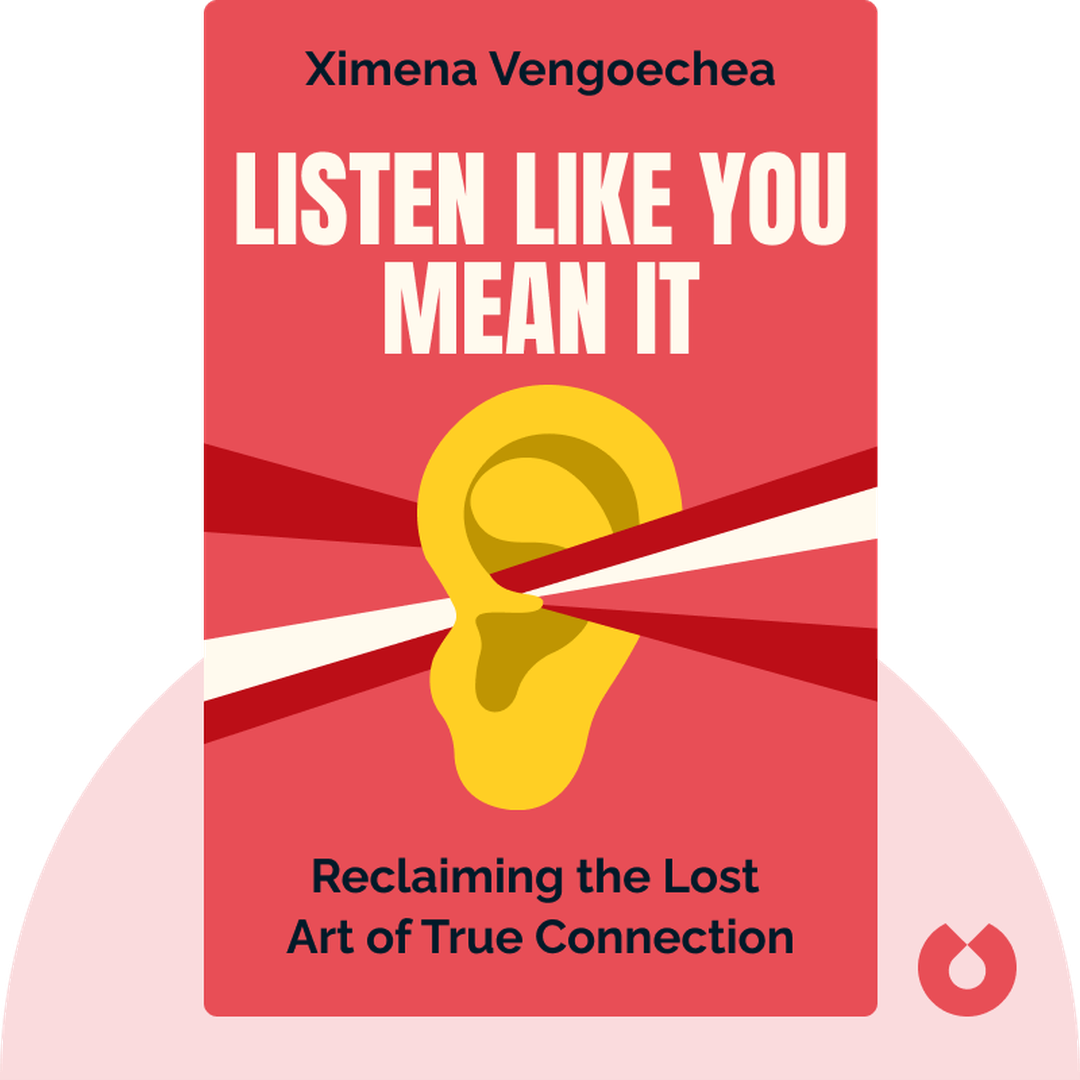
Listen Like You Mean It
Start ListeningDownload Try free on iPhoneScan to start in 5 seconds
Categories:
If You're Curious About These Questions...
You should listen to this audiobook
- What if you could use the secret techniques of a professional user researcher to transform your most difficult conversations into moments of deep connection?
- Have you ever wondered why we often feel unheard even when people are looking right at us—and what’s actually missing from our listening habits?
- Are you curious about the specific "listening scripts" that can help you navigate awkward silences and prevent misunderstandings before they even start?
Listen to Listen Like You Mean It — Free Audiobook
Loading player...
Key Takeaways from Listen Like You Mean It
- Discover the difference between surface listening and empathetic listening so you can stop making assumptions and truly understand the underlying meaning of your partner's words.
- Cultivate the three essential listening qualities of empathy, humility, and curiosity to keep your conversations focused on the other person without passing judgment.
- Master the habit of conversational self-awareness by monitoring your own energy levels and boldly rescheduling when you are too drained to be fully present.
- Learn how to observe subtle emotional indicators like eye contact and tone of voice to gently nudge your partner toward honesty when they are hiding their true feelings.
- Identify your default conversational role—whether you are an explainer, identifier, or interviewer—and adapt your listening style to uncover and meet your partner's hidden needs.
Learning Tools
Reinforce what you learned from Listen Like You Mean It
Mind Map
Listen Like You Mean It
Mindset & Intention+
Presence & Observation+
Adapting to Needs+
Deepening the Conversation+
Dynamics & Discomfort+
Boundaries & Self-Care+
Quiz — Test Your Understanding
Question 1 of 10
According to the author, what is a common consequence of engaging in 'surface listening'?
Question 2 of 10
Which three qualities are essential to cultivate a mindset for empathetic listening?
Question 3 of 10
If a conversation partner frequently uses phrases like 'I'm doing the best I can' or 'I'm going out of my way here,' what hidden need are they likely expressing?
Question 4 of 10
What is the most effective way to frame a 'connecting question' to deepen a conversation?
Question 5 of 10
Why does the author recommend counting to ten in your head after a conversation partner gives a brief or superficial response?
Question 6 of 10
How did the author successfully redirect her colleague Gabriela, who was exhibiting avoidant behavior instead of sharing her real 'update'?
Question 7 of 10
According to the text, how do men and women typically differ in their use of the vocalization 'hm-hmm' during a conversation?
Question 8 of 10
When discussing taboo or highly charged topics like politics or religion, what should be your primary goal?
Question 9 of 10
What is 'time-boxing' in the context of setting conversational boundaries?
Question 10 of 10
What is the purpose of determining a conversation partner's 'neutral baseline' regarding their voice pitch and expressiveness?
Listen Like You Mean It — Full Chapter Overview
- 1Recommendation
- 2Begin conversations with the intention to truly focus on and engage with your partner.
- 3Stay present by carefully observing both yourself and your conversation partner.
- 4Recognize what your conversation partner needs from you, then try to offer it.
- 5Deepen conversations with connecting questions, then confirm you’ve understood.
- 6Remain flexible, and don’t push the conversation in one specific direction.
- 7Gently and politely redirect conversations when they go off track.
- 8Notice the reasons a conversation may start to feel uncomfortable.
- 9Leave conversations that become too toxic or clash with your priorities.
- 10Final summary
Listen Like You Mean It Summary & Overview
Listen Like You Mean It (2021) is a friendly, comprehensive guide to deepening relationships through the power of listening. Too often, our conversations with family, friends, and coworkers remain superficial – we talk past each other, refrain from showing vulnerability, or get caught in a tangle of misunderstanding. With tips and scripts taken from the author’s experience as a user researcher, we can improve our listening skills and, in doing so, be heard and understood ourselves.
Who Should Listen to Listen Like You Mean It?
- Professionals who want to improve their workplace communication skills
- The socially awkward
- Anyone seeking more connection and understanding
Books Similar to Listen Like You Mean It
Readers who enjoyed this also liked these titles.