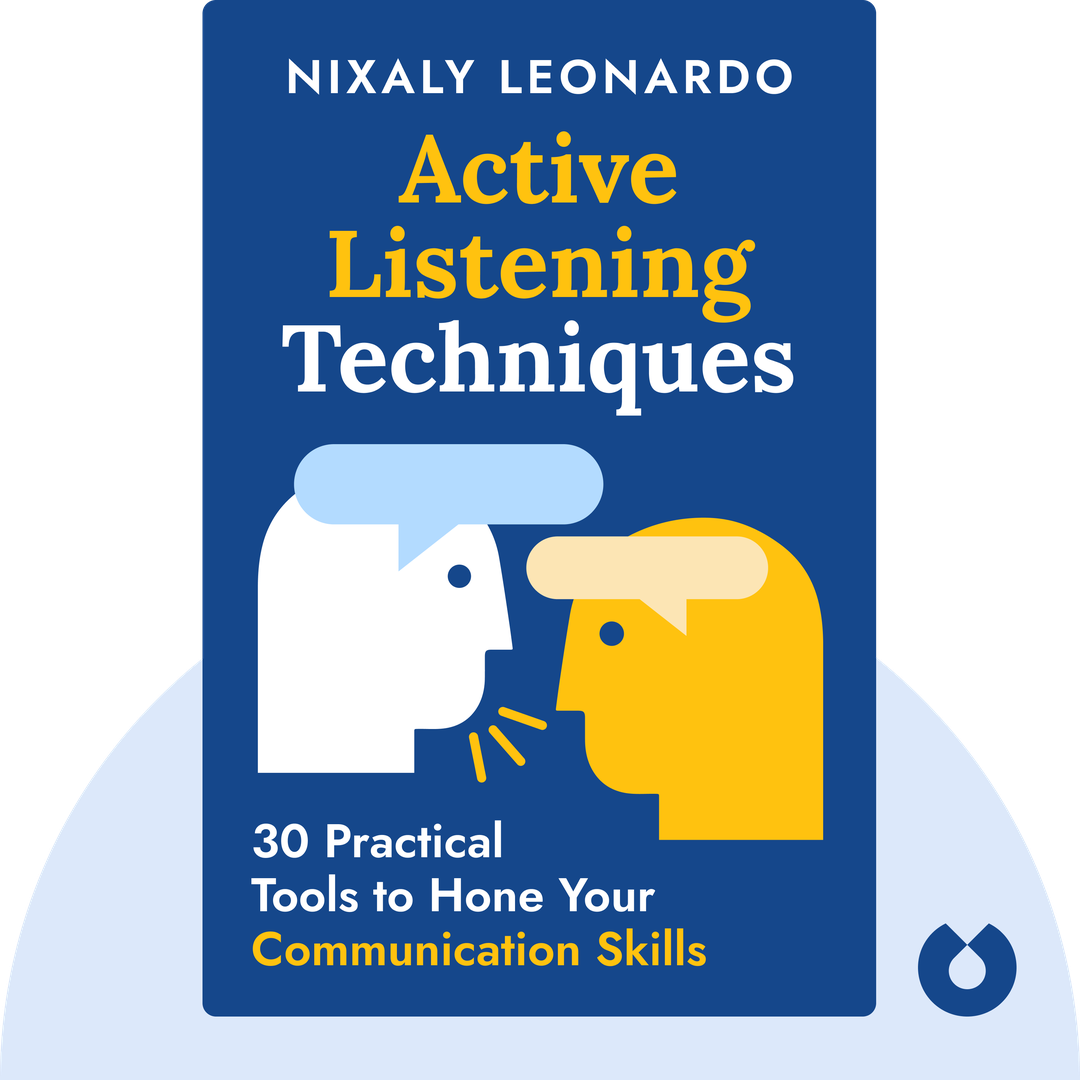
Active Listening Techniques
Start ListeningDownload Try free on iPhoneScan to start in 5 seconds
Categories:
If You're Curious About These Questions...
You should listen to this audiobook
- Have you ever wondered why simply 'hearing' someone isn't enough to prevent misunderstandings and resolve conflicts?
- What's the secret to building instant rapport and making others feel truly valued without saying a single word?
- What if you could transform your professional influence and personal relationships by mastering the art of what happens before you even speak?
Listen to Active Listening Techniques — Free Audiobook
Loading player...
Key Takeaways from Active Listening Techniques
- Understand how true active listening combines critical thinking, reflective echoing, and strategic silence to make others feel genuinely heard.
- Master the crucial role of empathy to go beyond merely hearing words, allowing you to accurately sense feelings and respond to underlying needs.
- Find out how building a track record of active listening creates trust, making colleagues, partners, and subordinates much more receptive to constructive criticism.
- Discover how to manage strong emotions during arguments by using proven techniques like paraphrasing and intentional nonverbal cues to validate the speaker.
- Identify and overcome the four primary listening barriers—external, biological, language, and emotional noise—to maintain focus and re-engage distracted speakers.
Learning Tools
Reinforce what you learned from Active Listening Techniques
Mind Map
Active Listening Techniques
Internal Preparation & Self-Awareness+
Verbal Communication Techniques+
Emotional Connection & Empathy+
Conflict Resolution+
Quiz — Test Your Understanding
Question 1 of 8
According to the book, what is an effective way to prepare for a conversation with someone who usually triggers your cognitive distortions?
Question 2 of 8
What physical technique does the author recommend to help maintain a calm, neutral speaking tone during heated conversations?
Question 3 of 8
Why should you avoid starting questions with the word 'why' when trying to gather information in a delicate situation?
Question 4 of 8
When someone goes quiet after sharing something significant, how long does the book suggest you should sit with the silence before speaking?
Question 5 of 8
What is a recommended strategy for sharing a delicate or controversial opinion without causing unnecessary conflict?
Question 6 of 8
How should you phrase your feelings to avoid escalating a conflict when someone's behavior makes you uncomfortable?
Question 7 of 8
When someone is upset during a difficult conversation, what approach should you prioritize to help them feel understood?
Question 8 of 8
Which sentence template does the author suggest using to seek clarification when a conversation begins to escalate due to misunderstandings?
Active Listening Techniques — Full Chapter Overview
- 1Recommendation
- 2Overcoming Distorted Thinking
- 3Mastering Awareness of Your Body and Voice
- 4Asking Better Questions
- 5The Role of Silence in Communication
- 6Handling Sensitive Conversations Respectfully
- 7The Impact of Choosing the Right Words
- 8Why Validating and Normalizing Emotions Matters
- 9Managing Tension During Conversations
- 10Final summary
Active Listening Techniques Summary & Overview
Active Listening Techniques (2020) focuses on improving communication skills by teaching the art of active listening. It provides practical tools and exercises to help people become more engaged listeners, fostering better understanding and stronger connections in both personal and professional interactions.
Who Should Listen to Active Listening Techniques?
- Professionals seeking to improve workplace communication skills
- Couples interested in strengthening their relationship dynamics
- Anyone striving to improve their interpersonal communication abilities
Books Similar to Active Listening Techniques
Readers who enjoyed this also liked these titles.