If You're Curious About These Questions...
You should listen to this audiobook
- Have you ever wondered why some people can stay calm in the middle of an emotional storm while others feel completely overwhelmed?
- What if you could master the paradoxical secret of accepting yourself exactly as you are while simultaneously working to change your life?
- Are you curious about the specific communication tools that allow you to stand your ground and get what you want without damaging your most important relationships?
Listen to DBT Made Simple — Free Audiobook
Loading player...
Key Takeaways from DBT Made Simple
- Learn why Dialectical Behavior Therapy (DBT) is not just for clinical settings, but a universal toolset to help anyone build emotional resilience and navigate life's storms.
- Understand the biosocial theory of emotions to see how a combination of your natural genetic sensitivity and your environment shapes your ability to regulate feelings.
- Discover how to walk the 'middle path' by learning to accept your current emotional realities while simultaneously striving for positive change and growth.
- Find out how DBT blends the practical strategies of Cognitive Behavioral Therapy with Eastern philosophy to give you a highly flexible approach to emotional management.
- Master the foundational pillar of mindfulness using a simple four-step process to anchor yourself in the present moment and peacefully observe your thoughts without judgment.
Learning Tools
Reinforce what you learned from DBT Made Simple
Mind Map
DBT Made Simple
Core Philosophy+
Pillar 1: Mindfulness+
Pillar 2: Emotion Regulation+
Pillar 3: Distress Tolerance+
Pillar 4: Interpersonal Effectiveness+
Quiz — Test Your Understanding
Question 1 of 6
What does the biosocial theory in DBT state about the origin of emotional difficulties?
Question 2 of 6
What does the 'dialectical' approach of DBT primarily encourage individuals to do?
Question 3 of 6
According to the text, what is the proper way to handle a wandering mind during mindfulness practice?
Question 4 of 6
In the context of emotion regulation and distress tolerance, which 'self' represents the integration of logic, emotion, and intuition?
Question 5 of 6
Which of the following best describes the 'assertive' communication style advocated by the interpersonal effectiveness pillar of DBT?
Question 6 of 6
Which of the following correctly lists the four pillars of Dialectical Behavior Therapy as outlined in the book?
DBT Made Simple — Full Chapter Overview
- 1Recommendation
- 2The strength of DBT
- 3Embrace the present with mindfulness
- 4How to navigate emotional storms
- 5Improve your relationships with assertive communication
- 6Final summary
DBT Made Simple Summary & Overview
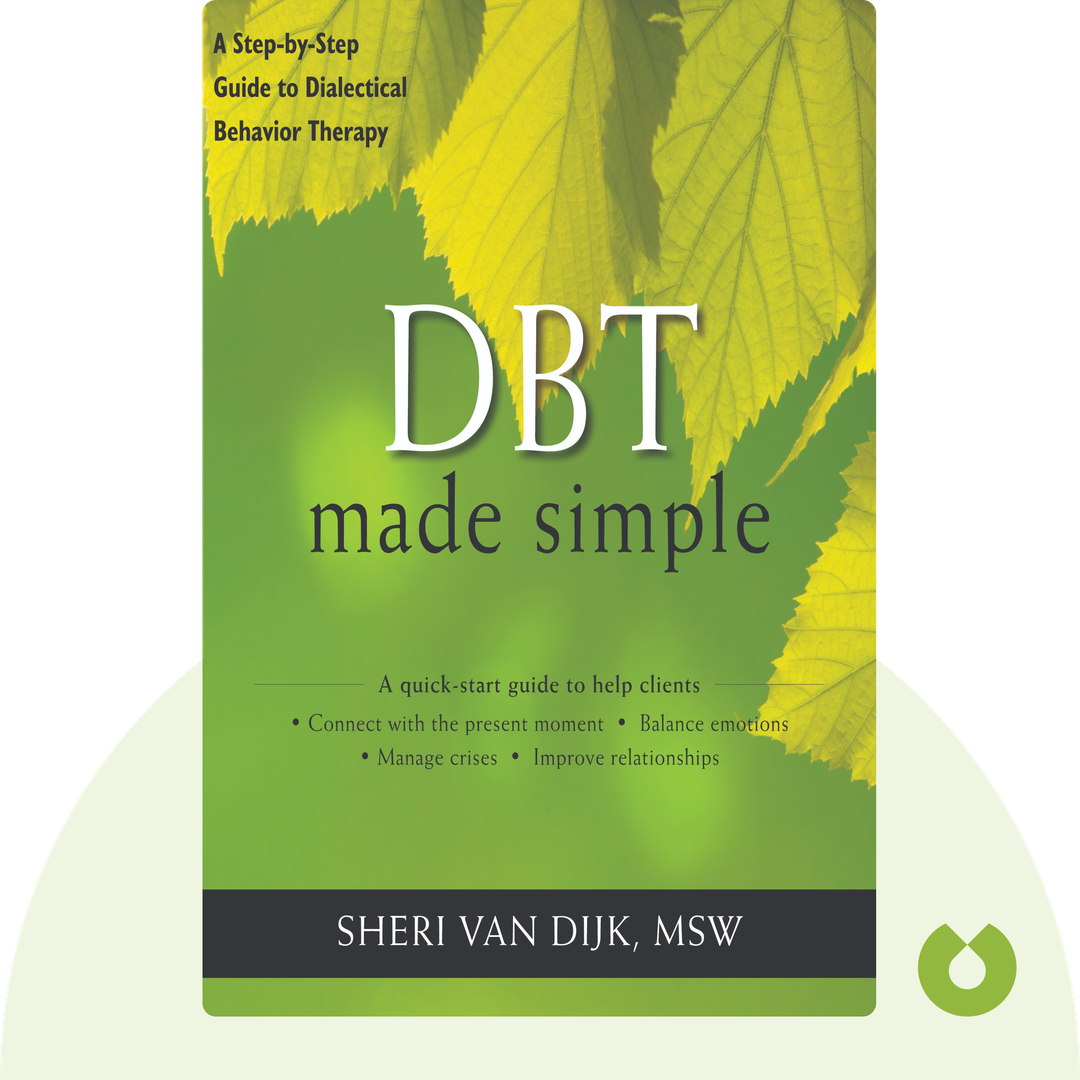
DBT Made Simple (2023) is your passport to navigating the complex terrain of emotional well-being. Unraveling the practical strategies of dialectical behavior therapy, it empowers you to turn life’s challenges into catalysts for personal growth and resilience.
Who Should Listen to DBT Made Simple?
- Individuals seeking emotional regulation and personal growth strategies
- Mental-health professionals exploring comprehensive therapy approaches
- Parents and teachers looking for resilience-building tools
Books Similar to DBT Made Simple
Readers who enjoyed this also liked these titles.