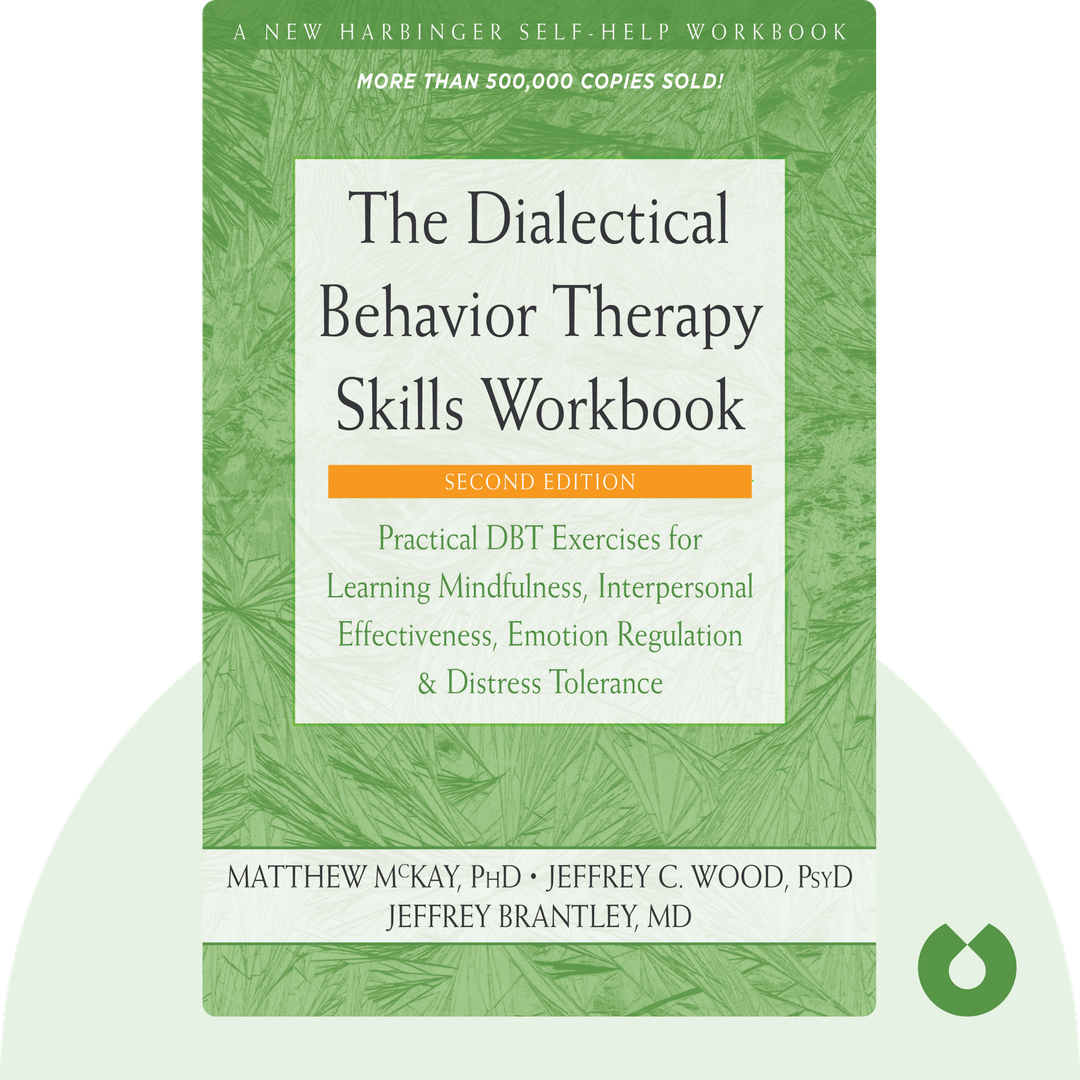
The Dialectical Behavior Therapy Skills Workbook
Start ListeningDownload Try free on iPhoneScan to start in 5 seconds
Categories:
If You're Curious About These Questions...
You should listen to this audiobook
- What if you could master the art of "radical acceptance" to find peace in situations you can't change?
- Have you ever wondered how to stop your emotions from spiraling before they become completely overwhelming?
- What’s the secret to asking for what you need and setting firm boundaries without damaging your closest relationships?
Listen to The Dialectical Behavior Therapy Skills Workbook — Cinematic Audio Edition
Loading player...
Key Takeaways from The Dialectical Behavior Therapy Skills Workbook
- Learn how to use productive distraction techniques, like doing a chore or exercising, to create space from distressing situations without avoiding them completely.
- Discover how to practice self-soothing through sensory grounding, using comforting sights, smells, or physical sensations to relax during emotional overwhelm.
- Master the three core components of mindfulness—awareness, staying in the present moment, and nonjudgment—to practice radical acceptance of your feelings.
- Understand how to physically describe, draw, and define your emotions on paper to separate your true feelings from unhelpful self-judgment.
- Find out how primary emotions can trigger a complicated chain of secondary feelings, and learn to objectively identify your triggers to prevent harmful coping behaviors.
Learning Tools
Reinforce what you learned from The Dialectical Behavior Therapy Skills Workbook
Mind Map
The Dialectical Behavior Therapy Skills Workbook
Core Philosophy+
Distress Tolerance+
Mindfulness+
Emotion Regulation+
Interpersonal Effectiveness+
Quiz — Test Your Understanding
Question 1 of 7
What is the primary purpose of 'distraction' as a distress tolerance skill?
Question 2 of 7
How does the text define the distress tolerance technique of 'self-soothing'?
Question 3 of 7
According to the book, what are the three core components necessary to truly practice mindfulness?
Question 4 of 7
What does the concept of 'radical acceptance' entail?
Question 5 of 7
What does Shauna's story about her work presentation illustrate regarding emotion regulation?
Question 6 of 7
How does the text characterize an emotionally healthy, 'assertive' person in the context of interpersonal effectiveness?
Question 7 of 7
In the interpersonal effectiveness exercise, what does having a long list of 'shoulds' (e.g., 'You should always be considerate') indicate?
The Dialectical Behavior Therapy Skills Workbook — Full Chapter Overview
- 1Recommendation
- 2Step one: Distress tolerance
- 3Step two: Mindfulness
- 4Step three: Emotion regulation
- 5Step four: Interpersonal effectiveness
The Dialectical Behavior Therapy Skills Workbook Summary & Overview
The Dialectical Behavior Therapy Skills Workbook (2019) offers basic and advanced exercises to help people hone the four core emotional competencies. While it can be used alone, it’s also an excellent companion for anyone working with a therapist.
Who Should Listen to The Dialectical Behavior Therapy Skills Workbook?
- Anyone currently in therapy
- People interested in self-improvement
- Individuals struggling to manage their emotions
Books Similar to The Dialectical Behavior Therapy Skills Workbook
Readers who enjoyed this also liked these titles.