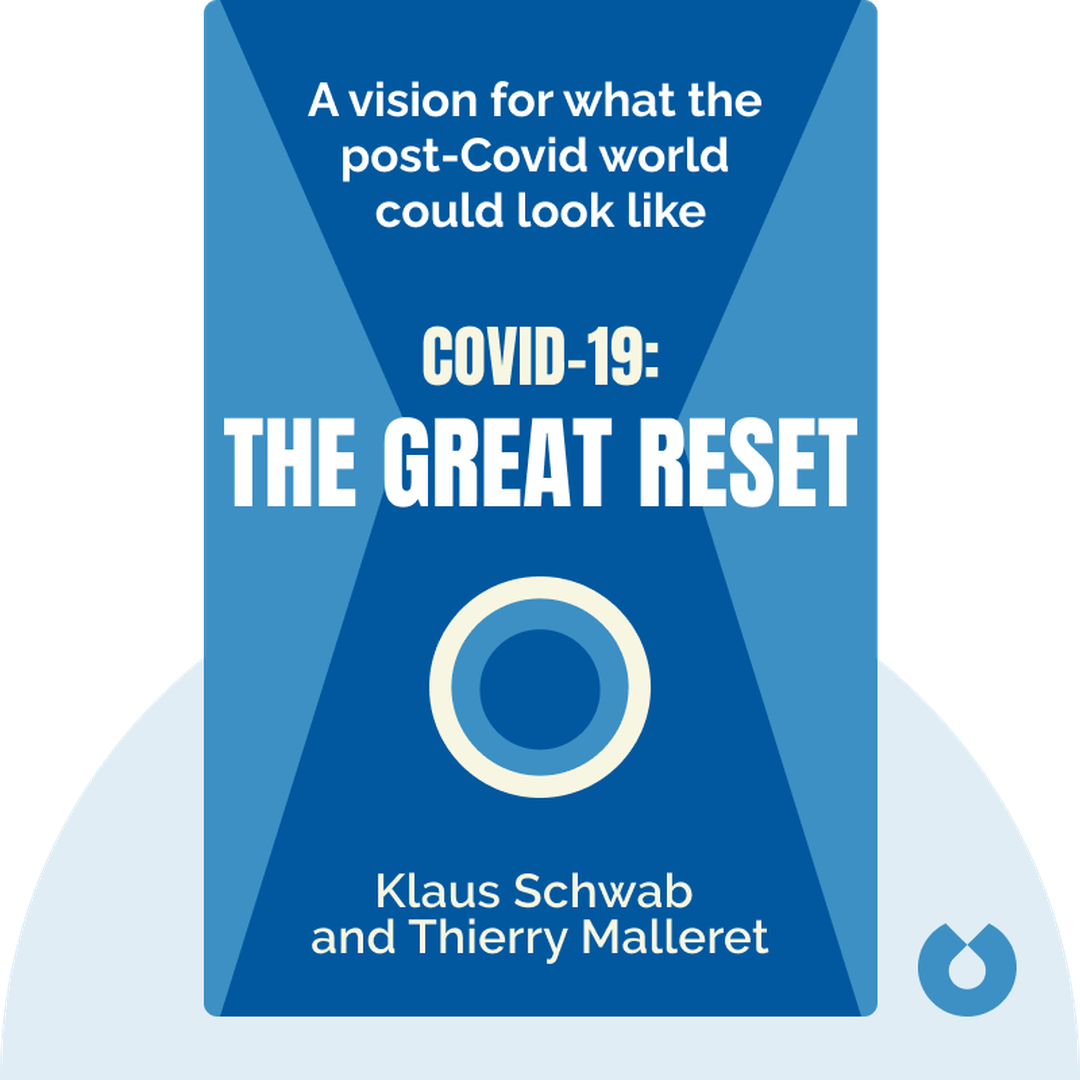
COVID-19: The Great Reset
Start ListeningDownload Try free on iPhoneScan to start in 5 seconds
Categories:
If You're Curious About These Questions...
You should listen to this audiobook
- Did you know that the global disruption caused by the pandemic could be the ultimate catalyst for a more equitable and sustainable world economy?
- Have you ever wondered how the 'social contract' between governments and citizens is being fundamentally rewritten for the post-crisis era?
- Are you curious about what a complete 'reset' of our global political and economic systems would actually mean for your future?
Listen to COVID-19: The Great Reset — Free Audiobook
Loading player...
Key Takeaways from COVID-19: The Great Reset
- Discover how the upheaval caused by COVID-19 presents a unique opportunity to hit reset and build a more resilient, equitable, and sustainable society.
- Understand the three defining forces of the modern world—interdependence, velocity, and complexity—and how they amplify the global impact of sudden crises.
- Learn why the choice between saving lives and saving the economy is a fallacy, and how we must redefine economic success beyond GDP to include happiness and planetary health.
- Explore why the pandemic could signal the end of neoliberalism, leading to a necessary increase in government intervention to prioritize social welfare and public trust.
- Recognize the fatal consequences of wealth inequality exposed by the crisis, and realize why we must fundamentally revalue the lower-paid essential workers who keep our world running.
Learning Tools
Reinforce what you learned from COVID-19: The Great Reset
Mind Map
COVID-19: The Great Reset
The Modern World Context+
Economic Reset+
Societal & Governmental Reset+
Geopolitical Reset+
Environmental Reset+
Technological Reset+
Business & Industry Reset+
Individual Reset+
Quiz — Test Your Understanding
Question 1 of 8
What three aspects of the modern world do the authors highlight as crucial when considering the pandemic's transformative effects?
Question 2 of 8
According to the authors, why is the choice between 'saving lives' and 'saving the economy' considered a fallacy?
Question 3 of 8
How do the authors predict the pandemic will affect the political ideology of neoliberalism?
Question 4 of 8
What geopolitical shift do the authors suggest might occur regarding global supply chains in the post-COVID world?
Question 5 of 8
How do the authors view the short-term drop in CO2 emissions caused by the pandemic?
Question 6 of 8
What major societal risk do the authors identify concerning the rapid technological innovation used to combat the virus?
Question 7 of 8
According to the text, what must be the new 'watchword' or primary focus for industries moving forward to survive future crises?
Question 8 of 8
Historically, how have pandemics usually affected social cohesion, and how might COVID-19 be different according to the authors?
COVID-19: The Great Reset — Full Chapter Overview
- 1Recommendation
- 2The coronavirus pandemic gives us a chance to build a better society.
- 3The pandemic’s economic effects will be severe and long-lasting.
- 4After the pandemic, governments will likely play a larger role in society.
- 5Geopolitics faces a difficult period ahead.
- 6The pandemic may bring positive environmental change.
- 7Since the pandemic, technological innovation has accelerated rapidly.
- 8The coronavirus pandemic will bring lasting changes to business and industry.
- 9Individual resets could make us more compassionate.
- 10Final summary
COVID-19: The Great Reset Summary & Overview
What’s it about?
COVID-19: The Great Reset (2020) is a compendium of predictions and prognoses. It offers forecasts for how the global economy may change in the wake of the coronavirus crisis – as well as suggestions for how it should change.
Who Should Listen to COVID-19: The Great Reset?
Who’s it for?
- Economics enthusiasts wondering what’s going to happen next
- Students of international relations grappling with the big questions of today
- Anyone attempting to come to terms with the pandemic
Books Similar to COVID-19: The Great Reset
Readers who enjoyed this also liked these titles.