Theme Song
If You're Curious About These Questions...
You should listen to this audiobook
- Did you know that by 2030, more than half of the world's wealth will be held by a group that has been historically overlooked, fundamentally changing how products are sold and used?
- Have you ever wondered how the convergence of urbanization and climate change will create a 'circular economy' that redefines our relationship with everything we own?
- Are you curious about which cities will become the new global powerhouses as the middle class shifts its weight toward entirely different continents?
Listen to 2030 — Free Audiobook
Loading player...
Key Takeaways from 2030
- Understand how declining global birth rates will reshape economies, forcing Western nations to rethink immigration policies to support their aging populations.
- Discover why the explosive population growth in sub-Saharan Africa will create a massive, trillion-dollar opportunity in the food and agriculture sector by 2030.
- Learn how to capitalize on the highly lucrative 'gray market' of consumers aged 60 and older, a wealthy demographic that is currently ignored by 96 percent of corporate advertising.
- Recognize the dramatic geographic shift of the global middle class, with booming Asian markets projected to account for half of all consumer spending power by the end of the decade.
- Find out why expanding businesses must carefully adapt to the cultural preferences of new markets to succeed, avoiding costly international blunders like Walmart's failed expansions.
Learning Tools
Reinforce what you learned from 2030
Mind Map
2030
Demographic Shifts+
Economic Power Shifts+
Urbanization & Climate+
Technological Revolutions+
New Economic Models+
Strategic Adaptation+
Quiz — Test Your Understanding
Question 1 of 9
What is a major projected consequence of the population boom in sub-Saharan Africa by 2030?
Question 2 of 9
Why does the book suggest corporations are missing a massive financial opportunity regarding the 'gray market' (people 60 and older)?
Question 3 of 9
How is the global middle class expected to change by the year 2030?
Question 4 of 9
According to the text, what is a primary reason working mothers will become increasingly essential to the workforce in the coming decade?
Question 5 of 9
What innovative solution is highlighted as a way for cities to reduce their carbon footprint and revitalize economically depressed areas?
Question 6 of 9
For populations in the developing world lacking adequate sanitation infrastructure, what technological innovation is highlighted as having a profound life-saving impact?
Question 7 of 9
What is identified as a significant drawback of the rising 'sharing economy' and platforms like Uber?
Question 8 of 9
Beyond acting as a digital currency, what is a key potential application of blockchain technology mentioned in the text?
Question 9 of 9
What lesson should businesses learn from Lego's struggles in the 1990s and subsequent recovery?
2030 — Full Chapter Overview
- 1Recommendation
- 2Falling birth rates will permanently reshape human demographics.
- 3Older consumers will have more spending power than ever before.
- 4By 2030, the middle class will have changed dramatically.
- 5Women will control the purse strings in 2030.
- 6City life must transform to withstand the coming climate crisis.
- 7Expect rapid technological change in the decade ahead.
- 8Get used to sharing rather than owning.
- 9In the next decade, we’ll unlock cryptocurrency’s full potential.
- 10Final summary
2030 Summary & Overview
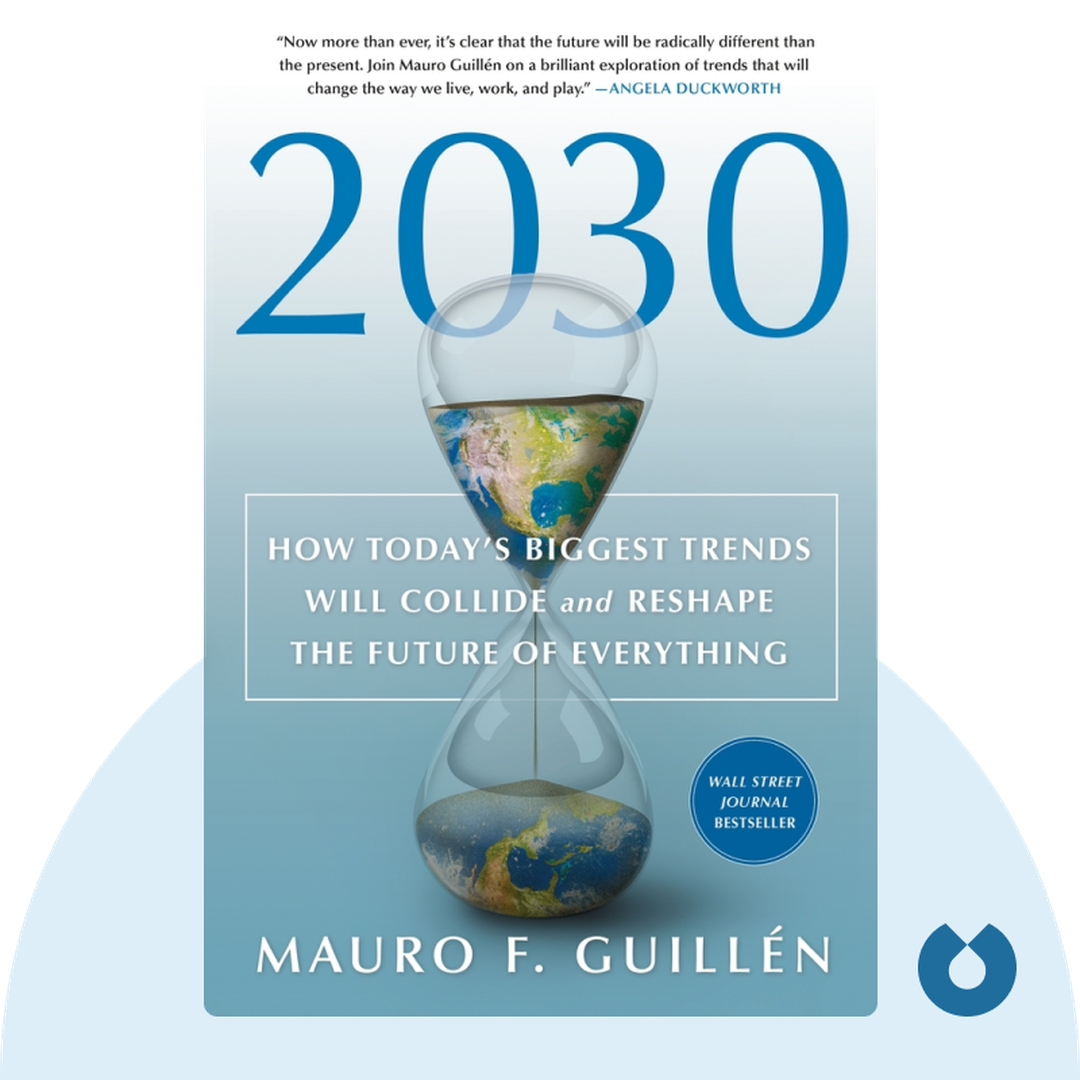
2030 (2020) isn’t a crystal ball – but it might be the next best thing. Drawing on current sociological trends, demographic trajectories, and technological advancements, it paints a convincing picture of the global changes we can expect to see and experience in the coming decade.
Who Should Listen to 2030?
- Tech workers and marketing professionals keen to stay ahead of the curve
- Eco-warriors looking for solutions to the climate crisis
- Anyone curious to see what the future might hold
Books Similar to 2030
Readers who enjoyed this also liked these titles.