If You're Curious About These Questions...
You should listen to this audiobook
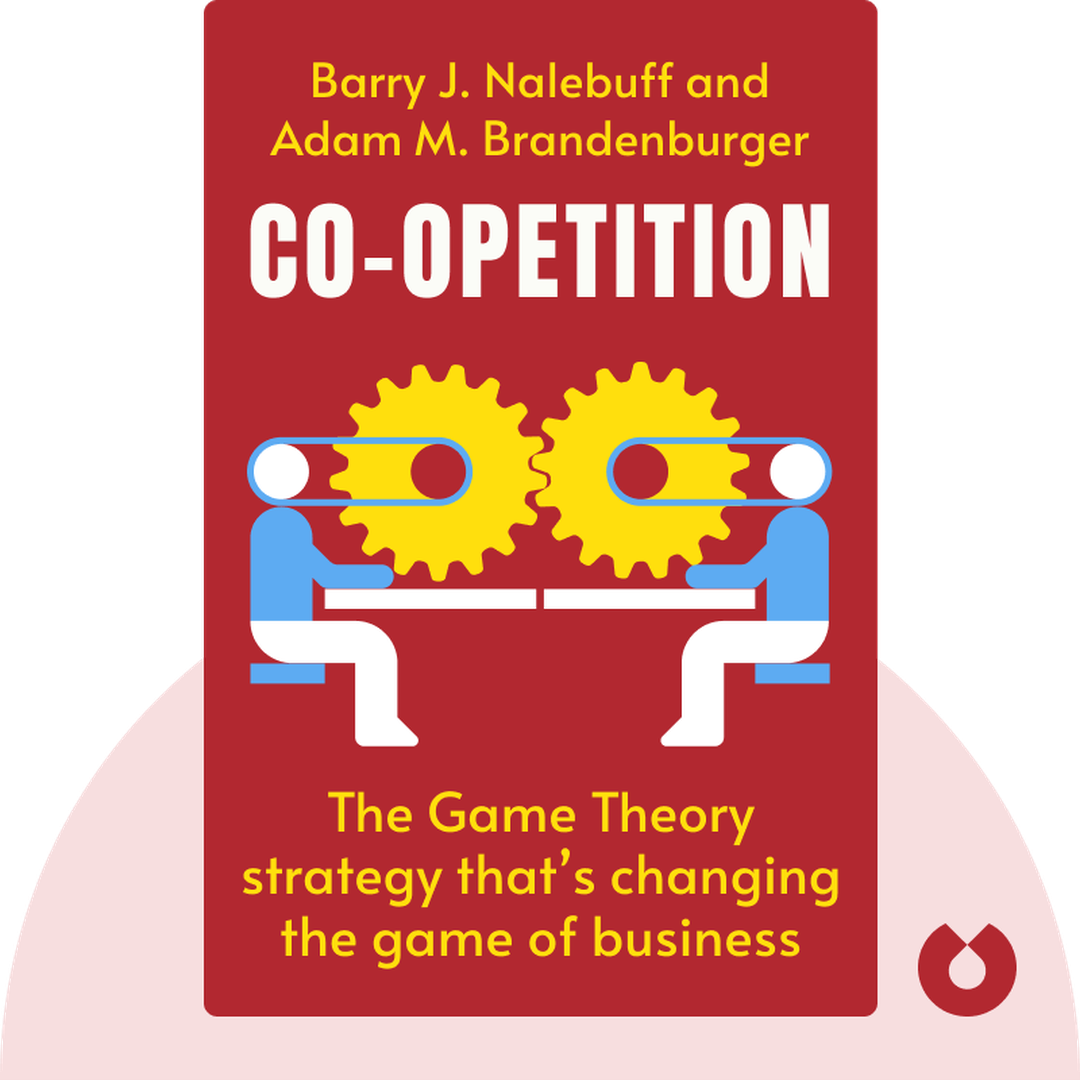
- Have you ever wondered why your fiercest competitor might actually be the key to your company’s greatest breakthrough?
- What if you could stop just playing the game of business and start rewriting the rules to tilt the board in your favor?
- Are you curious about how game theory can reveal the hidden value in your professional relationships that you're currently overlooking?
Listen to Co-opetition — Cinematic Audio Edition
Loading player...
Key Takeaways from Co-opetition
- Discover how "co-opetition" allows businesses to simultaneously cooperate to create value and compete to divide it, challenging traditional market rules.
- Master the PARTS framework of game theory—Players, Added value, Rules, Tactics, and Scope—to strategically adjust the elements of your business relationships to your advantage.
- Learn why entering a new market provides value to existing players, and how you can demand upfront compensation or guarantees from customers before taking the risk.
- Understand the strategic advantage of bringing new players into the game, leveraging new complementors, suppliers, and even competitors to boost your negotiating power.
- Find out how to manipulate your added value to increase your market power, using tactics like intentional supply shortages to diminish the leverage of your customers.
Learning Tools
Reinforce what you learned from Co-opetition
Mind Map
Co-opetition
Core Concept+
The Value Net+
PARTS Framework+
Actionable Strategies+
Quiz — Test Your Understanding
Question 1 of 9
What does the term 'co-opetition' fundamentally describe in a business context?
Question 2 of 9
In the game of business, who are the 'complementors'?
Question 3 of 9
What does the game theory acronym PARTS stand for?
Question 4 of 9
Because your entry into a new market often benefits existing players like customers, what strategy does the book recommend?
Question 5 of 9
How did Nintendo successfully diminish the 'added value' of its customers in the late 1980s?
Question 6 of 9
What is the primary strategic benefit of a Meet-the-Competition (MCC) clause?
Question 7 of 9
According to the text, why is 'telegraphing strength' (such as wearing a nice suit to an interview) an effective business tactic?
Question 8 of 9
How did Sega successfully manipulate the 'Scope' of the game when competing with Nintendo in the 1990s?
Question 9 of 9
Based on the actionable advice in the text, how can an employee or business effectively demonstrate confidence to potential partners?
Co-opetition — Full Chapter Overview
- 1Recommendation
- 2In business, two players can cooperate and compete at once.
- 3Use game theory to manage complex business relationships.
- 4Make sure the business game is worth playing.
- 5Added value is a measure of power in the game of business.
- 6Changing the game’s rules shifts the balance of power between players.
- 7Changing other players’ perceptions of the game influences their behavior.
- 8Gain leverage by changing the scope of the game.
- 9Final summary
Co-opetition Summary & Overview
Co-opetition (1996) combines game theory with business strategy, presenting a roadmap for how to create a successful venture. The authors explain how running a business is just like playing a game: it involves mastering the rules, knowing the players and the value they bring, understanding tactical approaches and being able to see the big picture. With these elements in place, you can utilize them to improve your own position in the game of business.
Who Should Listen to Co-opetition ?
- Anyone who likes thinking about business in theoretical terms
- Anyone interested in finance and macrobusiness
- Students of philosophy, psychology and economics
Books Similar to Co-opetition
Readers who enjoyed this also liked these titles.