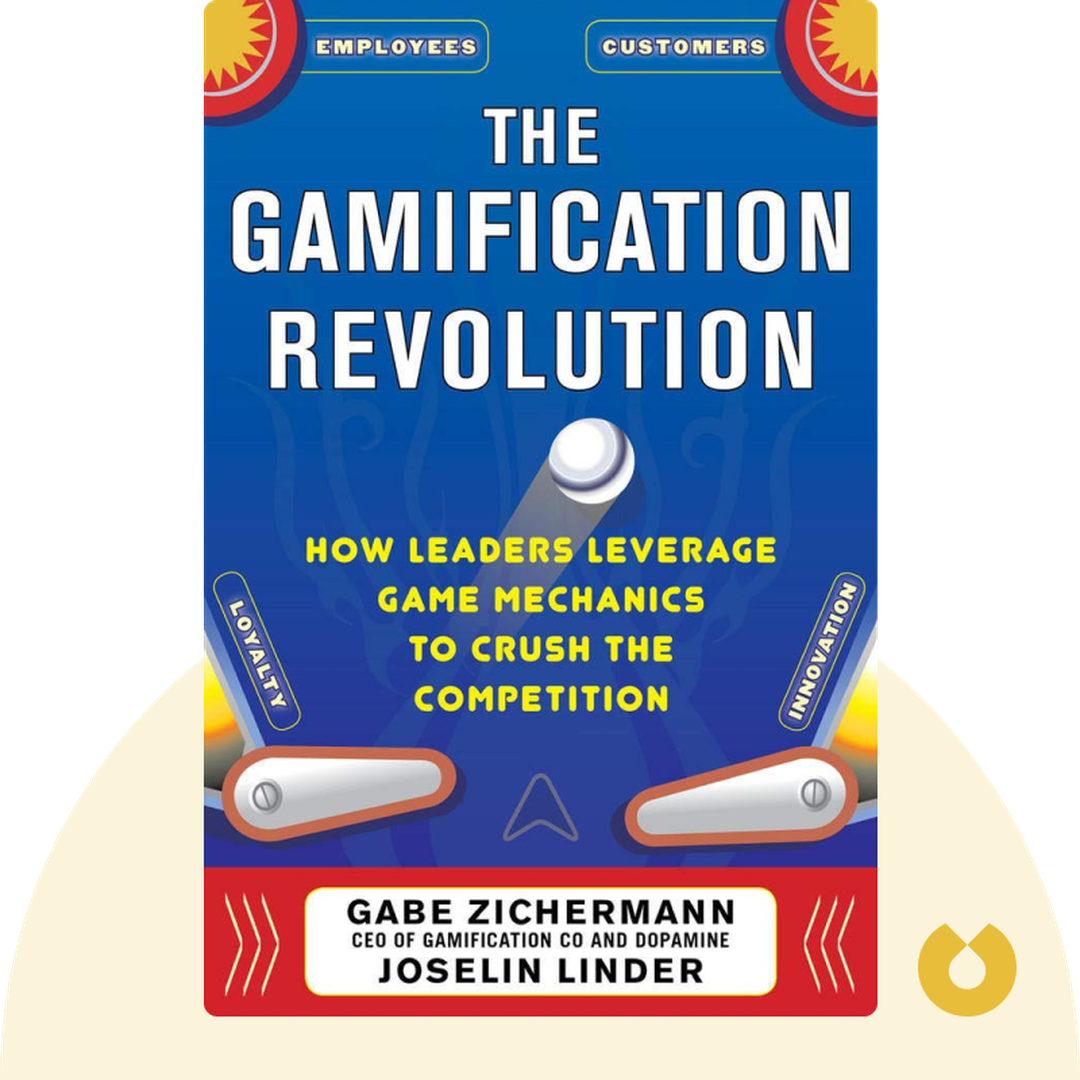
The Gamification Revolution
Start ListeningDownload Try free on iPhoneScan to start in 5 seconds
Categories:
If You're Curious About These Questions...
You should listen to this audiobook
- What if you could transform your employees' most tedious tasks into an engaging game that they actually look forward to every day?
- Did you know that the same psychological triggers that keep people hooked on video games could be the secret to building lifelong customer loyalty?
- Have you ever wondered why traditional management strategies are failing in the digital age, and how adding 'gameplay' to your business could spark a revolution in innovation?
Listen to The Gamification Revolution — Free Audiobook
Loading player...
Key Takeaways from The Gamification Revolution
- Understand how gamification leverages behavioral economics and design elements like points and leaderboards to deeply engage modern consumers.
- Discover how to reach customers in innovative ways by gamifying your products to meet their evolving lifestyle needs, just as Ford and Nissan have done.
- Master the use of Alternative Reality Games (ARGs) and scenario planning to accurately anticipate future business crises and improve strategic negotiations.
- Learn how to implement 'gamestorming' techniques, such as the 3-12-2 game, to boost enthusiasm, teamwork, and creativity in your problem-solving sessions.
- Find out how to motivate your workforce and transform monotonous daily tasks into engaging, competitive experiences that give employees a vital sense of control.
Learning Tools
Reinforce what you learned from The Gamification Revolution
Mind Map
The Gamification Revolution
Core Principles+
Customer Engagement+
Strategic Planning+
Employee Motivation+
Driving Innovation+
Recruitment & Training+
Social Media Synergy+
Quiz — Test Your Understanding
Question 1 of 8
What is the fundamental mechanism behind how gamification works in a business context?
Question 2 of 8
Why did car companies like Ford and Nissan introduce gamified dashboard displays in their vehicles?
Question 3 of 8
How did the bond company PIMCO successfully predict the collapse of Lehman Brothers?
Question 4 of 8
What was the primary psychological benefit of Target's 'checkout game' for its cashiers?
Question 5 of 8
How did the UK's Department for Work and Pensions (DWP) use gamification to save $16 million?
Question 6 of 8
What was the main advantage of Google using a complex math puzzle on a billboard for recruitment?
Question 7 of 8
How did the pharmaceutical company Daiichi Sankyo make learning complicated scientific details more effective for its sales force?
Question 8 of 8
According to the book, why did Foursquare succeed while its predecessor, Dodgeball, shut down?
The Gamification Revolution — Full Chapter Overview
- 1Recommendation
- 2Games matter far more than you realize.
- 3Gamification helps you engage customers in new ways.
- 4Games can help people develop strategies for real-world everyday situations.
- 5Use games to motivate your employees.
- 6Games can spark innovation.
- 7Games can enhance recruitment and training.
- 8In the era of social media, gamification builds bridges between companies and customers today.
The Gamification Revolution Summary & Overview
The Gamification Revolution shows us why games are the answer to many of contemporary business’s major problems. From engaging customers in the age of social media, to inspiring employees to be more innovative, every business needs to add a little game play to its arsenal.
Who Should Listen to The Gamification Revolution?
- Managers and entrepreneurs
- Anyone interested in consumer psychology
- Anyone who wants to improve their business by turning it into a game
Books Similar to The Gamification Revolution
Readers who enjoyed this also liked these titles.