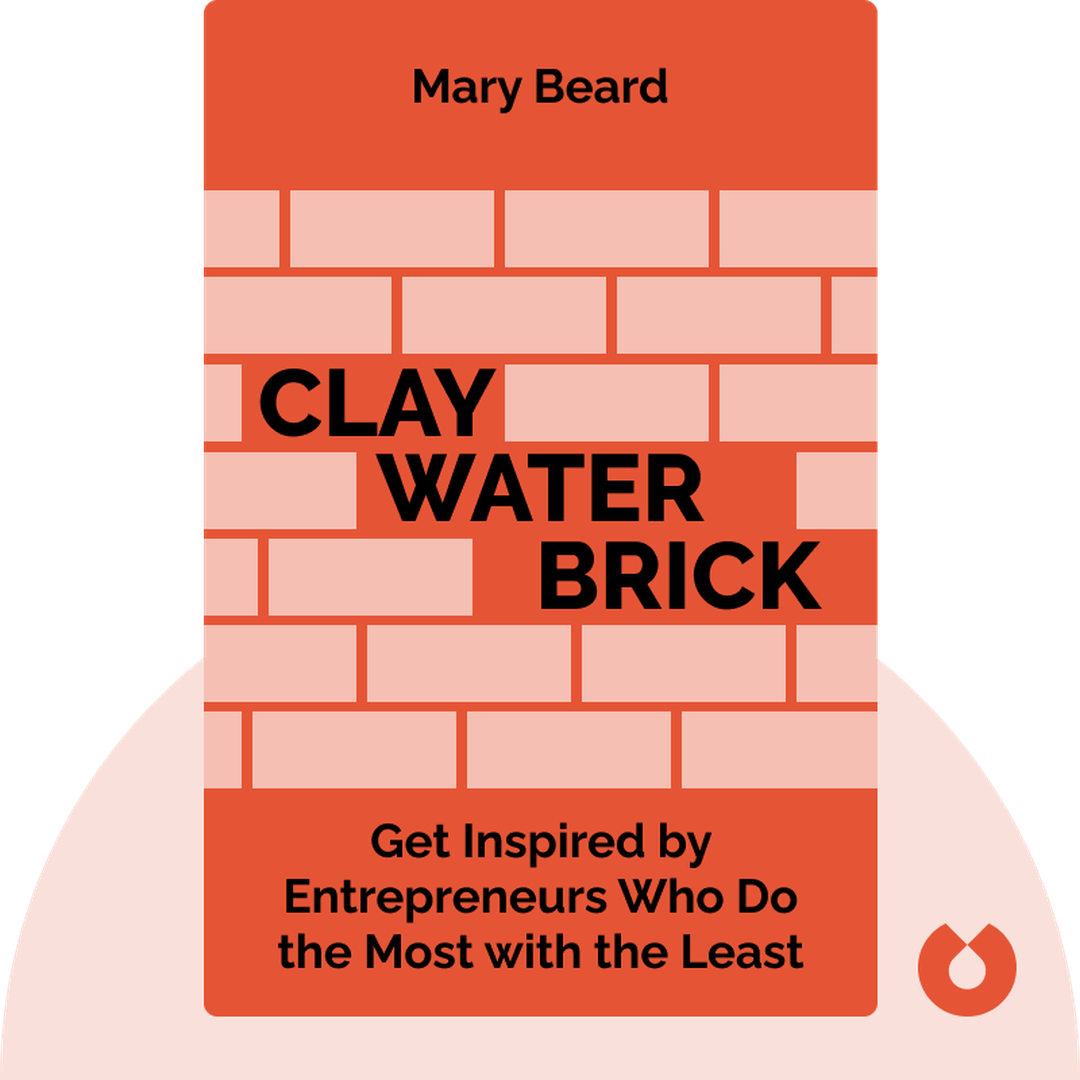
If You're Curious About These Questions...
You should listen to this audiobook
- Did you know that having almost no resources can actually be your greatest competitive advantage in building a successful business?
- What’s the secret used by micro-entrepreneurs in the world’s most struggling communities to turn basic materials like clay and water into thriving enterprises?
- Have you ever wondered how shifting your focus from traditional charity to micro-entrepreneurship could be the key to creating sustainable global change?
Listen to Clay Water Brick — Free Audiobook
Loading player...
Key Takeaways from Clay Water Brick
- Understand why supporting local entrepreneurs in developing nations provides a more lasting solution to global poverty than traditional charity.
- Discover how microlending platforms like Kiva empower ambitious individuals to break the cycle of poverty through small, direct financial sponsorships.
- Learn how unmatched resourcefulness outweighs the need for vast resources, as demonstrated by a Ugandan orphan who built a thriving business using only the clay beneath his feet.
- Find out why you should never wait for the perfect moment to start your venture, just as the author launched Kiva without an MBA or significant capital.
- Learn how maintaining a clear core mission keeps your business on track and protects you from early distractions and misaligned partnerships.
Learning Tools
Reinforce what you learned from Clay Water Brick
Mind Map
Clay Water Brick
Rethinking Charity+
The Power of Microlending+
Resourcefulness Over Resources+
Mission and Values+
Transparency and Honesty+
Teamwork and Collaboration+
Trial, Error, and Persistence+
Taking Calculated Risks+
Quiz — Test Your Understanding
Question 1 of 8
Why does the author argue that entrepreneurship and microlending are often more effective than traditional charity?
Question 2 of 8
How does Kiva, the microlending platform founded by the author, primarily function?
Question 3 of 8
What key entrepreneurial lesson is illustrated by the story of Patrick, the Ugandan brickmaker?
Question 4 of 8
Why did the author ultimately dissolve an early partnership with two well-connected entrepreneurs?
Question 5 of 8
How did Kiva handle the PR crisis when a partner organization in Uganda embezzled over $100,000?
Question 6 of 8
What was a significant personal challenge the author faced as Kiva began to grow rapidly?
Question 7 of 8
According to the book, what does the story of Shona, who designed equipment for her disabled daughter, demonstrate about business success?
Question 8 of 8
How did Katherine, the fish seller in Uganda, significantly improve her business's profitability?
Clay Water Brick — Full Chapter Overview
- 1Recommendation
- 2While traditional charities struggle, entrepreneurs in developing nations are creating real change.
- 3Microlending is a powerful weapon in the fight against poverty.
- 4Great businesses don’t need abundant resources, just a resourceful leader.
- 5A clear mission keeps your venture on track, no matter what happens.
- 6Honesty, even when plans go wrong, is what earns loyal followers.
- 7Teamwork can revive a business and help it reach new heights.
- 8Years of trial and error lead to sustainable success.
- 9Taking risks can open new doors for your business.
- 10Final summary
Clay Water Brick Summary & Overview
Clay Water Brick (2015) explores the author’s unusual business career in connection with stories of successful micro-entrepreneurs all over the globe. These blinks reveal the strategies of entrepreneurs who make something out of nothing while making a difference in struggling communities.
Who Should Listen to Clay Water Brick?
- Aspiring entrepreneurs worried that a lack of resources will hold them back
- Activists interested in sustainable approaches to changing the world
- Those who want to see global issues from an optimistic perspective
Books Similar to Clay Water Brick
Readers who enjoyed this also liked these titles.